Print Story
X




As Eid-ul Azha approaches, thousands of sanitary workers and supporting staff across Lahore get engaged in one of the biggest sanitation challenges the city faces
| T |
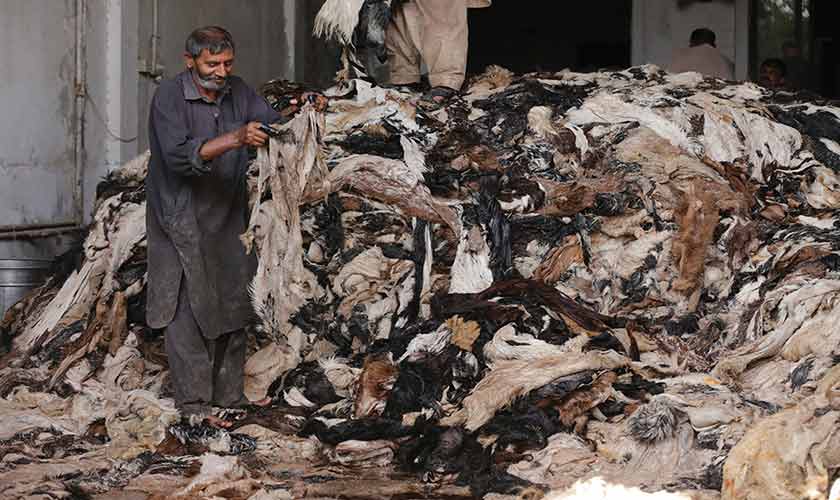
he Lahore Waste Management Company is working overtime. With Eid-ul Azha around the corner, the company officials are finalising a massive, high-stakes sanitation blueprint to keep the provincial capital clean during the festive period.
According to Umar Chaudhry, the communications director for the LWMC, the three-day operation to timely lift and dispose of animal waste across the city’s streets will cost upwards of Rs 230 million.
“Yes, that is a huge sum of money,” Chaudhry admits. “But given the sheer size of Lahore, the company must carry out an aggressive, three-day sanitation campaign across all nine towns to ensure the quick collection and disposal of sacrificial waste.”
Authorities say that the operation is critical to mitigating environmental pollution and safeguarding public hygiene during and after the celebrations.
Mobilising a mega-fleet managing the aftermath of Eid-ul Azha in a metropolis of 13 million people requires a logistical offensive, Chaudhry says. The LWMC is deploying an army of nearly 15,000 sanitation workers, 4,000 drivers and 3,000 support staff.
Working in three shifts, their duties begin well before the first sacrifice. Cleaning teams are tasked with clearing out cattle markets as soon as the animals are sold. Eid prayer grounds, mosques and public squares are washed and disinfected overnight.
Once the festivities begin, a fleet of nearly 2,000 heavy machinery units — including dumpers, excavators, loaders and tractor-trolleys — will work extended hours to clear residential and commercial areas.
To streamline the process, the LWMC will distribute biodegradable waste bags to citizens at designated camps in cattle markets and union councils. Waste will first be gathered via pushcarts, mini-dumpers and pickups; then moved to roughly 100 temporary collection points across the city.
From there, heavy machinery will transport the waste to five major dump sites: Sundar, Mehmood Booti, Lakhodair, Tibba and Saggian. Deep pits have already been prepared at these locations.
“Layers of waste will be carefully buried with soil and specialised materials to ensure it decomposes safely without creating pollution or foul odours,” Chaudhry says.
Special arrangements have also been made at 81 collective slaughterhouses, where washing teams, tractor-trolleys and disinfectant sprays will remain active throughout the three days.
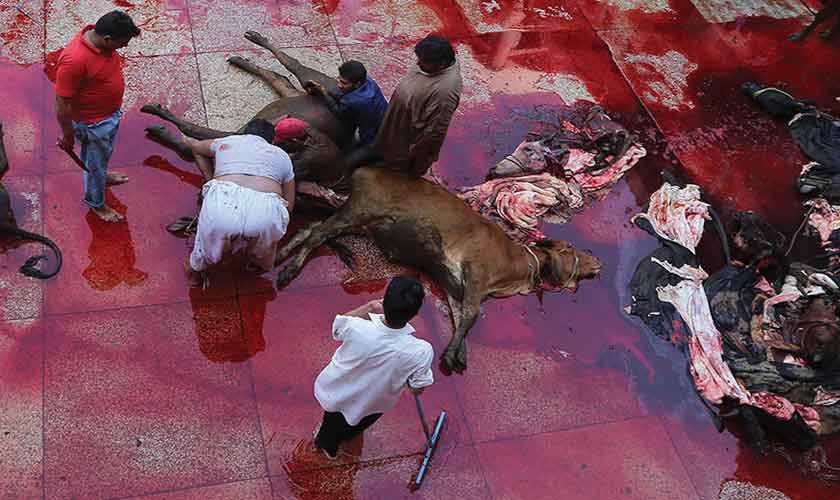
Cleaning teams are tasked with clearing out cattle markets as soon as the animals are sold. Eid prayer grounds, mosques and public squares are washed and disinfected overnight.
| L |
ahore’s Eid cleanup is a micro-cosmic reflection of a much larger provincial initiative: Suthra Punjab. Described by the provincial government as one of the world’s largest waste management systems, the province-wide infrastructure manages over 50,000 tonnes of municipal waste daily for a population exceeding 130 million.
The province-wide system features 34,000+ operational vehicles, 176,000+ sanitation workers, 6,600+ geo-tagged waste enclosures and 144 landfill and disposal sites.
Officials credit modern technology with revolutionising Punjab’s waste management. The government has implemented Vehicle Tracking and Monitoring Systems, AI-based facial recognition for worker attendance, centralised real-time performance dashboards and RFID-enabled weighbridges equipped with IP cameras to boost transparency.
Most notably, the Punjab has deployed AI-powered SafAI Agents on electric bikes for automated sanitation monitoring, alongside what is billed as the country’s first AI-based robotic complaint management centre.
These modernisation efforts have caught global attention, earning features in international media outlets such as the BBC, Forbes, Bloomberg, Gulf News and Nikkei Asia. Punjab’s waste management system adheres to international benchmarks, including ISO 9001 (quality), ISO 14001 (environment) and ISO 24161 (waste collection), with independent audits conducted by SGS.
On the climate front, two flagship initiatives — the Punjab Recycling Parks and the Landfill Valorisation Programme — have been shortlisted for the Top 20 global climate projects under the CVF-V20 for 2026-27.
Among these, the Lakhodair Landfill Valorisation Project focuses on capturing methane gas from waste to convert it into bio-CNG, bio-methane, electricity and thermal energy — a move estimated to offset between 175,000 and 275,000 tonnes of carbon dioxide equivalent annually.
The Lahore Recycling Park, a 500-tonne-per-day mechanical biological treatment facility, aims to divert up to 75 percent of waste from landfills by converting it into compost, recyclables and bio-CNG.
Other projects under development include offal-to-biogas systems that convert organic animal waste into fuel and fertilisers, waste-to-refuse-derived fuel (RDF) for the cement industry and systems utilising organic waste to produce insect protein meal.
Officials stress that technology and heavy machinery can go only so far. The ultimate success of the Eid-ul Azha operation hinges on civic cooperation. Waste management authorities are making repeated appeals to the public to utilise the provided biodegradable bags, avoid throwing animal remains into open drains and cooperate with the sanitation staff on duty.
Ahsan Raza is the editor of an English daily. He can be reached at [email protected]