Print Story
X

| F |
or much of the past decade and a half, Viktor Orbán stood as one of Europe’s most dominant and polarising leaders, constructing not just a durable electoral machine but an entire governing paradigm. Over sixteen years, he reshaped Hungary’s political system, hollowed out institutional checks and embedded a model of rule that fused nationalism with centralised authority and a sustained scepticism toward liberal democratic norms. Internationally, he became a nodal figure in the rise of right-wing populism, widely regarded as Donald Trump’s most reliable European counterpart. As Ivan Krastev observed, “Orbán didn’t just survive the liberal order—he learnt how to bend it to his advantage.”
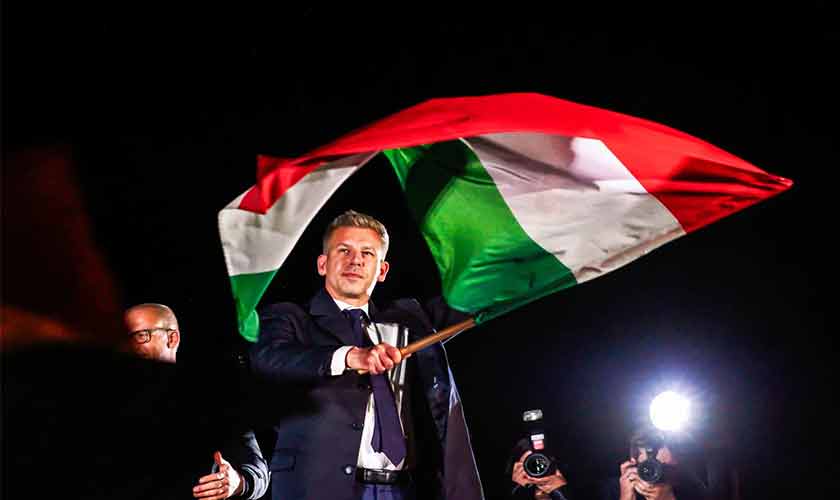
His defeat in the April 12 parliamentary elections by Péter Magyar therefore represents more than a cmeha of leadership; it constitutes a structural rupture in a system long assumed to be resilient, if not entrenched. Timothy Garton Ash captured the depth of this shift succinctly: “When a system built on loyalty and control begins to crack from within, it is not just a political defeat—it is a structural one.” What has fractured is not merely Orbán’s electoral dominance, but the broader architecture through which Hungary projected influence both domestically and in the European Union.
Orbán’s power rested on a dual strategy: internal consolidation and external maneuvering. Domestically, this meant rewriting constitutional rules, weakening judicial independence and aligning state institutions with partisan loyalty. Externally, it involved a calibrated balancing act—maintaining ideological proximity to Trump-era Washington while deepening economic ties with Beijing and cultivating political affinity with Moscow. Hungary under Orbán became, in effect, a strategic hinge in the EU: formally integrated yet functionally disruptive.
As Krastev has argued, its role was often less about leadership than obstruction, particularly on questions involving China and Russia. This positioning was underpinned by a political imagination shaped by historical grievance, especially the legacy of the Treaty of Trianon, which continues to inform Hungarian nationalism. In this sense, Orbán’s affinities arguably aligned more closely with Vladimir Putin than with Western conservatism. Anne Applebaum described the system he built as one that “looks democratic on the surface, but functions through loyalty, patronage and control underneath.”
Magyar’s ascent introduces a recalibration rather than a rupture. His stated agenda—restoring judicial independence, tackling corruption and normalising relations with Brussels—signals a potential reintegration of Hungary into the EU’s institutional mainstream. Yet this reformist posture coexists with clear elements of continuity.
On immigration, Magyar remains firmly within the restrictive paradigm that Orbán entrenched. The difference lies less in policy substance than in political style: where Orbán weaponised migration as a civilisational conflict with Europe, Magyar appears more inclined to treat it as a negotiable policy domain within EU frameworks, albeit without conceding sovereignty. This suggests not liberalisation, but depoliticisation at the European level.
A similar pattern emerges in the domains of democracy and human rights. Orbán’s tenure was marked by systematic erosion of institutional independence and frequent clashes with EU norms on media freedom and civil liberties. Magyar has pledged to reverse aspects of this trajectory. If implemented, such reforms will constitute a meaningful structural shift. However, the durability of Orbán’s institutional legacy complicates this process. Reform, in this context, is less an act of replacement than of gradual unwinding. The likely outcome is incremental improvement—greater judicial autonomy, reduced overt politicisation and a less confrontational stance on rights—rather than a wholesale liberal transformation.
Globally, Orbán’s fall represents a symbolic setback for both Trump and Putin, underscoring the limits of external backing in sustaining domestic political systems. It challenges the assumption that populist-nationalist regimes, once consolidated, are politically irreversible.
This duality extends to foreign policy. Magyar’s early signals—invoking historical ties with Austria, raising sensitive issues with Slovakia and proposing engagement with Volodymyr Zelensky in ethnically Hungarian regions—indicate that nationalism and historical memory will remain central to Hungary’s external posture. As Jacques Rupnik notes, “In this region, history is never past—it is a resource, a language and, sometimes, a weapon.” The implication is that Hungary’s tone may soften, but its underlying strategic instincts will persist.
The broader European ramifications are significant. Orbán’s defeat weakens the internal coherence of far-right networks that relied on him as both a symbol and an operational anchor. Figures such as Robert Fico and Andrej Babiš remain influential, but they lose a uniquely positioned ally capable of translating nationalist alignment into institutional leverage within the EU. This has direct implications for Trump’s influence in Europe. While his ideological footprint persists, the loss of Orbán diminishes its institutional expression. Without a dependable actor embedded inside EU decision-making structures, Trump-aligned politics becomes more diffuse—present, but less capable of shaping outcomes from within.
For the European Union, this creates both opportunity and uncertainty. A less confrontational Hungary could ease internal gridlock and facilitate consensus on key issues, from sanctions policy to relations with China. Yet, as Mark Leonard warns, “The danger is not confrontation, but ambiguity—when countries sit inside the system while quietly reshaping it.” Hungary under Magyar may transition from an overt challenger to a more transactional participant: less obstructive, but not fully aligned.
Globally, Orbán’s fall represents a symbolic setback for both Trump and Putin, underscoring the limits of external backing in sustaining domestic political systems. It challenges the assumption that populist-nationalist regimes, once consolidated, are politically irreversible. As Krastev has remarked elsewhere, “Populist regimes often look strongest just before they begin to unravel.” Yet the Hungarian case also complicates any simple narrative of democratic restoration. What is unfolding is not a clean ideological reversal, but a renegotiation of the same political logic under altered conditions.
Magyar thus embodies a hybrid trajectory—simultaneously corrective and continuous. His leadership reflects both the constraints of the system he inherits and the pressures of a European environment that demands greater alignment. This makes Hungary less a case of transformation than of adaptation. Trump’s influence becomes less anchored, more ambient; Hungary becomes less defiant, but not fully convergent; and the EU gains flexibility without resolving the structural tensions Orbán exploited so effectively.
The deeper significance of this moment lies in the collapse of inevitability. Orbán’s system appeared durable because it seemed self-reinforcing—politically, institutionally and internationally. Its disruption reveals that even entrenched illiberal orders remain contingent, vulnerable to internal fracture and elite defection. Whether Magyar can translate this opening into durable institutional reform remains uncertain. If he succeeds, Hungary may offer a model of gradual democratic recalibration from within. If he fails, it will demonstrate how resilient such systems can be, capable of mutation rather than disappearance.
Either outcome carries implications far beyond Hungary. What has changed decisively is not the end of a political model, but the perception of its permanence. In European politics, where power often rests as much on perception as on structure, that shift alone may prove transformative.
The writer is a professor in the Faculty of Liberal Arts at the Beaconhouse National University, Lahore.