Print Story
X




Questions of cultural legacy have resurfaced as Lahore’s Open Air Theatre once again changes hands
| T |
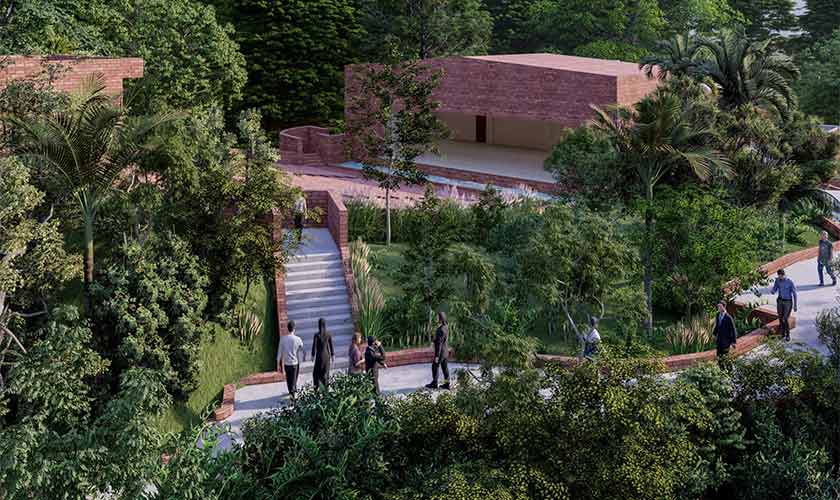
he future management of Lahore’s historic Open Air Theatre in Bagh-i-Jinnah has once again become the subject of debate. Reports suggest that control of the venue has now been handed over to the Lahore Arts Council, which is expected to run the theatre over the coming years. Whether this transition leads to renewed cultural activity or merely another bureaucratic reshuffle remains to be seen.
For decades, the Open Air Theatre has either been a facility of the Punjab Arts Council or been managed by it in practical terms. In fact, some offices of the Punjab Arts Council have long operated from the built spaces within the theatre complex itself.
The definitions and institutional boundaries have remained blurred ever since the establishment of the National Council of the Arts through an Act of parliament during the first Pakistan Peoples Party government in the 1970s. That was followed by the Punjab Arts Council Act, under which the provincial council was set up along with divisional councils across each administrative division. In Lahore, the Alhamra Arts Council technically became a divisional council within this structure. However, it resisted being reduced in status, as it had previously enjoyed a more elevated and autonomous position.
Alhamra had not originally been conceived as a government organisation, but rather as an autonomous arts body with its own governing board. Under the 1975 Act, however, the Punjab government appropriated the organisation and converted it into a divisional council of the Punjab Arts Council. Naeem Tahir, who was secretary at the time, challenged this appropriation in court. The case still awaits a regular hearing.
Beyond the turf war, one hopes the transition results in more meaningful and regular artistic activity than has been witnessed in recent years.
Over the years, the Alhamra Arts Council, with chairpersons drawn from among leading cultural figures, has continued to conduct its affairs with considerable independence from the Punjab Council’s umbrella structure. This is partly because important official and cultural functions are held at the Alhamra complex, giving its administration direct access to the highest levels of the Punjab government. As a result, it has rarely concerned itself with the hierarchy of the Punjab Council system, which oversees divisional councils as well as the Open Air Theatre at Bagh-i-Jinnah.
The Open Air Theatre itself is a historic cultural space. It is believed to have been conceived by GD Sondhi, principal of Government College Lahore, in the years before independence, as a venue for cultural and literary activities. Sondhi is also credited with establishing the open-air theatre at Government College, where House of Commons-style debates were staged alongside dramatic productions, including Julius Caesar, directed by Zia Mohyeddin in the 1950s.
The Open Air Theatre at Bagh-i-Jinnah later hosted plays by Khwaja Mueenuddin and, for decades, programmes organised by the All Pakistan Music Conference. Popular stage theatre also found an early home there, alongside performances at the Thara space at Alhamra during the late 1960s and 1970s, when the newer Alhamra building was under construction.
Beyond the turf war, one hopes the transition results in more meaningful and regular artistic activity than has been witnessed in recent years. Ideally, this should not be merely another administrative takeover designed to satisfy institutional egos, but a genuine step towards cultural revival and better stewardship of one of Lahore’s important artistic spaces.
The writer is a culture critic based in Lahore.