Print Story
X




Political psychology can help societies anticipate what they may otherwise only understand in hindsight
| W |
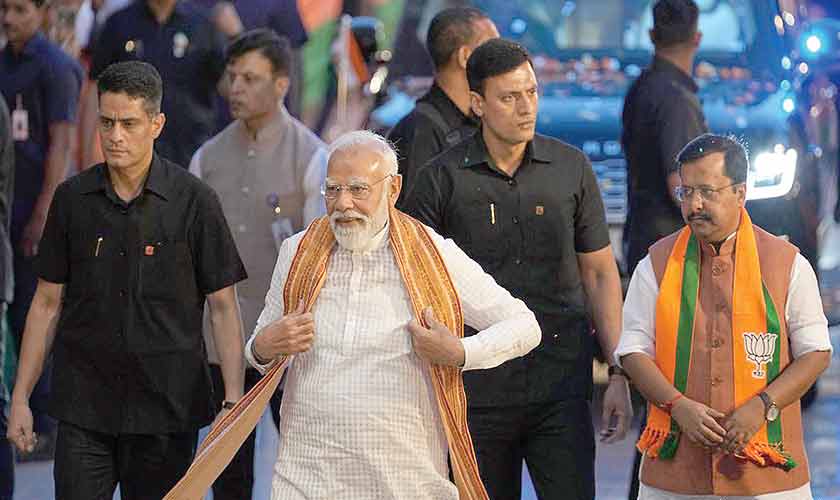
When Indian psychologist Ashis Nandy wrote his controversial analysis comparing the rise of Narendra Modi to the psychological patterns seen in earlier authoritarian movements, he was not making a partisan claim but demonstrating something far more important: that psychological assessments often follow predictable political trajectories. He wrote Gujrat, Gujrat: Obituary of Culture, published after Gujrat riots in 2002, his argument, grounded in decades of work on authoritarian personalities and mass anxieties, suggested that certain leaders emerged not in isolation but from collective fears, unresolved historical wounds and deep emotional currents in their societies. Whether one agrees with Nandy’s comparison or not, the significance of his analysis lies elsewhere. It shows that when psychologists engage seriously with politics, they can highlight patterns that traditional political analysis often misses. They can identify early signs of polarisation, collective resentment and the emotional hunger for strong leaders long before these forces crystallise into electoral outcomes or social ruptures. In other words, political psychology can help societies anticipate what they may otherwise only understand in hindsight.
Political psychology, at its broadest, applies what we know about human behaviour to the study of political life. It draws on personality theory, psychopathology, social and developmental psychology, cognitive science and intergroup relations to understand leadership, mass behaviour, political communication, socialisation, conflict, foreign‑policy decision‑making and the dynamics of race, gender, nationality and collective mobilisation. In other words, it examines the psychological forces that shape political action at every level, from individual biography to international conflict. Yet despite its obvious relevance, universities continue to treat political psychology as an intellectual orphan, too political for psychology departments and too psychological for political science. This is not an accident but a symptom of a deep discomfort with studying how power enters the mind, how institutions mould consciousness and how political realities are sustained through emotional, cognitive and symbolic processes that traditional disciplines prefer not to confront.
The roots of political psychology lie in the work of thinkers who understood that political behaviour cannot be separated from emotional life. Freud, in Group Psychology and the Analysis of the Ego, argued that crowds surrender individuality to leaders who embody their unconscious desires. He showed that political authority is sustained not only by institutions but by emotional bonds, projections and identification. Freud’s insight was unsettling because it suggested that obedience is not merely rational or coerced but rooted in the psyche. Wilhelm Reich extended this argument by claiming that authoritarianism thrives on emotional repression. In The Mass Psychology of Fascism, he argued that societies produce the very personalities that later submit to authoritarian rule. For Reich, psychological oppression is the precondition for political oppression. A population trained to fear its own desires becomes easier to govern.
Erich Fromm added another dimension by showing how modern individuals, overwhelmed by freedom and uncertainty, may escape into conformity or authoritarianism. In Escape from Freedom, he argued that people often choose submission because it relieves the anxiety of autonomy. This helps explain why populations sometimes support leaders who limit their freedoms. The desire for certainty and belonging can override rational calculation. Frantz Fanon brought the psychological analysis of power into the colonial world. In Black Skin, White Masks and The Wretched of the Earth, he showed how colonialism invades the psyche, producing self‑doubt, internalised inferiority and fractured identity. Fanon argued that political domination is impossible without psychological subjugation and that liberation requires mental decolonisation more than the political decolonisation. RD Laing, writing in The Politics of Experience, suggested that madness can be a rational response to an irrational society. He showed that nonconformity is often pathologised. Laing revealed how psychological diagnoses can become instruments of power.
These works of leading psychologists, though technically outside mainstream psychology, understood something that academic psychology continues to avoid: political life is inseparable from psychological life. Power does not operate only through laws or institutions; it also operates through desire, fear, identity, memory and imagination. Yet psychologists often retreat into neutrality and confuse it with impartiality. They claim to be neutral observers of human behaviour while avoiding the very structures that shape behaviour. This pseudo‑neutrality is not a scientific virtue but a political stance disguised as objectivity. By refusing to examine how power shapes the mind, psychologists inadvertently protect the status quo.
This avoidance is reinforced by institutional realities. Grants are rarely available for research or teaching in political psychology. Funding bodies prefer projects that appear apolitical, measurable and aligned with existing institutional priorities. Departments know that offering courses on political psychology may not attract financial support; so they quietly avoid them. Even psychology conferences, which claim to represent the full breadth of the discipline, rarely include discussions on political psychology. The subject is often outcast, even though it addresses some of the most urgent questions of our time. This institutional silence itself is a psychological phenomenon. It reflects a collective anxiety about confronting the emotional foundations of political life.
The absence of political psychology becomes even more striking when we consider the contributions of Noam Chomsky, Michel Foucault and Edward Said. Chomsky’s Manufacturing Consent and Said’s Covering Islam show how media systems filter information in ways that guide public opinion without overt coercion. People believe they are thinking freely while absorbing narratives shaped by institutional interests. This is not manipulation in the crude sense but a structural process that defines the boundaries of permissible thought. Foucault’s concept that power generates knowledge reveals how ‘truths’ are manufactured to discipline and regulate societies. Schools, hospitals, prisons and bureaucracies shape subjectivity by defining what counts as normal or rational. Said’s Orientalism exposes how cultural representations create identities, hierarchies and expectations. The East was constructed as irrational and inferior, not only to justify colonial rule but also to shape how both colonisers and colonised understood themselves.
When we place Freud, Reich, Fromm, Fanon, Laing, Chomsky, Foucault, Said and Nandy side by side, a clear picture emerges. Political psychology is not a niche subfield. It is the missing centre of modern social understanding. It explains why and when people obey; why and when they resist; why and when they fear; why and when they hate; why and when they hope; and why and when they believe what they believe. It reveals how institutions shape consciousness, how trauma shapes political identity, and how narratives shape collective memory. Power determines for the society what to remember, what to forget and when to revert and recall the past instead of moving ahead. This movement back and forth between inner awareness and outer realities reveals that the struggle for freedom, justice, dignity and democracy is, at its core, a struggle for the freedom of mind.
The absence of political psychology in academic institutions is therefore not a neutral omission. It reflects a deep reluctance to examine how power operates within the psyche. To study political psychology seriously requires confronting the emotional foundations of nationalism; the psychological mechanisms of propaganda; the lingering wounds of colonialism; and the ways in which institutions cultivate conformity. These are not easy topics. They challenge the legitimacy of systems that prefer to present themselves as neutral and rational. But the relevance of political psychology has never been greater. In a world marked by polarisation, misinformation, identity conflict, violence, wars and collective anxiety, understanding the psychological dimensions of political life is essential. It allows societies to recognise how fear is used to mobilise support; how trauma shapes political behaviour; how media narratives guide perception; and how identities are constructed and manipulated.
Political psychology reminds us that mind is the first battleground. Until the mind is liberated, political freedom is not possible, nor can it endure.
The writer is a principal clinical psychologist in the Republic of Ireland.He can be contacted at [email protected].