Print Story
X




Globalisation, cross-border movement of capital, people and culture have played a crucial role in the restructuring of the Punjabi identity
| P |
unjabiyat is the cultural, linguistic and civilisational ethos of the Punjab. The region has a complex history shaped by colonialism, partition, nationalism, globalisation and technological advancement.
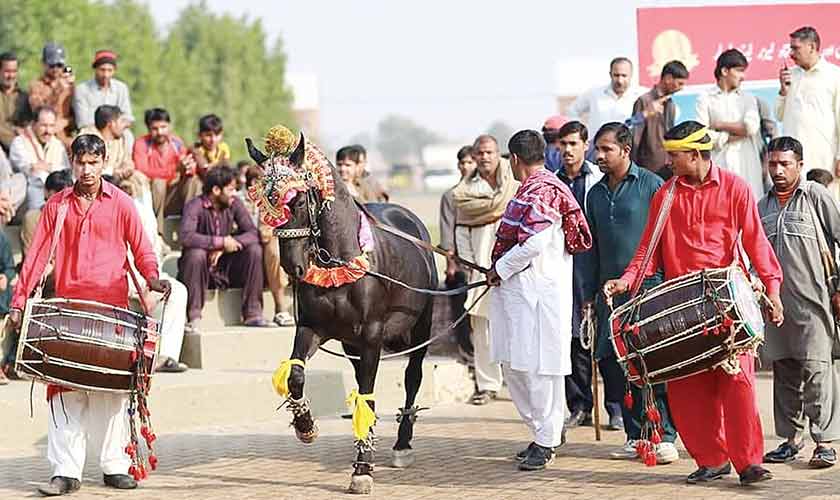
Punjabiyat may be described as the general mood of Punjabi-ness, grounded in language, folklore, syncretism and shared memory that transgresses religious and political boundaries. It is based on a composite of the pre-colonial and colonial Punjab. Still, its contemporary re-emergence must be perceived within the framework of the trans-national processes, in particular, globalisation, migration and digital communication technologies.
The traditional development of Punjabiyat took place in a pluralistic socio-cultural milieu, owing to the co-existence of Muslim, Sikh and Hindu communities. Oral traditions such as the Sufi and Bhakti movements, as well as common agrarian lifestyles, also assisted in the linguistic and cultural unity of the region.
This tradition was interrupted in 1947 when the Partition of India divided the Punjab into Indian and Pakistani regions. This led to the displacement of a huge number of people, violences and loss of culture. Some researchers posit that the process of nation-building in the two post-partition states had a religious and nationalist leaning rather than regional. Punjabiyat, therefore, had to choose between Pakistani and Indian nationalism. In Pakistan, the dominance of Urdu undermined the Punjabi language and identity both in the formal realm and in practice.
Another erosion of Punjabiyat occurred in the late 20th Century due to political instability, sectarianism and the rise of identity-based movements. Paradoxically, these processes also preconditioned its transformation. Globalisation, characterised by the rise in cross-border movements of capital, people and culture, played a crucial role in the restructuring of the Punjabi identity. It has tended to redefine local identities in trans-national ways. The Punjabiyat was no longer a territorially based and grounded identity; it was a de-territorialised and mobile cultural form.
This change has been mostly due to migration and development of the Punjabi Diaspora. The Punjabis are among the largest South Asian diasporic communities, estimated to number 3-5 million worldwide, most of them reside in Canada, the United Kingdom and the United States. Economic opportunities and colonial and post-colonial governmental policies have been driving migration.
The Diaspora Punjabis have been described as having strong socio-cultural and economic connections with their country of origin, thereby establishing what scholars call trans-national social fields. They permit cross-border flow of cultural practices, remittances and symbolic meanings.
According to empirical research, the diaspora has helped both maintain and modify the Punjabi culture. On the one hand, the preservation of traditions, language, music and cuisine as symbols of identity is central to the conservation of diasporic communities in multicultural societies. They have created hybrid identities that incorporate Punjabi and host-country influences.
A study of Punjabi in North America and Europe highlights how culture manifests in music, cinema and festivals as a space of negotiation between modernity and tradition. Research indicates that the involvement of Diaspora activity has led to the proliferation of Punjabi culture in other regions of the world, thereby making it visible and potent beyond its home country.
The Diaspora Punjabis have been described as having strong socio-cultural and economic connections with their country of origin, thereby establishing what scholars call trans-national social fields.
The Punjabi Diaspora is not just about preserving Punjabi culture, but also about re-inventing Punjabiyat. Apparently, the Diaspora Punjabis are predisposed to an inclusive, trans-religious identity, i.e., one focused on shared origins, as opposed to sectarian standings. This can be seen in cross-border cultural projects; in investment in charitable initiatives; and in the motive behind the language revival. The diaspora has been raising awareness of the Punjabi language, cultural festivals and media products, and demonstrating the symbolic capital of Punjabiyat in foreign fora. Direct investments in the economy and remittances have also established connections among the homeland, the diaspora and the unified Punjabiyat, as well as with international systems.
These processes have benefited from technology, particularly the rise of social media. Facebook, YouTube, Instagram and TikTok have touched Punjabi cultural production, distribution and consumption. It is here that the diasporic and local Punjabis experience an enclave in which they can engage in real-time communication, exchange cultural products and develop a sense of mutuality. As multiple studies have shown, people who have been separated might still be connected to their culture. Online societies may be used to maintain and re-energise the bond. This is observed in the worldwide popularity of Punjabi music, the use of online services to tell stories and online activism in the Punjab.
Punjabi music is a good example of how social media and globalisation are interrelated. Artists like Diljit Dosanjh and Sidhu Moose Wala have brought Punjabi music to a trans-national audience through digital media. Questions of identity, migration and cultural pride, as well as their appeal to audiences in both the country of origin and the diaspora, are prominent in their work. The fact that Punjabi songs are blowing up on sites like YouTube has to do with more people becoming aware of the culture and feeling that they are part of the tribe, even from distant locations.
Social media has been used for promoting Punjabiyat. The diaspora actors have seized the opportunity to highlight their history and assert their rights. This has helped bring back cultural awareness, though it has been a contentious issue.
Punjabiyat in the Twenty-first Century, is not a mere reconstruction of the past; it is a creation of new cultural imaginaries within the territorial margins. Some of the researchers see the new Punjabiyat as a multi-storied, interwoven and multi-layered fusion of a homeland with a diaspora, tradition and modernity, local and global forces. It is a new identity not restricted to national or religious identities, but a shared heritage that provides a new unit of belonging.
Does the history and formation of the new Punjabiyat point to a movement from regional cultural assimilation to disintegration and inspiring trans-nationalism? Migration, continuation and propagation of Punjabi identity across the globe are enabled by globalisation and social media. The Punjabi Diaspora has taken on the role of a battle horse in safeguarding cultural traditions and fostering a new consciousness. Thus, Punjabiyat can be fostered in technology-mediated scenarios in many ways. It is not a re-establishment of identity in the face of an increasingly dependent world, but rather a re-establishment of culture.
Mazhar Abbas, author of The Aftermath of the Bangladesh Liberation War of 1971: Enduring Impact (Routledge, 2024), has a PhD in history from Shanghai University. He is a lecturer at GCU, Faisalabad, and a research fellow at PIDE, Islamabad. He can be contacted at [email protected].
His X-handle is @MazharGondal87.