Print Story
X




Despite repeated rounds of negotiations, Afghan Taliban fail to rein in cross-border terrorism
| I |
mmediately after the US withdrawal from Afghanistan, Pakistan’s engagement with the Afghan Taliban appeared relatively promising, with regular talks on trade, transit arrangements, and visa facilitation. These were seen as the basic foundations of a workable and forward-looking relationship.
However, that early optimism gradually faded. Over time, cooperation gave way to rising mistrust and tension. The relationship has since shifted away from economic and diplomatic engagement and is now increasingly defined by border clashes and Afghan-based militancy targeting Pakistan.
As tensions escalated, multiple international and regional platforms attempted to defuse the crisis. Engagements in formats such as the Moscow meetings, as well as talks held in Qatar, Istanbul, Saudi Arabia and Turkey, reflected sustained efforts by external partners to bring both sides back to dialogue. Despite repeated rounds of negotiations these initiatives stalled and failed to produce meaningful outcomes.
Talking to The News on Sunday (TNS), former Special Representative for Afghanistan Asif Durrani advises Pakistan “to abandon hope of Afghan Taliban reciprocity and adopt an essential long-term policy of smoking out the Tehreek-e-Taliban Pakistan (TTP) as the primary pillar of national security strategy.” He also considers “the current policy of combining kinetic border enforcement with the use of economic leverage through transit controls, as helpful, arguing that Pakistan can destabilize the TTP’s logistical networks.”
Data supports this assertion: bilateral trade dropped from $2.46 billion to $1.77 billion, and while Pakistan loses an average of $177 million monthly when the border is sealed, the leverage remains with Islamabad, as Afghanistan faces stranded exports.
However, the Afghan population remains heavily dependent on Pakistan for trade, transit, and basic economic access, so any disruption or blockade quickly creates wider ripple effects. As a result, such measures add a significant humanitarian dimension to the crisis, deepening pressure on vulnerable communities and worsening existing economic hardship.
At the same time, unmet international commitments regarding Afghan refugees have placed additional strain on Pakistan’s resources and policy space. While Pakistan maintains that its actions are driven by legitimate security concerns, the humanitarian dimension remains an inseparable part of the broader relationship and continues to shape its policy choices.
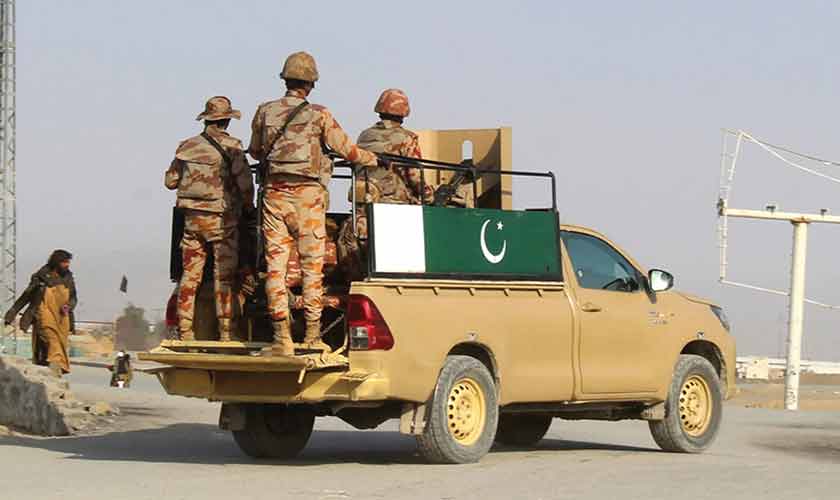
The Afghan Taliban, tend to frame the fallout of Pakistan’s policies in humanitarian terms, arguing that border restrictions and enforcement measures harm ordinary Afghans. Pakistani officials often interpret this framing as an attempt to shift focus away from the TTP issue.
After several years of attempted engagement, including negotiations with militant groups and efforts to leverage influence over the Afghan Taliban, there is now a growing sense within official circles that these approaches have not yielded the desired results. As a consequence, the emphasis has increasingly shifted towards a security-first framework. The idea that Pakistan could continue exercising restraint indefinitely became increasingly difficult to sustain as security concerns mounted and incidents intensified.
In this context, Pakistan’s policy of “strategic patience” began to come under strain—-a long-standing approach described by officials as guiding its conduct since 1947, essentially centred on managing recurring tensions with a difficult neighbour. The gradual shift away from this restraint reflects a growing sense of frustration in Islamabad as expectations of cooperation remain unmet.
Pakistan views TTP as an immediate and unacceptable security threat and insists that their presence in Afghanistan must be addressed.
Durrani says the Taliban must take concrete steps. “They include enforcing the Taliban leader Hibatullah Akhundzada’s edict forbidding attacks on Pakistan. The issue, he explains, remains that the edict is not publicised and only used as a ploy in talks. They must disarm TTP fighters in Afghanistan, stop TTP funding, and prevent Afghan nationals from participating in attacks inside Pakistan.”
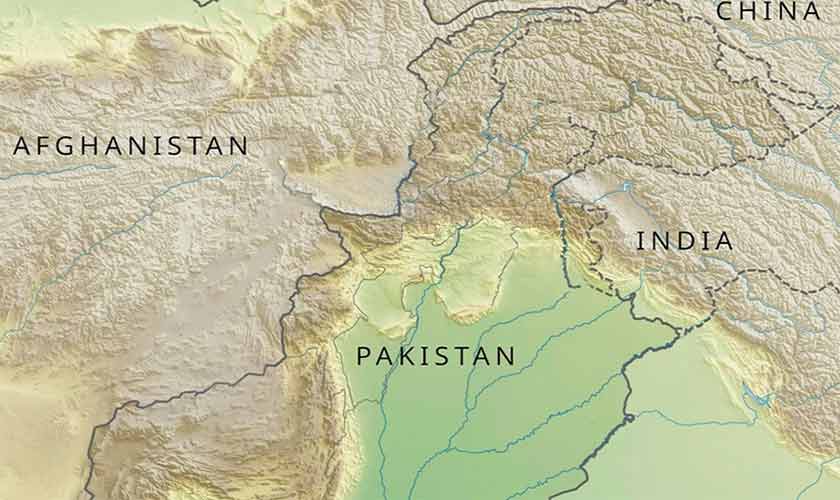
The disagreement is not limited to militancy alone. It is embedded within a broader framework of contested sovereignty and perception. Pakistan considers the Durand Line a settled international border, whereas every Afghan regime, including the Taliban, continues to treat it as a disputed issue. According to security experts, this difference also shapes how the Taliban interprets cross-border violence. Afghanistan may condemn high-profile attacks in Lahore and Karachi, but its response to incidents in Khyber Pakhtunkhwa and Balochistan is often seen in Pakistan as muted or insufficient.
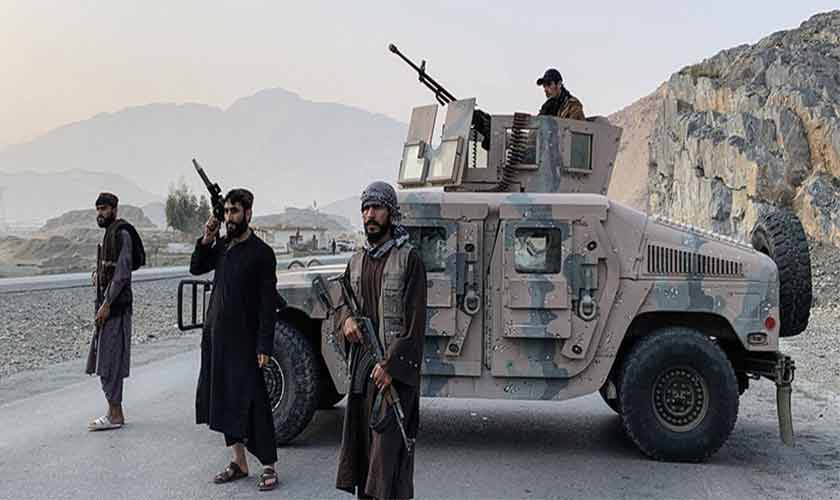
In this context, Pakistan’s policy of “strategic patience” began to come under strain—-a long-standing approach described by officials as guiding its conduct since 1947, essentially centred on managing recurring tensions with a difficult neighbour. The gradual shift away from this restraint reflects a growing sense of frustration in Islamabad as expectations of cooperation remain unmet.
Security developments in the region are now unfolding across Bajaur, Waziristan, and Bannu districts in Khyber Pakhttonkhwa. While in Balochistan Sibi, Bolan, and Quetta have been turned into active zones of instability.
One of the most striking developments in recent years has been the increasing use of drones by Hafiz Gul Bahadur, Jamaatul Ahrar, and other militant factions to attack checkpoints, police stations and civilian areas. As a result, local populations feel increasingly vulnerable and, in some cases, abandoned. This has led to the emergence of informal coping mechanisms by the locals, including jirgas involving militant actors, which further complicates the authority of the state and erodes public trust.
Experts argue Islamabad’s early assumption that the Afghan Taliban, once in power, would align with Pakistan’s security interests—particularly by restraining the TTP—has proven to be a critical miscalculation. Despite clear ideological and operational overlaps between the two groups, Pakistani officials believed the Taliban could be persuaded to act against the TTP. That expectation has not materialised. The ideological and cultural justification for the Taliban’s reluctance to confront the TTP has also become an important part of the debate. They often cite the Pashtunwali code in their defence and draw parallels with the stance of former Taliban leader Mullah Omar, who invoked the same principle while resisting American pressure to hand over Osama bin Laden. Ambassador Durrani also identifies the manipulation of Pashtunwali Code as a key grievance mechanism. He insists that genuine tribal elders, “reject the weaponization of Pashtunwali to justify cross-border terrorism. While the Afghan Taliban invoke tenets like melmastia (hospitality) and nanawati (asylum) to shield TTP elements.” Durrani argued that by harbouring foreign fighters and refusing extradition requests, “the Taliban were acting contrary to the spirit of watani (loyalty to homeland)”.
Initially, there was a perception in Pakistan that the Taliban’s return to power would reduce the influence of India, in Afghanistan. However, the emerging reality has proven more complex. Rather than moving into a Pakistan-centric alignment, Afghanistan appears to be shaping its foreign relations in a more multi-vector manner. The shifting alignment patterns in Kabul are therefore viewed as part of a wider regional recalibration in which India continues to retain or regain influence.
Highlighting India’s role in perpetuating the security dilemma, Durrani underlines that New Delhi utilizes its consulates to funnel resources to Baloch dissident groups and the TTP via Afghan proxies. “India’s broader strategic objective is to keep Pakistan under pressure across multiple fronts.”
Amid the repeated breakdown of talks and growing mistrust, there were nevertheless moments when a more structured framework for de-escalation appeared to be taking shape.
In earlier rounds of engagement, a loose five-point framework had begun to take shape. One of the central elements was the establishment of joint border mechanisms. Closely linked to this was the proposal for structured intelligence sharing. In theory, this could have reduced the space for militant infiltration and minimised misunderstandings arising from unverified claims.
“If implemented in good faith, these confidence-building and security cooperation measures could form the basis of a more stable and institutionalised bilateral security framework, supported by regular bilateral review and compliance assessments to ensure sustained progress.”
Tragically, there is currently no indication that Afghanistan will fully address Pakistan’s concerns regarding militant groups, nor is there evidence that Pakistan is willing to significantly alter its approach. The result is a prolonged period of instability—one in which tensions persist, trust remains fragile, and the prospects for meaningful reconciliation appear distant.
This impasse is increasingly spilling over into trade, transit, and regional connectivity dynamics. Persistent instability in Afghanistan, coupled with recurring border closures and security disruptions, has repeatedly constrained Pakistan’s ambition to position itself as a primary transit hub for Central Asia with alternative routes through Iran, China, and other corridors often gaining greater traction during periods of tension.
Following the Iran-US-Israel conflict, Pakistan has opened six land routes to Iran for trade facilitation and rerouting of goods through coastal and inland Balochistan, including the Gwadar–Gabd axis and supporting links via Ormara and Pasni, allowing goods to be rerouted more efficiently into Iran. The conflict has provided Iran and Pakistan with an alternative corridor for trade diversification. This dynamic underscores a slow but noticeable shift toward multi-vector regional connectivity, where Pakistan is seeking redundancy in its trade routes rather than reliance on a single transit pathway.
The writer is a senior The News staffer in Karachi.