Print Story
X




The Punjab government has restricted street sales of cattle, redirecting the trade to five designated temporary sale points
| T |
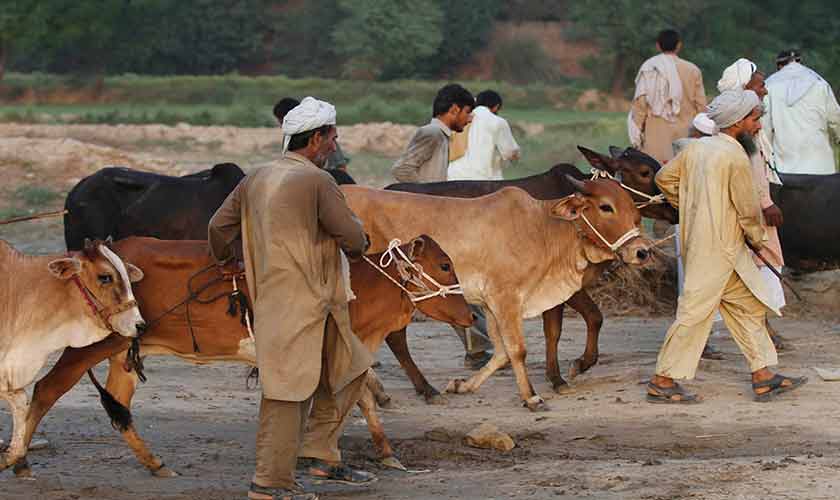
his Eid-ul Azha, purchasing a sacrificial animal in Lahore is no longer a matter of walking to the nearest street corner. The familiar sight of herds tucked into residential nooks is vanishing, replaced by a government mandate aimed at urban order and modernisation.
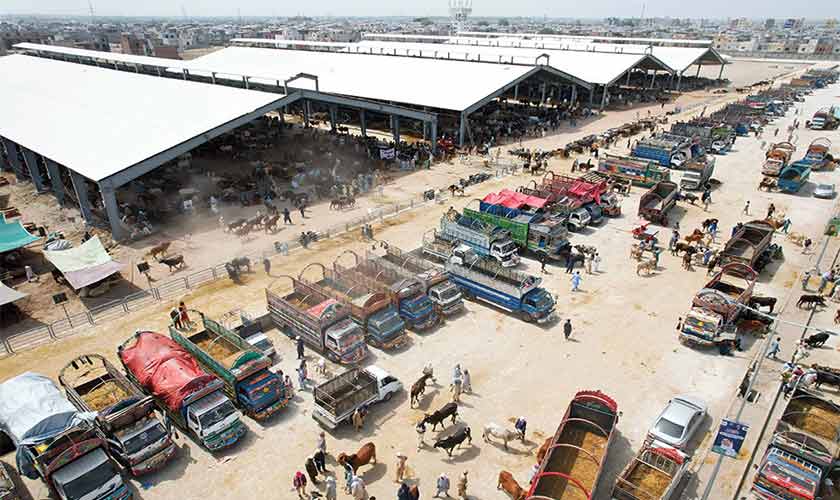
The government has vowed to restrict street sales, redirecting the trade to five designated temporary sale points and the permanent, state-of-the-art Model Cattle Market at Shahpur Kanjran. Managed by the Punjab Cattle Market Management and Development Company, these hubs represent a shift towards a more regulated, albeit distant, livestock trade.
For the average Lahori, the convenience of local buying comes at a price: distance. The five temporary sites — Saggian, Waghe Sports Complex, Burki Road, LDA City and Raiwind — are strictly suburban.
“Every sale point requires massive acreage to accommodate the influx of cattle and their caretakers,” a PCMMDC spokesperson tells TNS. The scale is indeed vast; for instance, the Saggian site spans 25 acres; the Wagha Sports Complex facility covers 50 acres.
These markets are set to become fully operational by May 13.
For Muhammad Ramazan, a livestock trader from Muzaffargarh, the new layout is a departure from tradition. “For years, we camped near RA Bazaar in the cantonment area,” he says. “But this year, we’ve been told that’s off-limits. We are now hoping to secure space at one of the official markets.”
Ramazan notes the presence of the PERA force, tasked with hunting down violators of the street-sale ban.
Beyond the logistics, he points to the social friction of the Mandi. “We toil all day for our rozi roti (livelihood). Is it too much to expect respect from the management and the buyers?” he asks.
The trek from the outskirts to downtown Lahore has its own risks. The City Traffic Police warn that transportation is often the most dangerous phase of the purchase.
PCMMDC CEO Bilal Hasham envisions a “technology-driven reform” of cattle markets. This includes e-ticketing, cashless transactions and online auction mechanisms.
“Accidents often occur when an animal trips on the back of a pickup, causing the vehicle to lose balance and turn turtle,” a traffic official notes. To mitigate this, buyers are advised to spread straw or dry husk on the vehicle floor to absorb animal waste and provide traction, preventing the ‘slip and flip’ scenarios that clog Lahore’s arteries during Eid.
| P |
CMMDC CEO Bilal Hasham is banking on technology to smooth over these hitches. He envisions a “technology-driven reform” that includes e-ticketing, cashless transactions and online auction mechanisms.
The PITB has introduced an online balloting system through which animal sheds and permanent enclosures can be secured at the Model Cattle Market.
As for the temporary sale points, they “offer comprehensive facilities: shaded tents, dedicated loading areas, clean water and public toilets,” says Hasham.
“Dedicated facilitators will be deployed at each site for the traders arriving from outside Lahore,” he adds.
Interestingly, while the tactile experience of the ‘walk-in’ purchase remains king, the financial side seems to be evolving. Even traditional traders like Ramazan are noticing the shift. “Customers now like to make payments through mobile accounts,” he admits, signalling that the digital divide is closing, even in the heart of the cattle pens.
To ensure the massive transition remains orderly, a coalition of agencies — including the Punjab Police, Rescue 1122 and the Livestock and Health Departments — will be stationed at these hubs.
As Lahore moves its oldest tradition to its new frontiers, the goal is clear: a cleaner city, safer trade and a more transparent market for all.
Ahsan Raza is a newspaper editor. He can be reached at
[email protected]