Print Story
X




As climate risks intensify, food insecurity is expected to place millions at risk of hunger and malnutrition
| F |
ood insecurity in Pakistan has evolved into a complex, systemic crisis, increasingly shaped by the accelerating impacts of climate change. While agriculture remains central to the economy, contributing nearly 19-20 percent to the GDP and employing over 37 percent of the labour force, its climate sensitivity makes national food systems highly vulnerable. The convergence of environmental stress, economic volatility and demographic pressure is rapidly eroding food security across both rural and urban populations.
Pakistan’s food security challenge is no longer marginal; it is structural.
Recent estimates suggest that 10-11 million people are facing acute food insecurity. A much larger proportion experiences moderate food insecurity, characterised by reduced dietary quality and limited access to nutritious food. At the same time, Pakistan’s population has surpassed 240 million, increasing pressure on already constrained food systems. This widening gap between food demand and stable supply is being exacerbated by climate-induced disruptions.
Warming temperatures, falling yields
Average temperatures in the country have increased by 0.6-1 degree Celsius over the past century, with projections indicating a further rise of 1.5-2 degrees Celsius by 2050. These shifts are already affecting crop productivity.
Wheat, which accounts for a major share of caloric intake, is particularly vulnerable. Studies indicate that yields may decline by 5-7 percent per degree Celsius increase in temperature. Additionally, heat stress is reducing yields of other staple crops, including rice and maize while also affecting cotton.
Climate change is also disrupting traditional agricultural knowledge systems. Farmers are increasingly unable to predict planting and harvesting cycles due to shifting weather patterns. This uncertainty reduces farm-level decision-making efficiency and discourages investment in agriculture. Without access to reliable climate information and adaptive technologies, productivity losses are likely to intensify in the coming decades.
Water stress and climate shocks
Pakistan is already experiencing severe water scarcity, placing it in the water-stressed category along with a sharp increase in the frequency and intensity of floods, droughts and heatwaves.
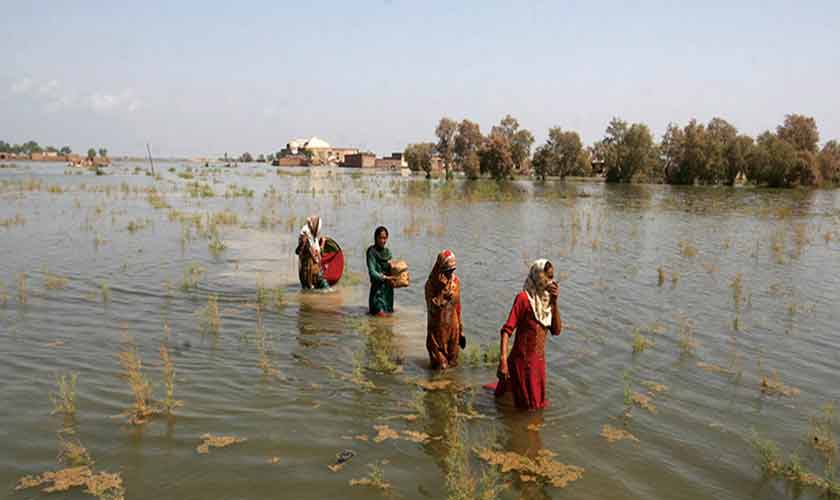
The catastrophic floods of recent years affected over 30 million people and inundated millions of acres of agricultural land, causing extensive crop losses and livestock mortality. Recurrent droughts in Balochistan and Tharparkar have severely reduced crop and livestock productivity, undermining food availability at the household level. Heatwaves, with temperatures exceeding 50 degrees Celsius in some regions, are further reducing agricultural labour productivity and accelerating crop stress.
Unequal economic burden
Food insecurity in Pakistan is also worsened by persistent inflation which reduces purchasing power. Prices of wheat, rice, fruits and dairy have risen sharply, making basic nutrition unaffordable. Simultaneously, higher costs of inputs—fertilisers, fuel and electricity—are increasing production costs, creating a fragile and inequitable food system.
Regional disparities highlight the uneven distribution of food insecurity. Balochistan, Sindh and southern Punjab face disproportionately higher levels of vulnerability due to fragile ecosystems, water scarcity and persistent poverty.
In some districts, over 20 percent of the population is classified under high levels of food insecurity. Rural households, particularly smallholding farmers and landless labourers, are the most exposed as their livelihoods depend directly on climate-sensitive agricultural systems.
The nutritional consequences are severe and deeply entrenched. Pakistan has one of the highest rates of child malnutrition globally, with approximately 40 percent of children under five stunted and around 18 percent wasted. Nearly 10 million children suffer from stunting, reflecting chronic undernutrition. These figures indicate not just a food quantity issue but also a profound deficit in dietary diversity and nutritional quality.
A system under strain
In essence, food insecurity in Pakistan is no longer a temporary or localised issue but a systemic crisis driven by the intersection of climate change, economic instability and demographic pressures. Rising temperatures, declining water availability, extreme weather events and persistent inflation are collectively undermining the resilience of food systems. As climate risks intensify, the scale and severity of food insecurity are expected to grow, placing millions at risk of hunger and malnutrition.
Towards resilient food system
Addressing food insecurity requires an integrated approach that tackles climate vulnerability, resource constraints and structural inefficiencies within the food system.
At the farm level, improving water-use efficiency is critical in the context of growing water scarcity. Practices such as laser land leveling, alignment of watercourses, multi-bed planting and broader regenerative agricultural approaches offer pathways to reduce water loss and sustain productivity. Initiatives by organisations like WWF-Pakistan are already working with farming communities to demonstrate and scale such water-efficient practices across varying landscapes.
At the same time, scaling resilient agriculture is essential. This includes the adoption of climate-smart practices, along with regenerative and organic farming systems that enhance soil health, improve resilience to temperature stress and stabilise yields over time.
Beyond production, reducing food loss and waste must be prioritised through improved post-harvest management, stronger value chains and enhanced awareness. In parallel, nutrition-sensitive interventions such as climate-smart kitchen gardens, small fruit orchards and poultry rearing can play an important role in strengthening household level food security.
Strengthening market access remains equally important. More efficient and inclusive value chains can improve farmer incomes while ensuring a more stable and accessibly food supply for consumers.
Finally, food security must be integrated into Pakistan’s climate policy. Without addressing the underlying climate risks embedded within the agricultural sector, long-term food system resilience will remain out of reach.
The trajectory is clear: climate change is steadily reshaping food security in Pakistan, transforming it from a development challenge into a long-term national risk. Addressing this challenge will require sustained, coordinated action across policy, practice and communities to build a food system that is both resilient and equitable.
The writer is WWF-Pakistan’s food and agriculture manager.