Print Story
X




At a tea stall in Old Anarkali, the air is thick with a language of its own — formed over two decades of shared tea and unspoken struggle
| D |
uring my MPhil years, the meaning of the term ‘deixis’ clicked for me when a classmate explained it through the lens of Abbasi.
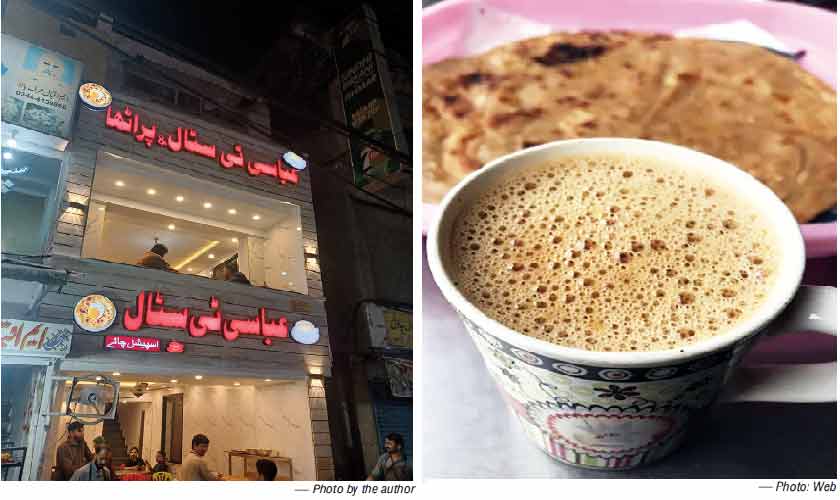
According to linguist Stephen C Levinson, deixis refers to words and phrases — like here, there or that — which require contextual information to be understood. At Abbasi Tea Stall in Old Anarkali, the air is thick with such words; they are the shorthand of a community built over twenty years of shared tea and shared struggle.
Established in 2002, Abbasi has become a local landmark, drawing generations of students who know its corners like the back of their hands. Even after graduation, those now navigating the corporate world or the gruelling job hunt return to these tables to relive the unforgettable years.
I often sense an uncanny resemblance between the aura of Lahore’s Old Anarkali and Delhi’s Old Rajinder Nagar. Though I have never visited the latter, I have seen its hustle through Aspirants, a series centred on students striving for the UPSC examinations. In both places, tea reigns supreme as a motif — a caffeinated elixir that allows students to rejuvenate their dreams and return to their goals with renewed vigour.
My own MPhil years were fuelled by afternoon tea in Old Anarkali. Initially, I was sceptical. On my first visit to Abbasi, the tea tasted reheated and stale. It took my friends six months to persuade me to give it another go. That second time, however, the person at the helm served us a perfectly brewed cup. From that day until I finally bound my thesis in Dhobi Mandi, my visits never ceased.
Recently, when I passed by the stall, I noticed that the façade looked unusually bright. In my mind, the stairways were always narrow, cloaked in a permanent, comfortable darkness. We gravitated towards the top floor — a democratic space where boys and girls would sit together and no one cared who you were or what you did.
The air there was a tapestry of wriggling and swirling smoke from the cigarettes of student leaders presiding over table-talks. It was at Abbasi that most rallies against the sarkar (government) were planned. One might hear a student holler “Long live freedom!” before dropping manifestos on every table.
Following in their wake would be a breathless waiter, dodging between tables to ask if anyone needed another paratha. In one corner, a boy might point a finger to indicate his order while trying to appease an upset girlfriend; in another, a student with oily hair peeking through cigarette smoke would bellow, “Bhai logon kay liye chaar chaye; bas!” (Four teas for the brothers; that’s it!) before diving back into debate.
Looking back, those moments of laughter, smoke and fervour were more than just a way to kill time. I marvel at how the simplest activities of youth leave such profound imprints. I often imagine returning to those seats, feeling a quiet happiness take root. Those days, and those cups of tea, will always remain close to my heart.
Usama Malick has an MPhil in English