Print Story
X




Arrest of a citizen over Tarnol-Hormuz comparison has drawn criticism from the civil society and sparked a broad conversation on the state of civil liberties in the country
| I |
slamabad police recently lodged a criminal case against a citizen for criticising the poor traffic management at a railway crossing in Tarnol by likening it to the Strait of Hormuz.
The action has drawn outraged criticism and condemnation from civil society, media and residents of Islamabad and Rawalpindi.
The case against Khurram Nazir was lodged on April 21 at the Tarnol police station for a social media post comparing the Tarnol crossing to the Strait of Hormuz and suggesting that blocking it might resolve many problems.
The case was ostensibly lodged for failing to comply with an order by a public servant, wrongful restraint and an attempt to commit an offence defined in the Pakistan Penal Code.
According to the FIR, Sub-Inspector Shahid Asghar was on a routine patrol when they came across the viral post. It said that the Tarnol Phatak (gateway) was “no less significant than the Strait of Hormuz” and that “if closed, many problems would be resolved.”
Police say that in view of the current security situation, the government has invoked Section 144 and prohibited such public announcements and social media content. Khurram Nazir allegedly violated this order.
Nazir was immediately taken into custody and later sent to jail. Eventually, he got bail from a court. His whereabouts ever since are unknown.
This reaction to a sarcastic comparison by a citizen triggered a wave of criticism from civil society and raised questions about the right to free expression and the priorities of law enforcement in Pakistan.
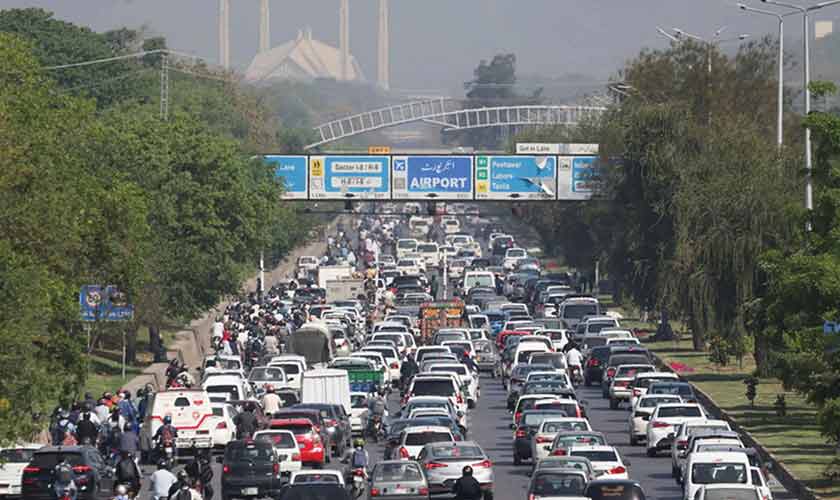
Police have claimed that the post violated restrictions imposed under Section 144 due to heightened concern for security in the federal capital. They are linking the remark to concerns about public order amid ongoing geopolitical tensions and anticipated diplomatic activity in Islamabad. However, the facts outlined in the FIR paint a different picture. A citizen frustrated by chronic traffic chaos at one of Islamabad’s most notorious bottlenecks, used satire to highlight a civic problem that thousands of fellow citizens face daily.
What followed has sparked outrage across legal and civil rights circles. The case is being viewed less as a matter of public order and more as an example of overreach.
This reaction to a sarcastic comparison by a citizen triggered a wave of criticism from civil society and raised questions about right to free expression and the priorities of law enforcement in Pakistan.
“The sections applied in the FIR appear disproportionate. The alleged action does not constitute a cognizable offensc that threatens national security or public peace. The courts are likely to strike down such a case,” Khalid Ahmed, an Islamabad-based lawyer said. “It is a mockery of law, citizens and police,” he said.
“It is a troubling sign of shrinking tolerance for dissent, satire and criticism, particularly online. They argue that using criminal law to respond to a sarcastic comment reflects a deep institutional discomfort with public scrutiny,” Saqib Ali, a resident of the city said. He urged higher authorities to take serious action against such steps by local police officers. He said there must be a story behind this case that has yet to become public.
The Tarnol railway crossing has long been a source of frustration for commuters entering and leaving Islamabad, often causing hours-long delays. For many, the arrested man’s remark resonated not as an incitement but as a reflection of everyday reality. “Instead of addressing the underlying issue, critics say, authorities appear to have chosen to silence the messenger,” another resident, Arif Subhan, said. “The incident raises questions about the state of the criminal justice system itself,” he said.
“Why are police resources being used to pursue social media posts when serious crimes often go under-investigated? What message does such action send about citizens’ ability to question governance or highlight civic issues?” he asked.
An officer in his office said that the matter had been brought to the notice of IGP Ali Nasir Rizvi. He said action was expected against the police officer who registered the case. However, no action by the police chief has been reported in the media. The IG’s office has not responded to the question of action despite repeated requests by The News on Sunday.
TNS has also approached the investigation officer named in the FIR, Shahid Asghar, but received no response.
“Please forget about it. The suspect has been released on bail. What else do you want?” an officer at the Tarnol police station said over phone.
The reaction from the public has been telling. Social media platforms were flooded with comments describing the FIR as excessive, misplaced and indicative of a lack of proportion.
Some users called it a waste of scarce resources. Others warned that such actions risk eroding public trust in law enforcement.
The author is a staff reporter. He can be reached at [email protected]. He tweets @waqargi