Print Story
X




Former captain’s strike-rate in T20 internationals hovers around 130-135, which is considered decent, but not explosive
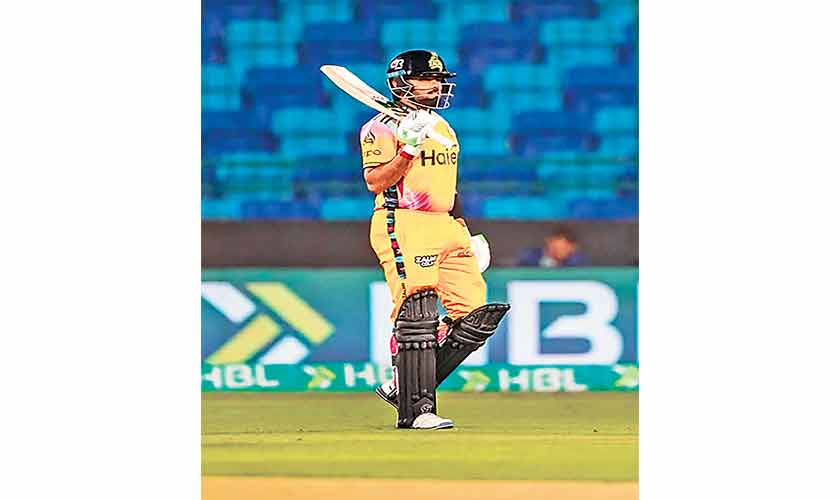
In modern T20 Internationals batting is no longer judged by accumulation alone. The format demands tempo control, boundary efficiency and sharp situational awareness.
With just 120 balls to define an innings, strike-rate has emerged as the primary currency of performance while teams increasingly favour batters who can sustain scoring rates above 140.
The contemporary T20 template leaves little room for anchors operating below a strike rate of 130-unless they deliver match-winning consistency. Evaluation metrics have shifted decisively toward phase dominance, with batters expected to clear the ropes consistently from the power-play through to the death overs.
Pakistan’s former captain, Babar Azam remains one of the finest batsmen of his era, admired for his elegance, consistency and remarkable command across all formats of international cricket.
In Test cricket, he has shown patience, technique, and the ability to build long innings under pressure. In One-Day Internationals, he has been even more impressive, combining class with consistency to anchor Pakistan’s batting lineup and deliver match-winning performances. His T20I record is also outstanding, with a strong average and a reputation for playing responsible innings in difficult situations.
What makes Babar special is his calm temperament and textbook stroke-play. He rarely looks rushed and often appears in complete control, even against top bowling attacks. His performances have made him a pillar of Pakistan cricket and a role model for young batters around the world.
However, one issue continues to follow him in the shortest format: strike rate. While Babar scores heavily in T20 internationals, critics argue that his scoring pace is sometimes too slow for modern T20 demands, where aggressive intent is often as important as consistency. If he can raise his strike- rate without losing his solidity, Babar Azam will strengthen his case as a complete T20 batsman and further elevate his already brilliant legacy.
Within this evolving framework, Pakistan’s Babar Azam stands as one of the most technically accomplished batters in world cricket. His pedigree in Test and One-day formats is beyond dispute. In 61 Tests, he has amassed 4,366 runs at an average of 42.38, including nine centuries and 30 fifties. In ODIs, he has scored 6,501 runs in 140 matches at an impressive average of 53.72, with 20 hundreds and 37 half-centuries. Babar’s dominance extends to the shortest format as well. He recently became the first player in history to reach 12,000 runs in T20 cricket and the first to cross the 4,000-run mark in the Pakistan Super League (PSL). These milestones reaffirm his stature among the modern greats, even as debates around his strike rate persist.
The landmark moment in the PSL came on April 11, 2026 when Babar, representing Peshawar Zalmi, reached 4,000 runs in his 104th match against Lahore Qalandars. Having previously played for Islamabad United and Karachi Kings, he achieved the feat through sustained consistency, compiling multiple centuries and 37 half-centuries. In 105 PSL matches, he has accumulated 4,000 runs, including two hundreds.
Days earlier, Babar had also set another benchmark, becoming the fastest player in T20 history to reach 12,000 runs-achieving the milestone in just 338 innings and surpassing the long- standing record of West Indies great Chris Gayle.
His impact was further evident in Zalmi’s record-breaking total of 246-3 against Karachi Kings, the highest in PSL history. The innings was built on a commanding 191-run partnership between Babar and Sri Lanka’s Kusal Mendis. Babar remained unbeaten on 87 off 51 balls, while Mendis
struck a scintillating 109. Notably, Babar had earlier been part of a 176-run stand with Sharjeel Khan in 2021, underlining his role in some of the league’s most prolific partnerships.
World’s leading explosive batsmen are known for their power-hitting in both the power-play and death overs, crucial moments in T20 cricket. Babar’s ability to accelerate in these phases has often been questioned, making him less effective in situations that require big shots at the end.
In comparison, contemporaries such as England’s Jos Buttler and India’s Hardik Pandya operate at strike-rate exceeding 140, often providing quicker acceleration. Critics argue that while Babar’s method suits stabilising an innings, it can at times restrict Pakistan’s ability to maximise scoring in high-impact phases.
Questions remain over his capacity to consistently shift gears during the latter stages of an innings-an increasingly vital skill in modern T20 cricket. As the format evolves, the balance between stability and explosiveness has become more critical than ever.
In the fast-evolving landscape of T20 cricket, the comparison between Babar Azam and Virat Kohli continues to spark debate. Both are modern greats, yet their approaches to the format differ significantly.
Kohli’s T20 credentials are built on adaptability and match-winning consistency. He combines a high average with an ability to accelerate under pressure, particularly in chases. His strike rotation, boundary-hitting in crucial phases, and proven record in global tournaments give him a decisive edge in high-stakes scenarios.
Babar, on the other hand, represents technical elegance and stability at the top of the order. His shot selection and timing are exemplary, allowing him to anchor innings effectively.
However, critics often point to his relatively conservative strike-rate compared to modern T20 demands, where rapid scoring is paramount.
The distinction ultimately lies in impact. Kohli’s innings frequently alter match outcomes, especially against top-tier opposition, while Babar’s contributions, though consistent, sometimes lack the same tempo-shifting effect.
In contemporary T20 cricket, where strike rate and situational dominance are key metrics, Kohli marginally leads the debate. Nonetheless, Babar remains among the most reliable top-order batters and his evolution could yet redefine this comparison.
Despite these debates, Babar Azam’s achievements underscore his class and enduring value. His record-breaking feats in both international and franchise cricket reflect a player of rare consistency and technical excellence. As he continues to refine his approach, particularly in enhancing his strike rate, Babar remains well-placed to further elevate his standing in the T20 arena.