Print Story
X




Can Pakistan guarantee every child a fair opportunity to learn, even during crises?
| A |
war in the Middle East is affecting regions beyond it. As global oil prices rise and supplies become uncertain, authorities in Pakistan have taken some tough policy decisions including discontinuation of physical classes at schools.
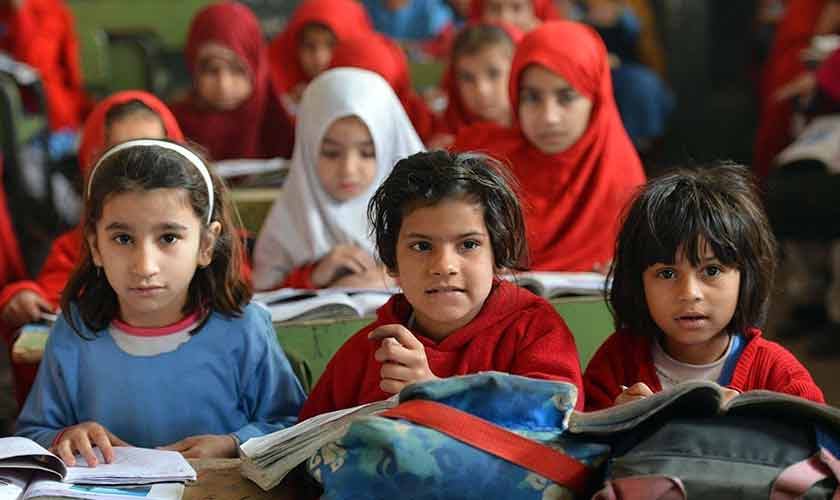
This has disrupted education, impacting millions of students who already contend with unequal opportunities and resource constraints. For many, it is not just a delay but a stark reminder of how external shocks can disrupt learning and aggravate the inequalities.
The government raised the fuel prices by up to Rs 55 per litre and ordered all schools closed for two weeks. In some Punjab cities schools received sudden instructions for shutdowns, leaving families unsure about how education will proceed.
The school closures may indeed alleviate pressure on fuel consumption. However, the decision has significant implications for education. Even a short interruption can set back learning in ways that are difficult to recover from. Already, nearly 77 percent of 10-year-olds are unable to read a simple sentence. The recent school closures threaten to aggravate this situation.
To maintain continuity, schools have been asked to shift to online teaching. In theory, this keeps learning going. In reality, access to digital resources is highly unequal. The transition is meant to allow learning to continue without requiring physical attendance.
The scale of the challenge is stark. Nearly 23 percent of Pakistani children – more than 5 million – lack access to a device that can support remote learning. For them, online education is simply out of reach. The assumption that the students can simply log in overlooks the reality that millions are unable to connect to the internet at all.
Even in households with adequate devices, this imposes a significant cost. The average monthly income is about Rs 82,179. Nearly 63 percent of that goes to food and fuel. Spending on internet data or additional devices is therefore difficult to justify. When budgets are stretched so thin, education often takes a back seat to survival.
Connectivity remains inconsistent across the country. While approximately 57 percent of the population has internet access nationally, the situation is worse in rural provinces. In Balochistan, only around 43 percent of people use the internet. Many remote areas suffer from weak network coverage, slow speeds and unreliable service. Students in these regions face a double challenge: limited access and poor-quality connections.
Beyond geography and income, digital access is determined by gender. While 69 percent of men own an internet-capable device, only 31 percent of women have it. This disparity affects education in households with shared devices, where boys are often prioritised. As a result, girls may have fewer chances to join online classes. The move to home-based learning could thus worsen the gender gap.
The ongoing crisis has shown that connectivity is not a minor concern; it is a core issue. It is crucial for the continuation of education during mobility disruptions. Lacking dependable devices and internet access, millions of children are essentially prevented from learning.
More than 26 million children in Pakistan are already not attending school, mainly due to poverty and limited access. The shift to digital education, especially when it requires paid internet and personal devices, can exclude millions of children. For many families, education is increasingly a privilege rather than a fundamental right.
The risk extends beyond temporary disruption to long-term exclusion. Students missing months of learning are less likely to recover and more prone to falling behind. Ultimately they will be at a higher risk of dropping out. The educational gap between socioeconomic groups is growing.
This raises a key question: is it feasible for an education system to depend on digital solutions when a large part of the population lack access?
Some countries facing similar constraints have taken a more flexible approach. Instead of relying only on the internet, they have used a mix of technologies. Television and radio broadcasts have been effective in some cases in reaching students without internet access. Additionally, printed materials and community-based teaching models have supported ongoing education.
Implementing a multi-layered strategy that combines low-tech options with digital platforms can guarantee learning for all students, not only those with internet access.
Investing in infrastructure over the long term is vital. Key actions include expanding internet access, enhancing reliability and lowering data costs. Without these improvements, digital education risks being unequal and exclusive.
Local innovation provides room for optimism. EdTech platforms are developing solutions suitable for low-bandwidth settings and enabling offline content access. These initiatives are practical and rooted in local contexts but require scaling, support and incorporation into public policy.
Teachers must also be prepared for this transition. With adequate training, they can adapt lessons to various formats and discover ways to engage students across multiple channels. Their role remains vital, particularly in a system where technology cannot entirely replace the classroom.
The ongoing crisis has shown that connectivity is not a minor concern but a core issue. It is crucial for the continuation of education during disruptions. Without dependable devices and internet access, millions of children are essentially prevented from learning.
Ensuring that every child can keep learning, even in times of crisis, is not just an education challenge.
As economic pressures increase and global uncertainty persists, safeguarding education should stay a top priority. The consequences of inaction extend beyond missed school days.
Ultimately, the key question is whether Pakistan can guarantee every child a fair opportunity to learn, even during crises. The answer will influence not only the education system but also the nation’s future.
The writer is a research fellow at the Sustainable Development Policy Institute. He can be reached at [email protected] and tweets @kazmi_m