Print Story
X




Transitioning away from fossil fuels is a need for survival, security and human dignity
| T |
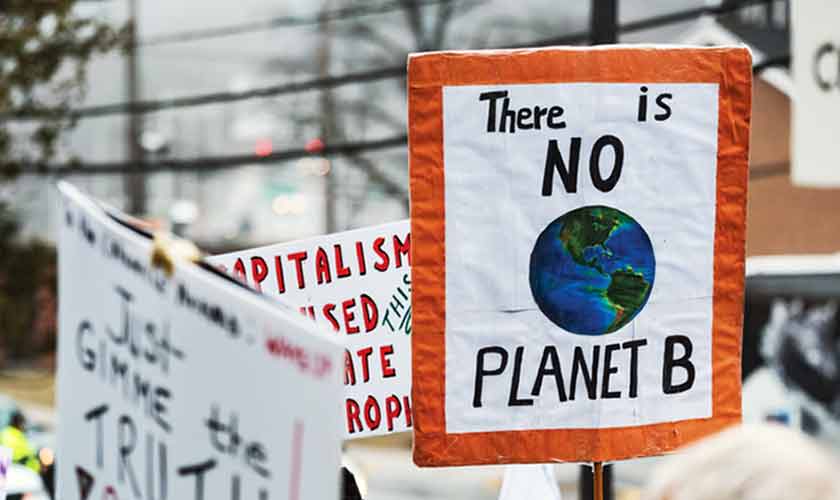
he world set a record recently and not one worth celebrating. According to the International Energy Agency, global coal demand hit an all-time high of 8.77 billion tonnes in 2024. That is 278 tonnes burned every single second. Meanwhile, the floods keep coming, the glaciers keep retreating and the smog over our cities keeps thickening. The theme of Earth Day 2026—Our Power, Our Planet—is a reminder of this challenge; for Pakistan, this remains deeply personal.
Pakistan contributes less than 1 percent to the global greenhouse gas emissions. It also ranks among the ten most climate vulnerable countries. The melting glaciers of the Karakoram; the catastrophic floods of 2022 that submerged a third of the country; the floods of 2025; and the scorching summers that push temperatures past 50 degrees Celsius are lived realities.
Transitioning away from fossil fuels is a need for economic survival, energy security and human dignity—all at once.
The transition under way is driven by millions of Pakistanis making cold economic calculations. Solar power’s share of Pakistan’s electricity generation more than tripled in just three years, climbing from 4 percent in 2021 to 14 percent in 2024—one of the highest growth rates in Asia, according to a Reuters analysis of Ember data. When off-grid systems are included, solar now accounts for roughly 25 percent of Pakistan’s total electricity consumption.
What drove this? Not climate policy.
Electricity tariffs rose by 155 percent over three years. Where government subsidies were withdrawn, households, farmers and businesses turned to rooftop solar. Pakistan imported 17 gigawatts of solar panel capacity in 2024 alone, making it the world’s largest solar panel importer. The economics have been settled by IRENA data: the cost of utility-scale solar electricity fell 90 percent between 2010 and 2023, from $0.460 to $0.044 per kilowatt-hour. Increased solar adoption reduced Pakistan’s oil and gas import bill by around 40 percent between 2022 and 2024, generating savings exceeding $12 billion by early 2026. For a country perpetually squeezed by foreign exchange shortages, that is keeping Pakistan’s economy afloat.
On the solar front, the government’s net-metering framework, which once allowed households to sell surplus electricity to the grid, has been significantly weakened. The buyback rate has been cut by more than 60 percent for new users, reducing the financial return for new solar adopters and raising concerns about whether policy is keeping pace with the energy transition it claims to support. But legislation alone cannot carry this transition. The community must continue to play its role.
Every household that installs a solar panel is reducing national dependence on imported gas. Every farmer who converts a diesel-powered tube well to solar is cutting both costs and carbon. Every person who chooses an electric bike over a petrol motorcycle is casting a vote for cleaner air and a reduced carbon footprint. The data shows that these individual decisions, aggregated across millions of households, can shift national outcomes.
The transition is no longer confined to rooftops. Pakistan’s electric vehicle story is one of the most striking turnarounds in the region. Electric vehicles rose from just 567 registered units in 2021 to more than 80,000 by June 2025, a transformation driven almost entirely by electric motorcycles and rickshaws, the workhorses of Pakistan’s urban mobility. In 2025 alone, EV sales surged by 191 percent year on year, reaching approximately 90,000 units.
The community has been central to this shift.
Delivery riders, students, farmers and small business owners—the people who feel fuel price spikes most immediately—have been among the earliest and most enthusiastic EV adopters. In 2021, Lahore was ranked the most polluted city in the world, with 83 percent of airborne emissions coming from road transport. Every electric motorcycle on the road is a direct reform action.
Critically, legislation is beginning to match this grassroots momentum. Pakistan’s National Electric Vehicle Policy 2025-2030 sets a target of 30 percent of all new vehicle sales to be electric by 2030, rising to 50 percent by 2040 and a net-zero transport fleet by 2060. The government has introduced subsidies of Rs 50,000 for electric motorcycles and Rs 200,000 for rickshaws, backed by an allocation of Rs 4 billion, alongside plans to establish 3,000 EV charging stations across the country by 2030. This could massively reduce emissions.
Businesses must invest in clean supply chains. Researchers and engineers must continue driving down the cost of storage and transmission. Local governments must embed EV infrastructure into urban planning. The federal government must hold the line on its policy commitments, resist the pull of short-term fossil fuel dependency and ensure the benefits of this transition reach low-income communities who cannot yet afford a solar panel or an electric bike.
The renewable energy potential in Pakistan is vast. The community has demonstrated it will lead when the economics make sense. The legislation, for the first time, is beginning to provide a serious framework. If these forces converge—sustained policy, community action and continued investment in clean infrastructure—the path to a sustainable future is not a distant aspiration.
The planet does not grant extensions. But if Pakistan continues on this trajectory, it may yet prove that a developing nation, battered by climate change and constrained by debt, can still make the transition that the planet demands, and in doing so, build a stronger, cleaner and more resilient country for every generation that follows.
The power is ours. So is the responsibility.
The writer is WWF-Pakistan’s climate action and sustainability director.