Print Story
X




Why the future of climate action lies with indigenous wisdom
| I |
n the intense summer heat of Lahore, walking by an old building may feel refreshingly cool. These structures often feature natural ventilation or unique airflow design, missing in most modern urban houses. Whether surrounded by lush greenery or built with traditional red and brown bricks, their architecture distinguishes them from the rest of the city. Structures such as traditional havelis use central courtyards to facilitate air circulation while using materials chosen for the local climate.
One such building is located in the Upper Mall area of Lahore. A long street, lined with greenery, leads to a house tucked away in the back. Here, the air feels different. It is as if the city has suddenly expanded, not in size but in sensory depth. Upon entering it, one finds no white walls or a massive steel gate. Instead, there are bare red bricks and untamed plants that seem to breathe alongside the building. A modest gate, just wide enough for a person to pass, leads inside. The interior is noticeably colder than the surroundings. Even before the lights are turned on, the studio is bathed in the soft glow of the sunset peeking through the windows.
Inside, I meet Kamil Khan Mumtaz, the eminent Lahore-based architect who has dedicated his life to advocating architecture that is sustainable and makes use of traditional materials. “We build using materials the earth provides naturally—clay, stone and lime. We try to limit the use of industrially manufactured materials,” he says. Discussing urban development, Mumtaz offers a frank critique: “We were asked to create a plan for a sustainable city; we concluded that cities, by their very nature, are not sustainable. They consume far more than they produce and survive by compromising the regions that sustain them. Endless development cannot be sustained. It inevitably leads to destruction.”
“Before we set out to even plan sustainable cities, we need to revisit what we mean by sustainable development. The fact is that we are consuming more every day. Unless we maintain an equilibrium and live in harmony with our land, we cannot survive.”
“Our current mode of development is abnormal. It cannot go on. It has already devastated the globe.”
So what should development look like? Mumtaz says, “The best city is a walkable city.”
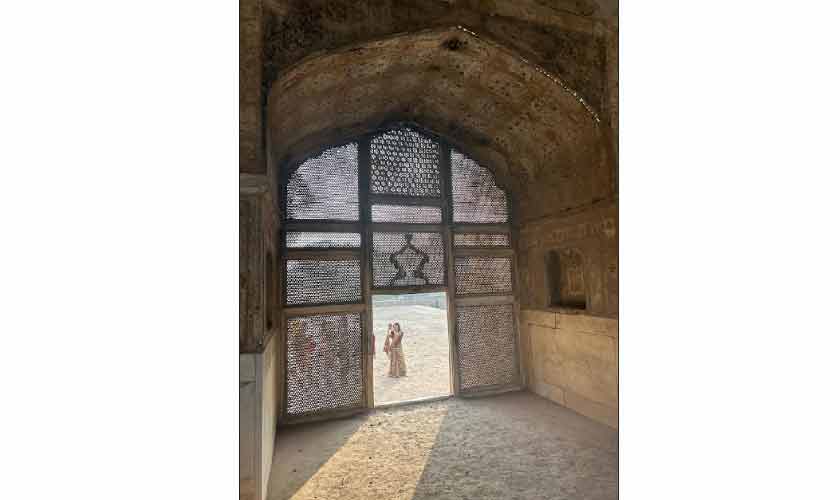
Mumtaz advocates building as we did in pre-industrial times, with materials supported by the land. His argument is not an isolated one. Globally, there has been a shift recently toward indigenous practices to address the climate crisis. Its proponents argue that humanity once coexisted with the planet. However, mass production and rapid development have led to unprecedented environmental damage. Returning to traditional building methods is not a step backward or an opposition to progress. Rather, it is a sign of understanding that indigenous knowledge and traditional practices provide a peek into real sustainability.
These initiatives are being championed far beyond Pakistan as vital climate solutions. In Nanyuki, a small town 200 km from Nairobi, Kenya, Duncan from Habitat for Humanity works with houses made of soil and advocates it as a climate solution. “Houses made of soil like these here have passive cooling,” Duncan says. “When it is hot outside, it is cool inside. When it is cold outdoors, they stay warmer inside because they are made of earth blocks.”
The compressed earth blocks (CEBs) are made by mixing local soil containing sand, silt and clay with water and a small amount of a stabiliser like cement.
These traditional approaches reduce the environmental footprint of construction, ensuring that homes are more accessible to low-income households while making development sustainable and environment friendly. While these traditional building pathways offer solutions to our climate crisis, the core problem remains our understanding of sustainability and development; without changing these, nothing significant can be achieved.
Usama Irfan has earned widespread acclaim for his documentary Dry Wells that amplifies the voices of Thar’s local communities. “When roads were constructed in Thar, in the name of development, they shrank spaces where animals could roam and graze freely. Many animals were killed in road accidents.”
“This ‘development’ polluted the water and deprived people of land,” he says. Irfan, too, says there is an urgent need to redefine development. “Development without social and climate justice can never be sustainable. Those indigenous to a region are the most well-versed and wise regarding the land. A few people in power cannot dictate what happens to the environment. The people and the planet should determine the path; we must listen to them.”
“We need development that is inclusive and just. Else, we do not need it, no matter how sustainable it is made to sound.”
The writer is an investigative climate journalist and educator based in Lahore.