Print Story
X




There is still hope in the collective power of rejecting disposable consumption and demanding transparency and accountability
| T |
he world is currently navigating a climate crisis of unprecedented scale, marked by a terrifying acceleration of ecological collapse. From the incineration of ancient forests to the acidification of our oceans and the erratic, violent swings of global weather patterns, the warnings have shifted from future projections to lived realities.
Yet, as the planet reaches critical tipping points, the gap between scientific urgency and political action has widened into a chasm.
For decades, global governance has been characterised by a cycle of high-profile promises and systemic failure. International forums like the COP summits and the World Economic Forum have become venues for lip service. Performative commitments to net zero lack binding enforcement or genuine structural change. This disconnect is epitomised by the United States’ erratic relationship with international climate agreements, where pulling out of the Paris Agreement signalled to the world that political expediency takes precedence over planetary survival.
Perhaps more chilling is the shift in how we perceive the natural world. Discussions have emerged regarding futures where access to basic natural resources: water, clean air, fertile soil, will be commodified. In this neo-liberal vision, these essentials are no longer viewed as fundamental human rights, but as market assets to be traded and sold.
When these essentials are seen as commodities, the crisis is no longer just environmental but one of equity.
This blind pursuit of growth extends to the digital frontier. While the world is told that artificial intelligence will provide solutions to the climate crisis, there is a hyper-push for AI expansion without any balancing of its physical cost. As Karen Hao argues in Empire of AI, the digital revolution is not “cloud-based” in any ethereal sense; it is grounded in a brutal material reality. AI requires staggering amounts of energy and water (for cooling), often siphoning resources from local communities to power the data centres of a few corporate giants.
It is becoming increasingly clear that climate change and social justice are not separate issues, but two sides of the same coin. Greta Thunberg has been instrumental in connecting these dots, arguing that the climate crisis is a result of a system that prioritises profit over people and the planet. The impact is visceral: the Global North continues its culture of hyper-consumption and waste just as the Global South bears the brunt of the devastation. People suffer through droughts, floods and crop failures caused by emissions they did not primarily produce. Even in the Global North, a stark socio-economic gap exists so that the poor are the first to be displaced by environmental disasters.

The scale of this inequality is staggering.
A study by Oxfam revealed that the collective wealth of billionaires surged by $2.5 trillion in 2025, almost equivalent to the total wealth held by the bottom 4.1 billion people on the planet. This concentration of wealth allows a tiny elite to dictate global policy while the masses suffer. Furthermore, the ecocide resulting from ongoing wars—the bombing of infrastructure; the release of toxic chemicals; and the destruction of landscapes—is rarely factored into policy-level climate accounting. Those who initiate these conflicts are not just political actors; they are complicit in the acceleration of ecological collapse.
Despite this bleak landscape, a wave of grassroots innovation is rising. The most effective solutions are often coming from the places already seeing the consequences of the crisis. From indigenous land management practices to local sustainable agriculture, communities are innovating out of necessity. Parallel to this, a new generation of youth is asking critical questions at an early stage, refusing to accept the incrementalism proposed by their elders.
At this moment of heightened uncertainty and environmental stress, one conclusion is clear and broadly shared: progress in protecting our land, air and water is real, resilient and ongoing. Environmental stewardship has never depended on a single administration, institution or election. It is sustained by the daily decisions of communities, educators, workers, innovators and families who understand that protecting the places they live and work in is both a responsibility and a long-term investment.
In an environment where one can feel helpless, we must remember that controlling the purse strings is a powerful form of resistance. Being a responsible consumer is not just a lifestyle choice; it is a signal to the systems of power that the ‘business as usual’ is no longer acceptable.
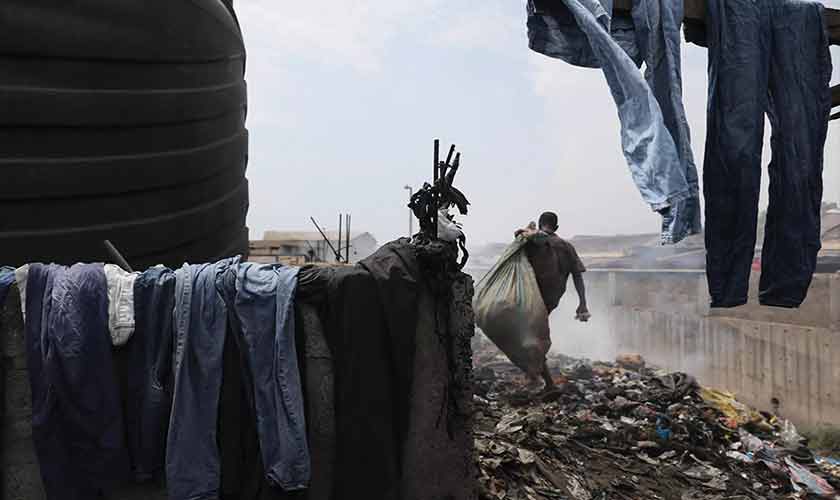
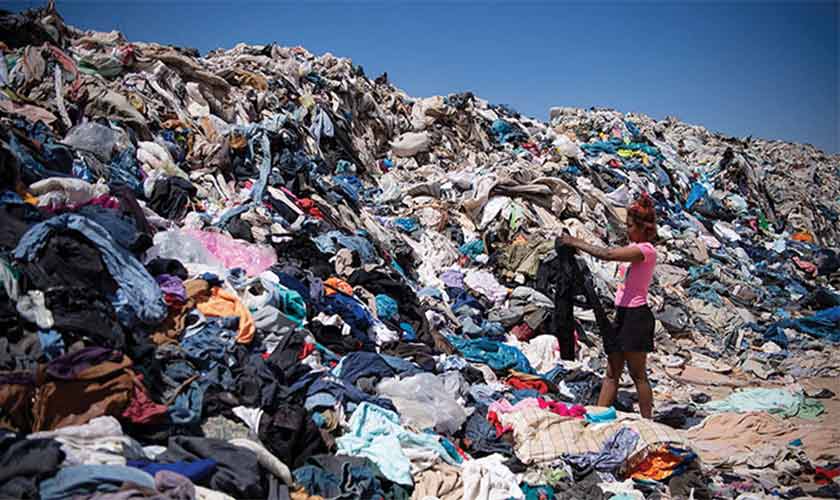
The fashion industry provides a stark example of why this matters. Less than 1 percent of clothing is truly recycled; most recycling is actually downcycling into lower-grade industrial wipes or insulation. Worse, the production process involves carcinogenic and mutagenic chemicals including phthalates, APEOs and BPAs that disrupt hormones and cause cancer. ‘Forever chemicals’ used for water resistance are now found in minuscule concentrations in human blood. They are linked to fetal abnormalities and immune suppression.
The costs are not just biological but also atmospheric.
In 2023, apparel sector greenhouse gas emissions increased by 7.5 percent, driven by the rise of ultra-fast fashion and the heavy use of polyester. This pollution extends to the ends of the earth; 92 percent of microplastics found in the Arctic Ocean are microfibers, 73 percent of those polyester.
By rejecting the culture of disposable consumption and demanding transparency and accountability, we force the hand of those who believe they can get away with anything. When we shift our demand, the market must follow. There is hope in this collective power.
The writer is a communications, public relations and sustainability professional. Her X handle: @FatimaArif.