Print Story
X




A coach who has consistently prioritised athlete development, javelin-throwing in particular
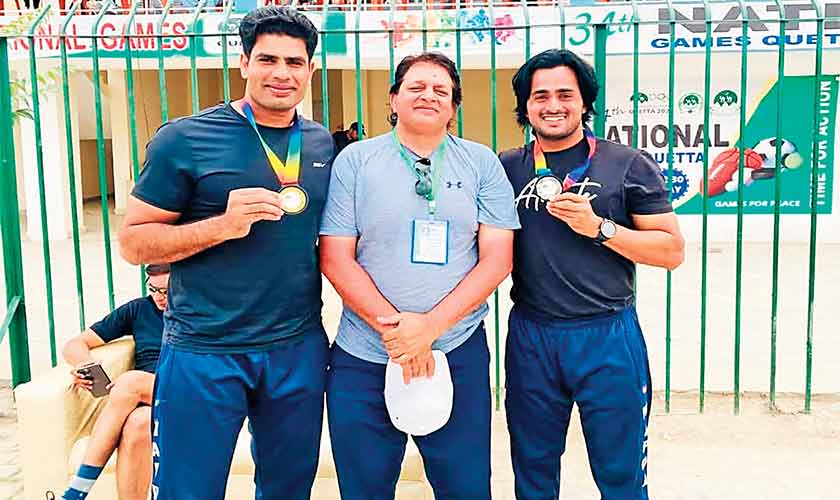
The coaching career of Fayyaz Hussain Bukhari, one of Pakistan’s most respected javelin mentors, reflects a paradox of measurable success and recurring professional setbacks, raising broader questions about athlete management and institutional decision-making in the country’s athletics structure.
Bukhari, a senior coach affiliated with WAPDA, has long been regarded within Pakistan’s track and field community as a diligent and selfless figure. Over the years, he has worked closely with leading javelin-throwers, most notably Olympic gold medallist Arshad Nadeem and national No. 2 Yasir Sultan. Despite his contributions to their development, his coaching assignments have repeatedly ended under circumstances that have puzzled observers.
Bukhari played a central role in Nadeem’s early rise, overseeing his progression to the global stage. Under his guidance, Nadeem qualified for the Tokyo Olympics 2020, where he produced a landmark fifth-place finish in the javelin final, widely considered a breakthrough moment for Pakistan’s athletics on the world stage.
However, shortly after that achievement, Bukhari was removed from his position. He was replaced by Salman Butt, under whom Nadeem’s career reached new heights, including a silver medal at the World Championships and a historic gold medal at the Paris Olympics 2024.
During this period, South African coach Terseus Liebenberg also contributed to refining Nadeem’s technique, an influence the athlete himself publicly acknowledged, noting that he had acquired technical insights previously unavailable to him domestically.
Following his departure from Nadeem’s camp, Bukhari was assigned to train Yasir Sultan, who at the time had struggled to move beyond the 75-metre mark. Under Bukhari’s supervision, Yasir demonstrated notable improvement. His performances peaked at the 2023 Asian Championships in Bangkok, where he achieved a personal best throw of 79.93 metres and secured a bronze medal, his first podium finish at the continental level.
Despite that progress, Yasir fell short of expectations at the Asian Games 2023 Hangzhou, narrowly missing a medal. Over the subsequent two years, he collected a handful of international medals, though largely at lower-tier competitions that did not significantly enhance his global standing. More concerning for athletics authorities was his inability to replicate or surpass his personal best.
The situation took a decisive turn recently when Yasir formally requested the WAPDA Sports Board to appoint a new coach for him. Initially suggesting a former hurdler, Khalil, he was reportedly advised to consider a more experienced option. As a result, Rafique Ahmed, also from WAPDA, was appointed despite having limited experience at the elite level in javelin coaching, though he is a qualified coach.
Sources familiar with the matter indicate that Yasir had privately expressed doubts about his ability to progress further under Bukhari’s guidance. In discussions involving figures close to the Athletics Federation of Pakistan (AFP), the athlete maintained that a change in coaching was essential for his development. Bukhari, on the other hand, attributed Yasir’s stagnation to a lack of focus.
The divergence in perspectives underscores a recurring tension in elite sport: the balance between athlete autonomy and coaching authority. For officials within the AFP, Yasir’s plateau, despite consistent international exposure, was a cause for concern and likely contributed to their willingness to accommodate his request.
For Bukhari, however, the episode represents another setback in a career marked by untimely exits. Those close to him describe a coach who has consistently prioritised athlete development over personal gain. He is said to have expressed openness to Yasir training abroad if it could enhance his performance, reflecting a broader commitment to the athlete’s success.
Yet Yasir’s decision to bypass direct engagement and approach WAPDA for a coaching change has raised eyebrows. Sources aware of Bukhari’s perspective suggest he was both surprised and disappointed, believing that Yasir should have consulted him before writing to WAPDA.
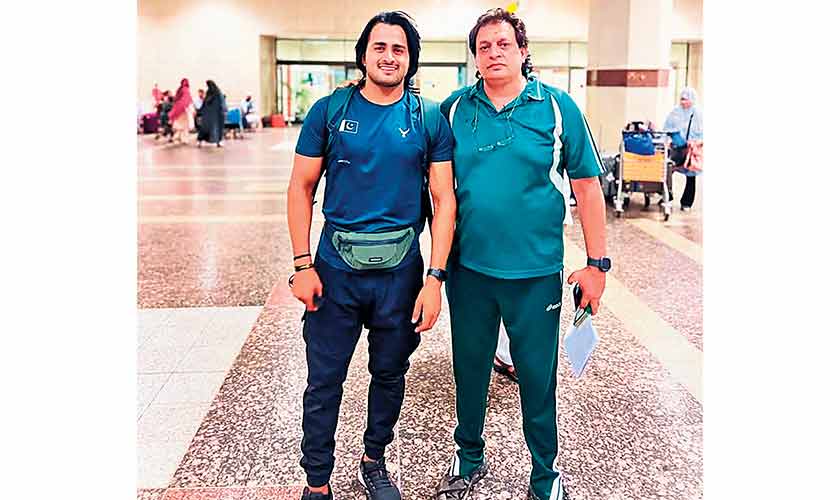
The development has also sparked debate over the growing influence of athletes in administrative decisions. And yielding to such demands without a structured evaluation process could set a precedent, potentially undermining coaching stability and inviting internal politics into team and athletes dynamics.
If a change was deemed necessary, a more established figure such as Salman Butt, already working successfully with Nadeem, could have been considered, or alternatively, that Yasir should have been provided opportunities to train abroad.
Amid these developments, Bukhari’s contributions risk being overshadowed. His role in elevating both Nadeem and Yasir during critical phases of their careers is widely acknowledged within informed circles. Yet, despite years of service, he has reportedly struggled to secure a stable contractual framework from institutions such as the Pakistan Sports Board and the Inter-Provincial Coordination Ministry.
However undeterred, Bukhari continues to invest in the future of the sport. He remains actively engaged in coaching a new generation of athletes, including his sons Hussain Bukhari and Mohsin Bukhari, with the aim of sustaining Pakistan’s presence in javelin at the international level.
His story reflects both the promise and the fragility of Pakistan’s athletics ecosystem where individual dedication often compensates for structural inconsistencies and where success does not always guarantee security.
As the debate surrounding Yasir Sultan’s decision continues, it also serves as a moment of reflection for the country’s sporting authorities. Ensuring transparency, merit-based decisions and institutional support for coaches may prove essential not only for safeguarding careers like Bukhari’s, but also for maintaining the long-term integrity and progress of Pakistan’s athletics on the global stage.
Despite all such setbacks sports circles believe Bukhari deserves accolade, of course a civil award, as he has worked well with both Arshad and Yasir and no onn can deny the fact.