Print Story
X




Conscience speaks the truth, distinguishing right from wrong
| W |
orldwide, April 5 is observed as the International Day of Conscience—a reminder that peace and harmony is not merely the absence of conflict but the presence of justice, empathy, tolerance and diversity. It is also a call for individuals and states alike to reflect whether their actions have nurtured or undermined these values.
Conscience is not an abstract ideal. It is the inner compass that guides one in distinguishing right from wrong, and thus addressing the root causes of human suffering. Without it, individuals and institutions drift away from their foundational purpose.
The Universal Declaration of Human Rights affirms that all human beings are endowed with reason and conscience; and that freedom of conscience is a fundamental right. Indeed, it is the mother of all freedoms. Without it, freedom of expression, association and religion lose their meaning. Deny freedom of conscience, and all other freedoms are diminished.
This year, the Day of Conscience arrives at a moment when conversations on right and wrong and freedom and suffocation are urgently needed on one hand and increasingly difficult on the other.
Over the past year, there has been a steep decline in the protection of fundamental rights. This decline is not theoretical. It is visible in our daily treatment of the minorities and the marginalised in the streets; reflected in our courts; embedded in our political processes; and visible in the way so many voices are muzzled in the media. This erosion of freedom becomes visible when a dozen concerned citizens coming together to raise a voice against a perceived injustice have to worry about being whisked away. It is in plain sight when a religious minority is stopped from observing its religious rites even in the privacy of individual homes. It is felt in the unspoken anxieties of ordinary citizens.
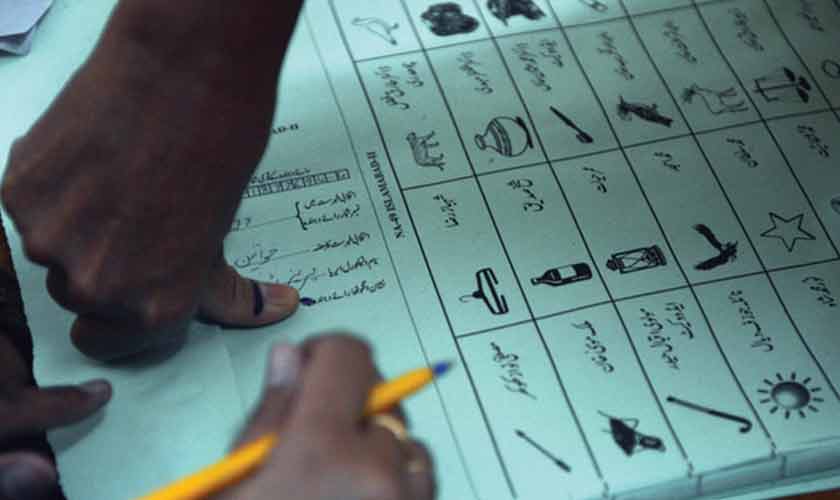
Two developments since the Day of Conscience last year illustrate this.
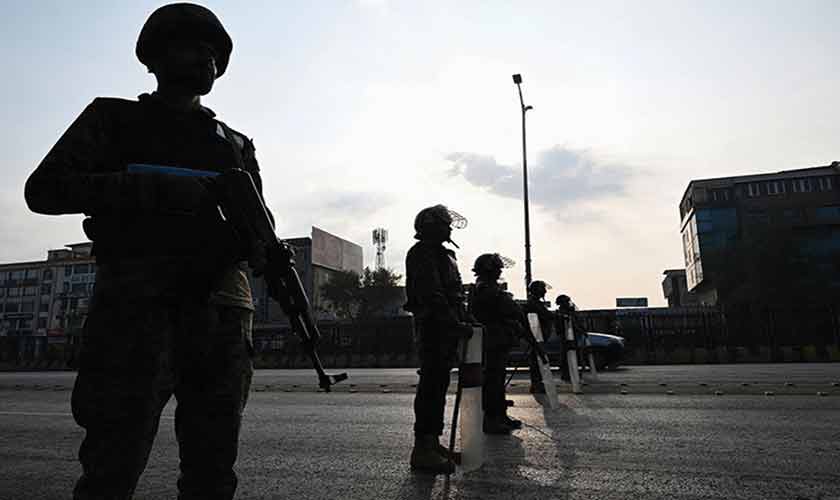
First, sadly, the Supreme Court upheld military trials of civilians. Military courts operate behind closed doors. Their procedures lack transparency. They, therefore, cannot demonstrably protect the right to a fair trial. Access to independent judicial oversight gets restricted. The accused cannot always freely choose legal counsel. These courts do not always render ‘speaking’ verdicts open to public scrutiny.
Trying civilians in such courts is not merely a legal deviation—it is an existential question about the relationship between the state and its citizens. It normalises an exception and blurs the line between civilian and military authority. History tells us that once such lines are blurred, they are not easily restored.
Second, the 27th Amendment was bulldozed through the parliament, marking a further shift away from political and civilian supremacy. Framed in the language of security, this legislation has turned on its head the constitutional architecture and the framework of fundamental rights enshrined in Articles 8 to 28.
By expanding both the formal and informal role of the military in governance, weakening parliamentary oversight and diluting the autonomy of civilian institutions, it has further marginalised people, the fountain of all political power. Its provisions granting immunity from accountability to certain state functionaries go against the very essence of accountability and rule of law.
The International Day of Conscience must be more than symbolic. It must be a call to reclaim the constitutional space that belongs to the people.
The message for the citizenry seems to be that civilian supremacy is dispensable; constitutional norms are elastic; and that political space can be re-engineered to the advantage of unelected individuals and institutions.
Unaccountable privilege results in a shrinking civic space, a weakened parliament, a subdued media and a citizenry hostage to fear.
The talk about shrinking space is not an abstraction. The fact is reflected in the recent treatment of human rights defenders and in the unexplained incarceration of political activists.
When scores of opposition leaders including the leaders of opposition in the Senate and the National Assembly are sentenced to long terms in jail and not many stand up to speak for them, a feeling of disquiet is not an abstraction but a reality.
On this Day of Conscience, it is difficult not to point out the systemic erosion of rights: arbitrary detentions; enforced disappearances with impunity; alleged extra judicial killings that go uninvestigated; shrinking space for freedom of expression; weaponisation of the PECA; harassment of journalists; and the intimidation of human rights activists.
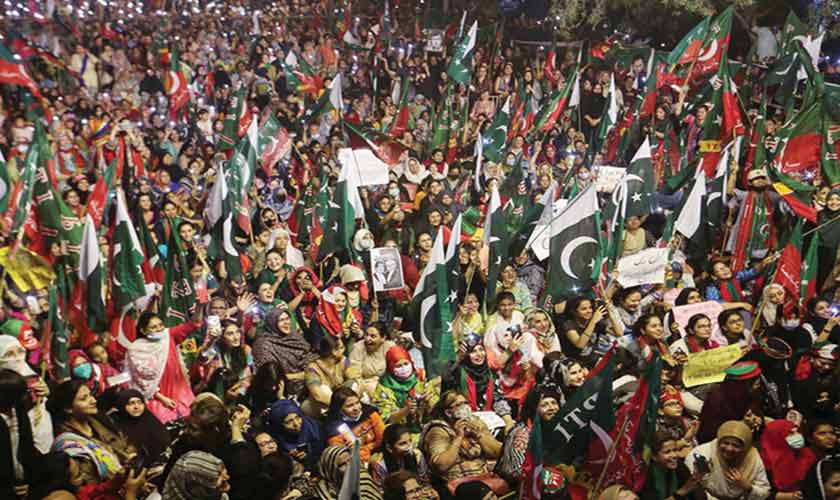
When constitution begins to tilt away from the citizen and towards coercive apparatus of the state, human rights become the first casualty. This is a moment not only for reflection but also for resolve.
Pakistan has faced difficult times before. We have endured martial laws, political upheavals and constitutional deviations. The present challenge is more subtle—and, therefore, more insidious.
Undemocratic arrangements are being clothed in constitutional legitimacy. Extraordinary measures are being normalised through judicial sanction. Freedoms are not only curtailed through overt force but are increasingly constrained through abuse of judicial processes.
The danger of such normalisation lies in its quiet permanence.
The observance of International Day of Conscience must therefore be more than symbolic. It must be a call to reclaim the constitutional space that belongs to the people.
Let us speak clearly and without hesitation: civilian trials must remain in civilian courts; constitutional amendments that distort democratic balance must be revisited; human rights must be placed at the centre—not the margins—of state policy; and no one should be above accountability. Citizens must reclaim their rightful role as the true sovereigns of the Republic.
If we, the people, remain silent, rights will continue to recede and fear will advance. If we listen to the call of conscience, we can still redeem the foundational promise of the republic: the rights of its citizens are sacred, inviolable and non-negotiable.
Conscience speaks the truth. It is the quiet tribunal within, where no falsehood can endure long. It speaks in whispers reminding us of the truth we know but might hesitate to acknowledge. The Quran in Surah 103 ordains: “Man is bound to lose himself unless he is of those who attain to faith, do good works and enjoin upon one another the keeping to truth and patience in adversity.”
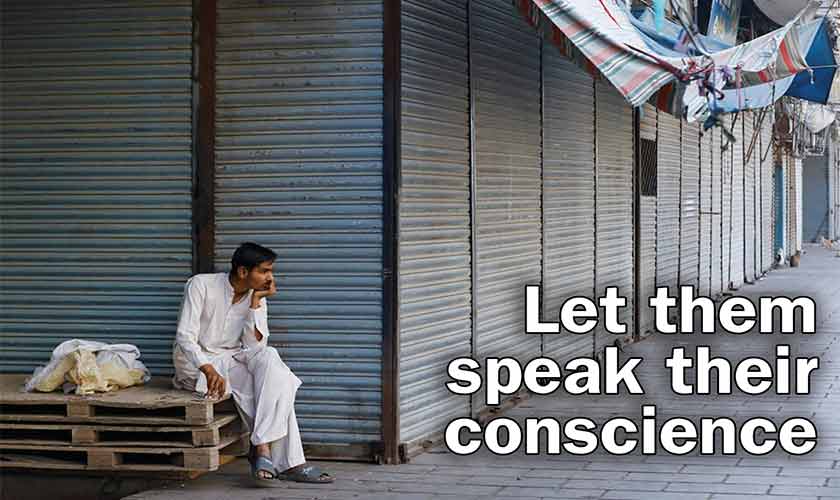
Let everyone speak their conscience and advance the cause of peace and harmony, tolerance and empathy.
The writer is a former senator, a newspaper editor and life member of the Human Rights Commission of Pakistan.