Print Story
X




With the passage of time, the ritual of Eid film-going has changed beyond recognition
| T |
he number of films released this Eid-ul Fitr was probably the lowest ever, barring the first years after the creation of the country. In all, only three films were thrown open for public viewing on what used to be the most important day in the cinema calendar.
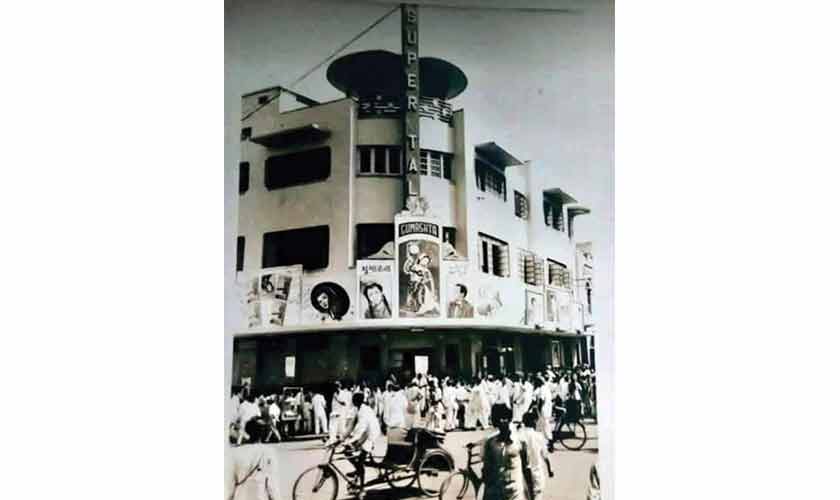
It was not always like this. One can still recall the dramatic build-up to Eid, when publicity campaigns would sweep through towns and cities. Tongas carried loud announcements, radio spots filled the air and billboards rose high above the streets. Some were as tall as seventy feet, matching the grand depictions described by certain maulanas. The scale was matched by the excitement they generated.
Many wanted to see the film on the Eid day. Long queues would form outside cinemas, stretching in serpentine coils in front of the box office. People struggled, fought, snatched, pushed and shoved to get tickets. Some even took off their shirts for fear of losing them in the crush. Many were beaten for jumping the queue or trying to be over-smart. It was all considered worth it if a ticket was secured. The success was celebrated with the pomp of a small victory, almost like holding a trophy.
As Kidar Sharma once said in a documentary, the monkey-like succeeded most often. He himself did, as he admitted, because he was monkey-like in his youth. Coming from one of the most successful film directors of his time, the remark captured something essential about the frenzy and passion of those days.
The tickets were cheap. For the man in the street, cinema was an affordable fantasy, a brief voyage into another world. It did not require much saving or sacrifice. It was part of the rhythm of life, especially on Eid.
Today, despite efforts by both provincial and federal governments to revive the film industry, the take-off is still far from happening. Tickets are expensive, and the idea of cinema as a cheap and accessible escape has faded. The return to that golden age, when a visit to the cinema was within easy reach, seems distant.
Many wanted to see the film on the Eid day. Long queues would form outside cinemas, stretching in serpentine coils in front of the box office.
This is not only a local story. Cinema is facing a crisis the world over. This was evident even at the Oscars ceremony held last week. Hollywood was once known for a particular kind of cinema: well-made films that also did well at the box office, both at home and abroad. These films were not too avant-garde. They were easy on the eye and the mind, larger-than-life yet still open to straightforward interpretation.
This year, however, the film that won top honours, One Battle After Another, is a brilliant effort but failed to make money. It could not even balance its books. This goes against the long-standing Hollywood belief that art and profit could go hand in hand. Another widely appreciated film, Hamlet, also did not create any financial sensation.
Perhaps the cinema we grew up with was the child of a particular set of technologies, those that allowed a creative handling of the moving image in a specific way. New technologies and new modes of transmission have changed the meaning of aesthetic expression. The way films are made, distributed and watched has shifted.
The giants of movie production, the big studios, are themselves changing hands. Some are even on the auctioneer’s list. A new order may be emerging, though it is not yet clear what shape it will take.
In this changing landscape, the old rituals of cinema-going feel even more distant. The queues, the excitement, the shared experience of watching a film on Eid day belong to another era. What has replaced them is still uncertain.
And yet, there is hope. This Eid, three films, Aag Lage Basti Main, Dilli Gate and Bullah, have been released. It is hoped that they will do well at the box office, in defiance of the broad trends.
Whether they succeed or not, they carry a reminder of what cinema once meant: not just entertainment, but an event, a gathering, a moment of collective anticipation: something larger than the screen itself.
The writer is a culture critic based in Lahore.