Print Story
X

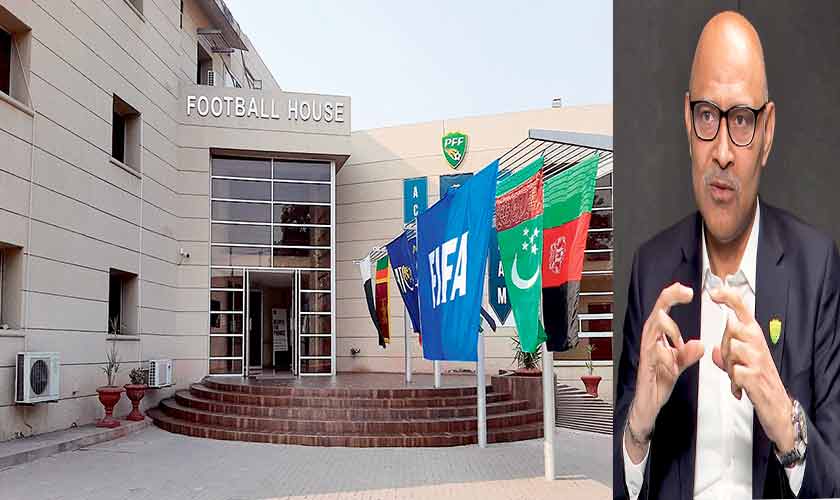
There comes a moment in every sport’s journey when survival is no longer enough, when ambition must replace dependency, and vision must confront reality. For Pakistan football, that moment appears to have arrived.
Recent remarks by Shahid Niaz Khokhar, Chief Operating Officer of the Pakistan Football Federation, reflect not just administrative intent but a philosophical shift. The message is clear: Pakistan football can no longer afford to exist on borrowed oxygen.
For years, the federation has leaned heavily on financial assistance from FIFA, a lifeline that ensured continuity but never guaranteed progress. Khokhar’s candid admission that FIFA funding is merely “kick-off money” is both refreshing and revealing. It underscores a truth many have long ignored: external aid can sustain activity, but it cannot build a footballing nation.
Relying on FIFA grants has created an illusion of stability, an operational comfort zone where survival was mistaken for growth. But football ecosystems are not built on allowances; they are built on investment, structure, and vision.
Pakistan’s football crisis has never been about passion. The streets, schools, and informal grounds across the country tell a different story, one of raw, untapped potential. The real crisis has always been institutional: the absence of a coherent system that connects talent to opportunity. Khokhar’s emphasis on financial independence is therefore not just administrative reform, it is existential necessity.
At the heart of this transformation lies the proposed revival of a national league, likely under the banner of the Pakistan Premier League. If executed with professionalism, transparency, and commercial clarity, this could become the cornerstone of Pakistan’s football revival. But let us be honest: Pakistan has seen leagues before, announced with optimism, only to dissolve into inconsistency.
A credible domestic league is more than a competition. It is a marketplace. It attracts sponsors, engages broadcasters, and, most importantly, gives players a pathway. Without it, talent remains scattered, invisible, and ultimately wasted. The federation’s pursuit of local sponsorships is encouraging, but sponsorship follows structure, not the other way around. Brands invest where there is visibility, reliability, and return. The PFF must first build a product worth investing in.
The role of Mohsin Gilani, as highlighted by Khokhar, will be crucial. International connections can open doors, but domestic credibility will determine whether those doors stay open.
Pakistan football does not lack goodwill; it lacks continuity. Every new administration speaks of reform, yet the sport remains trapped in cycles of interruption. Breaking this cycle will require more than intent, it will demand institutional discipline.
Khokhar’s remarks on geopolitics-particularly regarding international tensions affecting football, highlight a familiar frustration. Football, ideally, should transcend politics. In reality, it often becomes its casualty. Yet within this challenge lies an opportunity.
The idea of regional rivalries, especially between Pakistan and India, is not merely romantic, it is commercially transformative. Cricket has already demonstrated how rivalry can drive global interest. Football, with its universal appeal, could replicate that success if given the chance.
Neutral venues, international audiences, and regional participation from countries like Bangladesh and Afghanistan could turn South Asian football into a vibrant, marketable product. But again, this requires alignment, between federations, governments, and commercial stakeholders.
One of the most pragmatic admissions from Khokhar is the federation’s stance on government support. While operational independence is a worthy goal, infrastructure remains a different equation. No footballing nation has built stadiums, academies, and training facilities without state involvement. Expecting otherwise is unrealistic.
The real challenge, therefore, is not whether the government should be involved, but how effectively that involvement is structured. Transparent partnerships between the public and private sectors could accelerate development without compromising autonomy.
There is no shortage of optimism in Khokhar’s vision. Financial independence, a revived league, regional engagement, and modern systems, these are all the right ideas. But Pakistani football does not suffer from a lack of ideas. It suffers from a lack of execution.
The coming months will be decisive. Announcing a league is easy; sustaining it is not. Securing sponsorships is promising; retaining them requires credibility. Speaking of reform is inspiring; delivering it demands accountability.
If the Pakistan Football Federation can translate its current intent into consistent action, Pakistan football may finally step out of its long shadow of uncertainty. The stakes are high, but so is the potential. Football in Pakistan does not need saving. It needs structuring. It does not need sympathy. It needs strategy.
And perhaps, for the first time in a long while, there is a sense that the conversation is finally moving in the right direction. The real question now is simple: Will this be another chapter of promises, or the beginning of a new era?