Print Story
X




Flawed selection strategies and leadership decisions keep Pakistan away from reaching new heights while India’s back-to-back T20 World Cup wins cement their status as cricket’s modern-day giants

India capped a remarkable period of dominance by becoming the first team to win three titles at the ICC Men’s T20 World Cup and the first to successfully defend the trophy. The triumph marks a fitting conclusion to the 2024-26 cycle, with the most consistent and dominant side of the period once again claiming the world title.
The Men in Blue also created history by becoming the first team to win the tournament on home soil and the first to achieve back-to-back T20 World Cup victories.
In contrast, Pakistan endured another disappointing campaign, failing to qualify for the semi-finals and leaving fans frustrated. The Green Shirts have lifted the ICC Men’s T20 World Cup only once, back in 2009 under the leadership of Younis Khan. Their most recent ICC triumph came eight years later when Pakistan defeated India to win the ICC Champions Trophy in 2017 in England.
That victory remains Pakistan’s last ICC title. Since 2020, however, India have asserted their supremacy on the global stage, winning three major ICC tournaments - the 2024 T20 World Cup, the 2025 Champions Trophy, and now the 2026 T20 World Cup.
Ahead of the 2026 Men’s T20 World Cup, India held top rankings in ODI and T20I formats, while Pakistan were ranked behind 4th and 6th.
Historically, Pakistan enjoyed considerable success against India during the 1970s, 1980s and much of the 1990s, often dominating the rivalry across formats and venues. In recent years, however, the balance of power has shifted dramatically. Since 2020, the two sides have met nine times, with India winning seven matches compared to Pakistan’s two victories.
Repeated defeats against their traditional rivals have exposed deeper structural issues within Pakistan cricket. Critics argue that the administration has yet to learn meaningful lessons from these set-backs.
As a supporter of the Pakistan national cricket team, it is always painful to watch our side repeatedly lose to the Indian team. While emotions run high in such encounters, but the reality is difficult to ignore.
India currently appears stronger in almost every department, particularly in the fast-paced Twenty20 cricket format. Their lineup boasts explosive openers, a dependable and technically sound middle- order and powerful all-rounders capable of finishing games under pressure.
Pakistan, on the other hand, has been struggling for years to settle on a balanced and consistent winning combination, often experimenting with players but failing to produce the stability required to compete at the highest level.
One recurring concern is the frequent change in leadership at the Pakistan Cricket Board. With every change of federal government, it has almost become routine to appoint a new PCB chairman. Political considerations often appear to outweigh cricketing expertise, with administrations keen to place their preferred individuals in key positions regardless of their understanding of the sport.
The consequence of appointing non-cricketing administrators is an overreliance on advisors and committees. Selection panels are frequently formed based on personal preference rather than a transparent merit-based process.
Former players such as Aaqib Javed, Asad Shafiq, Azhar Ali, Misbah-ul-Haq and Sarfraz Ahmed have the part of the selection structure.
While each of them enjoyed distinguished playing careers and served Pakistan with distinction but the critics question whether the system adequately evaluates their expertise in the modern T20 format. The shortest format of the game demands specialized knowledge of aggressive batting, innovative bowling strategies, and data-driven selection - areas where experience and strategic planning are crucial.
After the T20 World Cup debacle, former ICC umpire Aleem Dar has resigned from the Pakistan men’s national selection committee after expressing frustration with the authority given to head coach Mike Hesson and what he described as the silence of fellow committee member Aqib Javed.
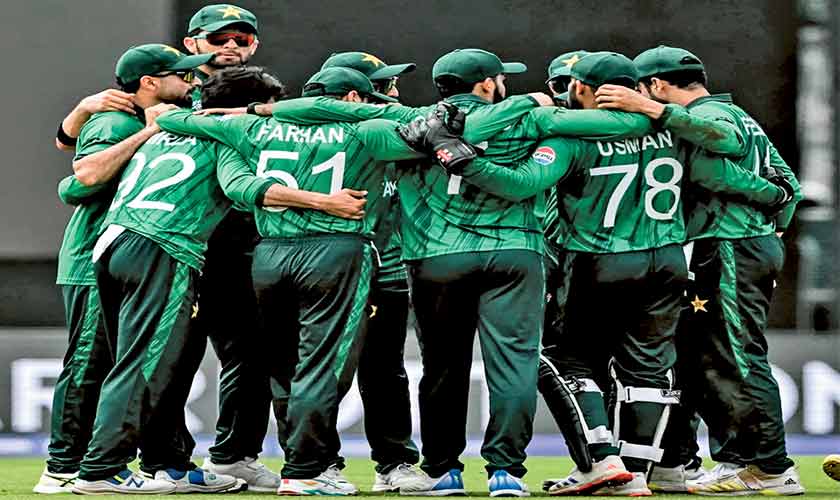
Dar opposed the inclusion of Babar Azam, Shadab Khan, and Usman Khan in Pakistan’s squad for the ICC Men’s T20 World Cup. However, at the insistence of the head coach and the team captain, those players were ultimately included in the squad.
The T20 World Cup results, however, show a clear performance gap between the two teams (Pakistan and India) particularly in global tournaments and limited-over formats. While raw talent exists in both countries, India’s consistency and Pakistan’s unpredictability raise questions about underlying structures shaping elite cricket outcomes.
Pakistan’s defeat has once again triggered the familiar reaction within the country’s cricketing circles: calls for sweeping changes in leadership, players, and coaching staff. However, history shows that replacing captains, sacking coaches, or overhauling the squad after every major setback rarely provides a sustainable solution. Pakistan cricket has repeatedly fallen into this cycle, yet the underlying structural problems often remain unaddressed.
The real issue lies not in personalities but in flawed selection strategies-particularly the continued misjudgment of which players are best suited for the T20 format. Modern T20 cricket demands aggressive stroke play, high strike rates, adaptability, and the ability to shift momentum within a few overs. Unfortunately, Pakistan’s squad for the tournament reflected a mismatch between player skill sets and the demands of the shortest format.
One of the most debated selections was that of Babar Azam. There is no doubt that Babar remains among the finest batsmen Pakistan has produced in the modern era. His classical technique, consistency, and ability to anchor an innings make him invaluable in longer formats. In One Day International cricket and Test cricket, where patience and calculated innings-building are essential, Babar’s strengths often translate into match-winning performances.
However, the T20 format requires a different approach. Batters must score quickly from the outset, maintain high strike rates, and keep the scoreboard moving under pressure. Babar’s style, which relies on constructing an innings and accelerating later, is often better suited to formats that allow more time for consolidation.
Babar Azam also struggled to make a significant impact. In six matches, he scored 91 runs at an average of 22.75 with a strike rate of 112.34. Notably throughout the tournament he managed to hit only one six and seven fours.
Despite this widely discussed limitation, he was included in the T20 World Cup squad. When he failed to deliver the explosive performances expected in the format, the response from selectors was equally puzzling: he was dropped from Pakistan’s ODI side-precisely the format where his skills are most effective.
Leadership decisions also raised eyebrows. Salman Ali Agha, a capable and hardworking cricketer, was entrusted with leading the side in the shortest format. Yet questions remained about whether his playing style aligns with the pace and intensity required in T20 cricket.
His performance during the tournament did little to silence those doubts. In six innings, he managed only 60 runs at an average of 10, with a strike rate of 130. These numbers raised serious concerns about his selection in the squad and, more importantly, his appointment as captain. For a leader in T20 cricket, where aggressive scoring and momentum are crucial, such returns inevitably sparked debate among fans and analysts alike.
Leadership in such a fast-paced format requires not only tactical awareness but also players whose natural game fits the rhythm of high-scoring contests. Critics argue that the team management overlooked this crucial factor.
Another major talking point in the aftermath of Pakistan’s early exit was the absence of Saim Ayub. In the weeks leading up to the tournament, considerable hype surrounded the young opener. Sections of the media and some analysts suggested that his inclusion might have significantly changed Pakistan’s fortunes. Ironically, Ayub had not even been part of Pakistan’s squad for the recent ICC Champions Trophy held in Pakistan. Yet the narrative quickly shifted to portray his absence as a decisive factor in the World Cup disappointment.
But in the T20 World Cup, Saim managed only 70 runs in five appearances, average just 14 and a strike rate 137.25.
Apart from Sahibzada Farhan and Fakhar Zaman, Pakistan’s lineup lacks players like Sanju Samson, Abhishek Sharma and Ishan Kishan, who consistently score over 10 runs per over in the power play. Samson, with a strike rate of 199.37, has hit 24 sixes and 27 fours, while Sharma (158.42) and Kishan (193.29) also excel in maintaining high strike rates.
Pakistan also lacks an all-rounder like India’s Hardik Pandya, who contributes both with the bat and ball. Pandya boasts a strike rate of 160.74 with the bat and has taken nine wickets with the ball.
In terms of pace bowling, Pakistan falls short of having a frontline bowler like India’s Jasprit Bumrah, who not only controls the run rate in the death overs but also takes crucial wickets.
Bumrah finished as the top wicket-taker in the World Cup with 14 wickets, averaging 12.42 and maintaining an exceptional economy rate of 6.21.
In contrast, Pakistan’s star fast bowler Shaheen Shah Afridi, despite taking eight wickets, struggled with a average of 22.37 and a high economy rate of 10.52, highlighting the clear gap between the two premier bowlers.
If Pakistan cricket truly wants to move forward, the focus must shift from reactionary changes to long-term planning. Selection committees must prioritize players whose skill sets match the specific demands of each format. Domestic tournaments should be structured to identify and groom aggressive T20 specialists, while maintaining a separate pool of players suited to Tests and ODIs.
Only by addressing these systemic issues-rather than resorting to the usual post-defeat reshuffles-can Pakistan build a team capable of competing consistently on the global stage. The lessons from the ICC Men's T20 World Cup 2026 should therefore serve not as a trigger for another round of cosmetic changes, but as an opportunity to rethink the country’s approach to modern cricket.