Print Story
X




Pakistan’s military operation against the Afghan Taliban continues
| O |
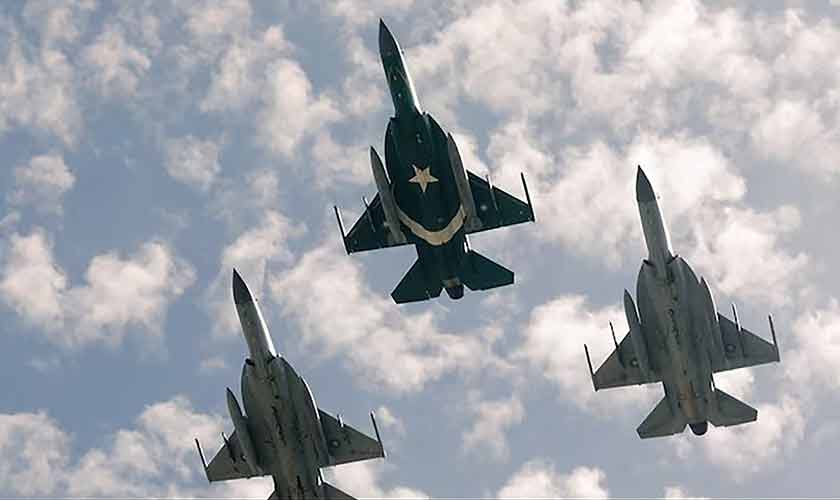
peration Ghazab lil-Haq was launched on February 26. Government and military leaders said it was in response to unprovoked attacks by Afghan Taliban from across the border. In October 2025 the two countries had agreed to a ceasefire, after an earlier border conflict.
Writing on X (previously Twitter), Defence Minister Khawaja Asif declared it an open war. He said, “Pakistan made every effort to keep the situation normal. In direct talks and through friendly countries, it engaged in full-fledged diplomacy. But the Taliban became a proxy for India.” He also said Pakistan had hosted 5 million Afghans for 50 years. “Even today, millions of Afghans reside in Pakistan and are earning their livelihoods on our soil. The cup of our patience has overflowed. Now it is open war .”
As the minister pointed out, Pakistan had repeatedly urged the Afghan Taliban regime to prevent its territory from being used for attacks against Pakistan. However, the attacks continued. On February 16, a suicide bomber killed 11 security personnel in one attack. Earlier, another suicide bombing on February 6, during Friday prayers at the Imambargah Khadijah-tul-Kubra in Islamabad, had 31 people and injured many more.
The News on Sunday spoke to journalist Azaz Syed, the author of The Secrets of Pakistan’s War on Al-Qaeda. Asked whether the ongoing operation signaled a general shift in Pakistan’s Afghanistan policy or was primarily a tactical counterterrorism move, he said:
“The policy has undergone a broad shift. The change has been evolving for some time. Over the past two to three years, we have seen Pakistan conduct intermittent actions across the border… The difference is that these actions have now been formally given a label. Pakistan has made it clear that whenever there is an attack against it and there is credible information about its origin, it will take action across the border. This represents a shift in policy, although similar actions had been taking place earlier.”
Asked what has caused Pakistan to abandon its preferred policy of diplomatic engagement with Kabul, he said: “I think the Pakistani policymakers were frustrated with a lack of meaningful progress.” Syed said when talks do not yield desired results, states opt for other alternatives. “In strategic terms, war is usually considered an option when diplomacy is seen to have failed.”
Speaking of the Afghan Taliban taking over Kabul in August 2021, Syed mentioned numerous occasions when Pakistan had tried to engage them diplomatically. “Since the Afghan Taliban came to power in August 2021, Pakistan has tried to engage with them. Frustrated, in October 2025, Pakistan closed the border. Since then many other incidents have occurred. There have reportedly been 65 engagements. After so many rounds, Pakistan’s patience may have run out.”
TNS asked Syed whether the current operation was a strategic attempt to force the Taliban’s hand or a tactical response to recent events. Syed said the Pakistan-Afghanistan confrontation had effectively become a sustained, long-term conflict since 2021. He added that tensions had existed even earlier, during the government of President Ashraf Ghani, before the Taliban took over power. “After the Taliban takeover, the Tehreek-i-Taliban Pakistan re-emerged. The issue has now become a permanent feature. It is likely to persist.”
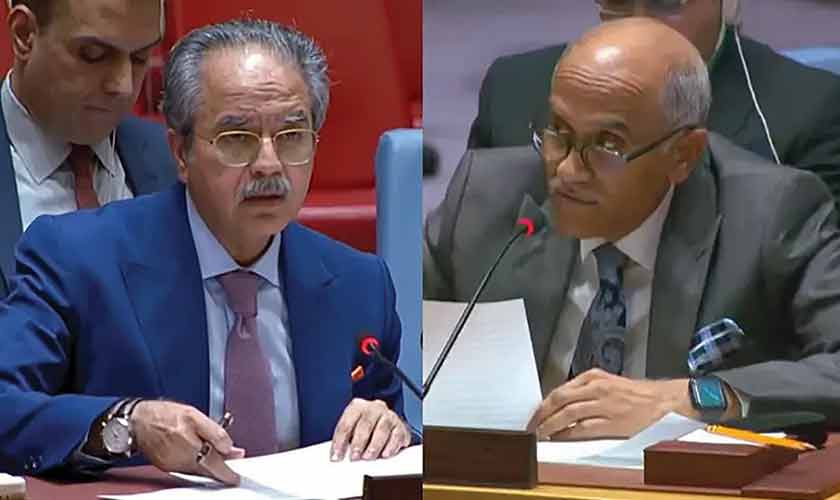
Defence Minister Khawaja Asif declared it an open war. “Pakistan,” he said, “made every effort to keep the situation normal: in direct talks and through friendly countries. It engaged in full-fledged diplomacy. However, the Taliban became a proxy for India.”
The senior journalist said the situation was likely to continue, “unless there is a realisation in Kabul that militant groups should not be allowed to operate from Afghan territory and attack other countries.” Syed said Pakistan was not alone is raising the concerns. “China has also complained that wanted criminals are being sheltered in Afghanistan. Individuals wanted in other countries, including Uzbekistan and Saudi Arabia are also sheltering in Afghanistan.” he said.
The United States has recently designated Afghanistan under the Taliban as responsible for wrongful detention. There is growing concern over the presence of militants linked to other countries. Dissatisfaction with the Taliban government is evident across a wide region. This reinforces Pakistan’s argument about the threat it faces from Afghanistan’s territory.
Pakistan has carried out several counterterrorism campaigns over the past two decades. These have included Operations Zarb-i-Azb and Radd-ul-Fasaad. Were lessons learnt from those informing the strategy and expectations for Ghazab-ul-Haq? Syed said, “Since 9/11, there have been around ten operations in these areas. In each of these operations, the stated objective was the same: to clear the tribal and frontier regions of militants. Whenever an operation ended and another began, we saw that the situation either remained the same or, in some cases, became worse than before.” Syed said the one operation that was widely regarded as “very successful” was the Swat Operation of 2009-2010.
Syed said the current operation faced serious challenges. “First, the provincial government has not given up on the Taliban. It is widely regarded as sympathetic toward them. This is a major issue.”
He said that operational outcomes too had raised persistent questions. “In comparing this operation with previous ones—especially since 2018—there has been an important question: which Tehrik-i-Taliban Pakistan commanders has been killed or arrested?”
Syed said that the broader challenge remained unresolved. Official briefings often state that Pakistan is acting in Afghanistan because the Taliban government there is supporting the militant groups and that the aim is to degrade their military capability. “But even if their military power is reduced, the fundamental problem remains: the actors involved in terrorism have survived. If they are not eliminated, the effectiveness of any operation will be limited.”
What does the endgame look like? Can air strikes and artillery fire compel the Taliban to hand over TTP leaders or does this operation risk creating a “nightmare scenario” of a two-front conflict with Afghanistan and India? Syed said that the way military actions are explained to the people can sometimes prove counterproductive. “One thing we must remember is that while the Taliban are ruling Afghanistan, the entire country is not Taliban. It is important to remember that this government came to power by force, not through some vote. In other words, it does not necessarily enjoy broad public support,” he said.
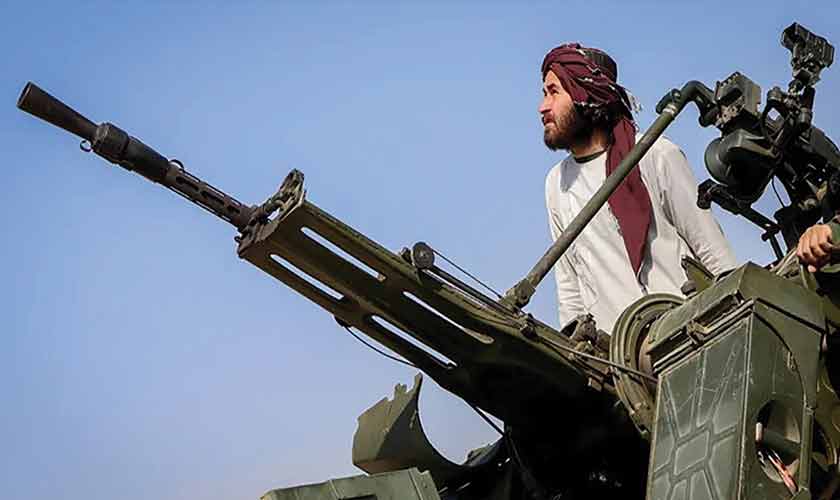
“Taliban were once described as Pakistan-backed terrorists. However, when Pakistan takes action against them, even Afghan ‘nationalists’ support the Taliban and accuse Pakistan of attacking their homeland,” Syed noted.
Given this dynamic, Syed said he believed that “intelligence-based operations were a more effective option. Considering certain individuals are carrying out attacks against Pakistan, action should be taken against those individuals alone. A policy framed as conducting airstrikes, sending drones, deploying aircraft and firing missiles is unlikely to resolve the problem. It may even deepen hostility and create further resentment.”
The writer, a communications professional, is currently the manager at the Centre for Excellence in Journalism, IBA Karachi. She can be reached on X: @mariaamkahn.