Print Story
X

| “G |
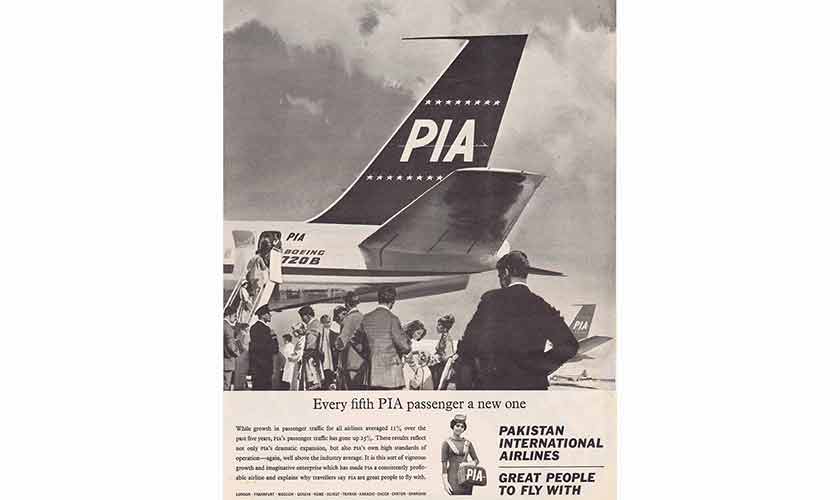
reat people to fly with!” The iconic slogan of Pakistan International Airlines was originally a compliment by Jacqueline Kennedy. In the early 1970s, PIA was not just an airline; it was a standard-bearer for international hospitality.
In October 1972, I was awarded a research scholarship to Turkiye. At the time, the Iranian embassy in Lahore warned me of the difficulties in securing a transit visa, yet the education advisor managed to secure mine in record time. With no travel grant provided, I could only afford a PIA ticket as far as Tehran. It cost me Rs 1,600.
The journey began at the Charing Cross terminal on The Mall. A shuttle whisked me to the Lahore airport, followed by a Fokker flight to Rawalpindi. A lavish dinner was served mid-air. The hospitality included a night’s stay at the Intercontinental Hotel — then owned by the airline. The next morning, elegantly dressed cabin crew welcomed us aboard for the flight to Iran. As we chased the sun westward, we gained two hours of daylight over a majestic vista of mountain ranges.
Landing at Mehrabad Airport, I took a shared taxi to the Claridge Hotel, later moving to the more affordable Musafir Khana-i-Shirazi at Maidan-i-Sipah.
No one in Tehran spoke or understood English. My Farsi was rudimentary, despite lessons at Lahore’s Khana-i-Farhang under the legendary Sufi Ghulam Mustafa Tabassum. But the locals were gracious. One of them, who knew a bit of English, took me to the Grand Bazaar — a labyrinth of domed shops that felt like a vast, ancient supermarket. It reminded me of our own Tollinton Market back when it was the premier colonial structure on The Mall.
The streets in Tehran were filled with double-decker buses. In those days, the sight of women in miniskirts was quite common — a stark contrast to today’s Iran.
I remember travelling to Danish Gah-i-Tehran (Tehran University) to meet Professor Pervaiz Pakbaz, a sculptor who headed the university’s Fine Arts Department. We concluded our meeting over chelu kebab: a mountain of buttered rice and grilled meat, followed by the customary glass of green tea.
The link between our nations is not merely geographic; it is ancestral. The Mughal school of painting owes its soul to Shah Tahmasp, who had famously lent his miniature painters to Emperor Humayun. Besides, it was an Iranian expert in hydraulics, Ali Mardan Khan, who designed the “garden extravaganza” of Shalamar Bagh in 1642.
The journey began at the Charing Cross terminal on The Mall. A shuttle whisked me to the Lahore airport, followed by a Fokker flight to Rawalpindi. A lavish dinner was served mid-air.
Farsi, or Persian, was our lingua franca for centuries, serving as the state language even through the Sikh rule. While Ghalib prided himself on his Persian verse, the Iranians today still reverently refer to Allama Iqbal as “Iqbal Lahori.”
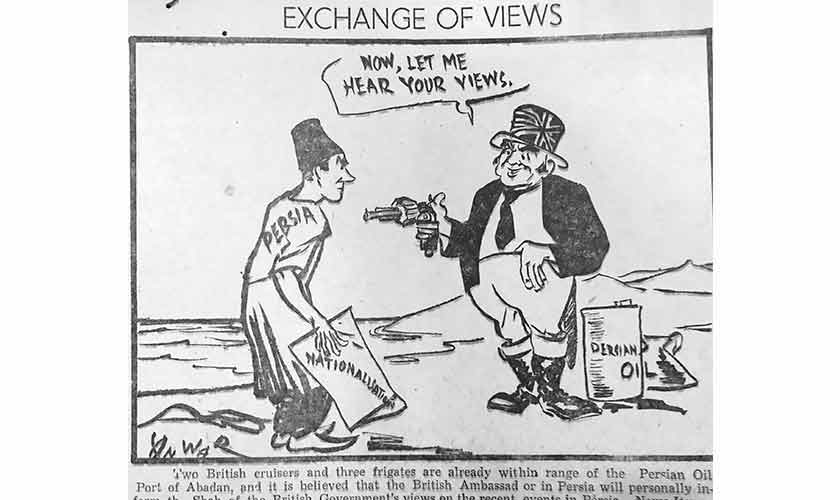
Iran was the first country to recognise Pakistan’s independence. It even diverted fighter jets to bolster our defence. When Prime Minister Dr Mossadegh nationalised Iranian oil in 1951, the move was celebrated so widely in Pakistan that many children born that year were named after him. The subsequent conspiracies to control Iranian resources — from the removal of Mossadegh to the Baghdad Pact — continue to echo in the modern era.
The Regional Cooperation for Development was the norm of the time, binding Pakistan, Turkiye and Iran in a brotherhood that has survived the test of time. Today, as these nations face external threats to their resources, that bond remains vital.
***********
My journey continued via Mihan Tours, a bus service travelling from Tehran to Istanbul. On the bus, I found myself sitting near a white Samoyed dog belonging to a Turkish troupe that had recently performed at the Plaza Cinema in Lahore. They were delighted to meet someone who had seen their show.
As we crossed into Turkiye, we were granted free three-month visas — a testament to the brotherly status of our nations. The Turks have never forgotten the monetary and moral support provided by our forefathers during their War of Independence (Kurtulu ).
The bus eventually dropped me at Sultan Ahmet, near the Topkapi Museum. I was there to report to the Devlet Güzel Sanatlar Akademisi to begin my research on Turkish miniatures — an art form heavily influenced by the Safavids, proving once again that in art and history, our borders have always been fluid.
The writer is a painter, a founding member of Lahore Conservation Society and Punjab Artists Association, and a former director of NCA Art Gallery. He can be reached at [email protected]