Print Story
X




The Iran-US war has raised fresh alarm for Pakistan’s already depressed economy with fears of rising oil prices and rapid inflation
| T |
he US-Iran conflict has seriously affected the oil supply chain from the region to the rest of the world, including Pakistan.
Analysts in Islamabad fear that if the Middle East conflict deepens and continues the single biggest economic threat to Pakistan will likely come from oil prices.
Iran, last week, announced the closure of the Strait of Hormuz. The route has supplied bulk oil and LNG (liquefied natural gas) from the ME to South Asia and Far East. The Strait of Hormuz lies between Iran and Oman. It is one of the world’s most critical oil transit routes. As much as 20 percent of global oil supplies passes through the route. The route has been traditionally controlled by Iranian naval forces.
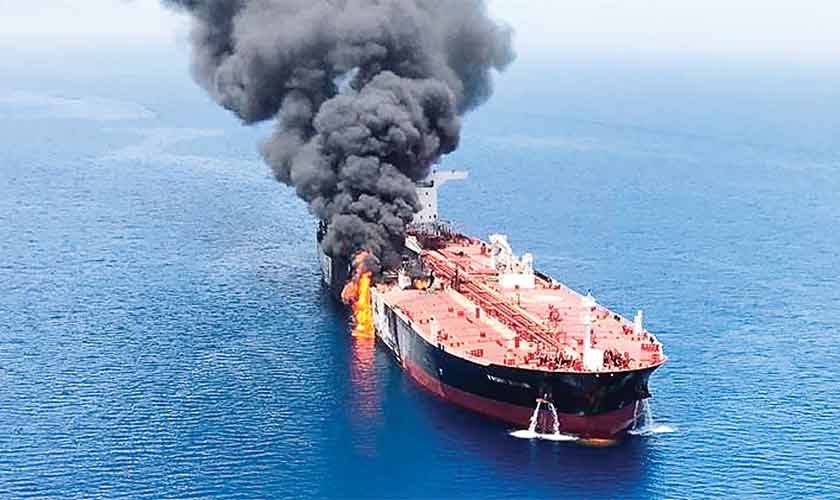
Since Israeli and US forces attacked Iran, Iranian missiles have targeted three oil tankers and several oil and gas facilities in neighboring countries and obstructed maritime traffic through the Strait of Hormuz. Meanwhile, Qatar has stopped producing LNG. The oil prices have jumped by up to eight per cent.
Experts say a deepening of the ME crisis can further spur fuel prices. In Pakistan, just last week, the government raised fuel prices by eight rupees.
Prime Minister Shahbaz Sharif has formed an 18-member committee including several ministers to monitor the situation and make decisions regarding oil prices and reserves. The committee will assess the impact of rising international oil prices on the country’s economy. The committee will also monitoring price fluctuations and formulate a strategy to mitigate the potential economic fallout for Pakistan. It will also monitor forward and futures prices of petroleum products and evaluate the stability of the supply chain in light of the ongoing conflict. The committee, chaired by Finance Minister Muhammad Aurangzeb will also assess the foreign-exchange implications of oil price volatility in both the short and medium term.
The global crude oil price may rise to $100 per barrel price. The fuel price in Pakistan could then reach Rs 300 per liter. The situation will not only impose a huge burden on the economy in term of foreign exchange but also cause inflation and drive prices up, further squeezing the economy.
“We are seriously afraid of the situation,” Muhammad Ali, a trader in the Aabpara market of Islamabad told The News on Sunday, adding, “The increase in oil price will affect every product. The economy is already sluggish as most people have lost much of their purchasing capacity.”
Importantly, the government has decided to continue passing on the impact of rising global oil prices to the consumers under the existing fortnightly adjustment mechanism to avoid a fiscal burden.
Pakistan has approached the Kingdom of Saudi Arabia to provide an alternative oil supply route to maintain its fuel supply chain.
Pakistan has approached the Kingdom of Saudi Arabia to request an alternative oil supply route through Yanbu to maintain its fuel supply chain in the wake of the closure of the Strait of Hormuz following the Israeli-Americans attack on Iran. Reports say the Saudi ambassador in Islamabad has assured support in this matter.
Petroleum Minister Ali Pervaiz Malik has said the government is trying to ensure continuity of the energy supply chain for its people. He says Pakistan expects supplies through the port of Yanbu on the Red Sea to meet its energy requirements.
It is estimated that for every $10 rise in oil prices, Pakistan’s current account deficit will increase by $1.5-2 billion, former chief executive officer of the Pakistan Business Council, Ehsan Malik has said. “If prices were to climb to $100, the deficit could expand by $5-$7bn on an annualised basis, potentially undoing recent gains that allowed Fiscal Year 25 to post a $2 billion current account surplus,” he says.
The All Pakistan Textile Mills Association last week said that Pakistan’s export and industrial sectors faced mounting risks as the ongoing crisis could disrupt the supply of oil and LNG, driving energy prices higher and threatening the country’s power security.
The APTMA, in a letter to Federal Minister of Commerce Jam Kamal Khan and other government ministers urged the government to take immediate measures, including suspending levies on fuel oil and boosting domestic gas production, to safeguard energy availability and protect export competitiveness.
“At the same time, higher energy costs will directly affect the competitiveness of the export sector. This creates a double impact on the economy: the dollar value of imports will rise significantly while exports, which are already under pressure, will face greater risks,” the APTMA letter warned.
The finance minister, however, said he was satisfied with the 28-day oil reserves of the country. “There is no emergency situation in Pakistan at the moment,” He told a Senate committee meeting. He said the petrol and diesel stocks were enough for 28 days, crude oil stocks for 10 days and liquefied petroleum gas and LNG for 15 days. Some cargoes, he said, have been stuck in Qatar. The government is also trying to enhance the output from local gas fields.
Minister Aurangzeb warned, however, that if the ME crisis persisted Pakistan would have to opt for “self-discipline” with respect to and energy use.
The author is a staff reporter. He can be reached at [email protected].