Print Story
X




A look at the current Pakistan-Afghanistan conflict and what lies ahead in the future
| T |
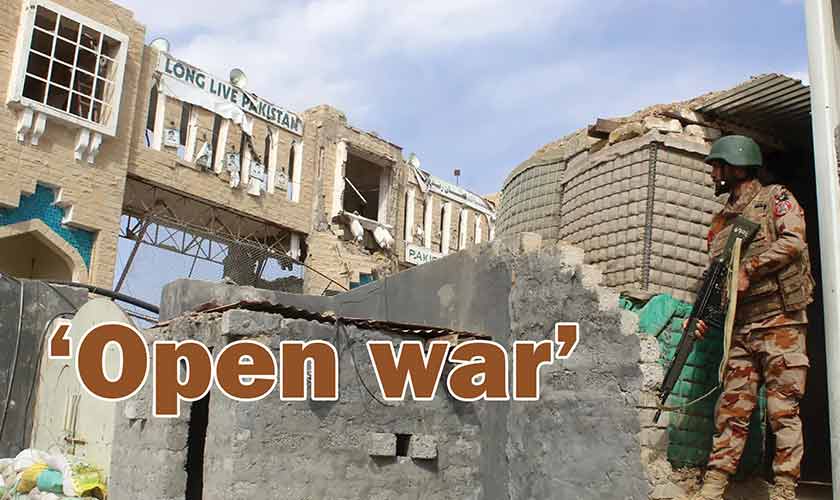
he military encounters between Pakistan and Afghanistan in the last week of February and the first week of March represents the collapse of Pakistan’s diplomatic efforts for the last two years to convince the Taliban government in Kabul to check the Afghanistan-based violent groups from undertaking terrorist attacks inside Pakistan. This complaint has had no impact on the policies of the Kabul government; Afghanistan-based terrorist groups continue to engage in terrorist activities in Pakistan’s two provinces—Balochistan and Khyber Pakhtunkhwa. Pakistan has employed air power as well as ground troops to target terrorist hideouts in Afghanistan’s three provinces bordering Pakistan and selected military installations of the Afghan Taliban government as a punitive measure. As the border troops of the Afghan Taliban government responded by launching attacks on several adjoining areas and border security posts on the Pakistani side, Pakistan’s security forces, including the Air Force, retaliated in a hard hitting manner.
These military clashes were not a surprise development, but a consequence of Afghanistan’s dismissive disposition towards Pakistan’s complaints regarding terrorism related issues undermining Pakistan’s internal security and peace. In order to understand the dynamics of the current breakdown in Pakistan’s relations with Afghanistan, let us examine the political developments in the Pakistan-Afghanistan relations since August 2021, when the present Taliban government assumed power in Kabul following the exit of American/ NATO troops.
Official, as well as non-official, circles in Pakistan welcomed the change of government in Kabul, assuming that a friendly government had come to power in Afghanistan. This hope proved short lived. Within a year or so, Afghanistan-based militant groups began to engage in terrorism in Pakistan. In 2023-2024, Pakistan formally complained to the Afghan Taliban government about the use of Afghan territory by terrorist groups for resorting to terrorist activities in Pakistan’s provinces of Balochistan and Khyber Pakhtunkhwa.
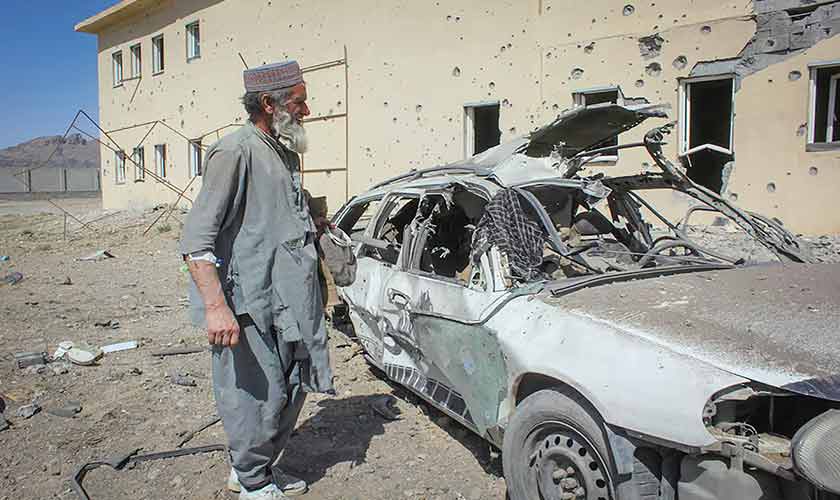
The government of Pakistan also started building a strong fence on the Pakistan-Afghanistan border and increased and updated its border posts to enhance border security and check the unauthorised movement of people across the Pakistan-Afghanistan border. Instead of paying attention to Pakistan’s complaints, the Taliban government opposed Pakistan’s decision to fence the border between the two countries. However, Pakistan continued with the fencing operation along most of the border.
Even before the Taliban came to power in Kabul in August 2021, Pakistan was conscious of the possibility of the use of Afghan territory by various groups for terrorist activities in Pakistan and other neighbouring countries. That was the reason the issue of non-use of Afghanistan territory by any militant group for terrorism in neighbouring states was raised in the Doha talks between the United States and the Taliban in 2019-2020. The final agreement of February 29, 2020, stipulated, among other things, that the Taliban will “prevent any group or individual, specifically mentioning Al-Qaeda, from using Afghan soil to threaten the security of the US and its allies.”
The Taliban government that assumed power in Kabul on August 15, 2021, promised to Pakistan and other neighbouring states, on several occasions, that Afghan territory would not be used by any militant group for violent activities in neighbouring states.
The Taliban government that assumed power in Kabul on August 15, 2021, promised to Pakistan and other neighbouring states, on several occasions, that the Afghan territory would not be used by any militant group for violent activities in neighbouring states.
The initial enthusiasm for the Taliban government had faded in Pakistan by the end of 2022 because Pakistan’s experience of interaction with that government ranged from frustrating to disheartening. Pakistan raised the issue of trans-border movement of Afghanistan-based violent groups at the bilateral level with the Afghan Taliban government and in multilateral meetings held in Russia and China, and later, at the United Nations in 2024-2025. Qatar, Türkiye and Saudi Arabia arranged talks between Pakistan and Afghanistan in 2025 to address Pakistani complaint about Afghanistan-based extremist groups. Despite the fact that Pakistan provided documentary evidence of terrorist activities, hideouts and training facilities in Afghanistan, the Afghan Taliban government rejected Pakistan’s complaint and refused to give a written categorical commitment for non-use of its territory by militant groups for terrorism in Pakistan. The Afghan Taliban representatives at these meetings argued that terrorism was Pakistan’s internal affair and that it should look within its territory to track violent incidents.
Given the non-cooperative disposition of the Taliban government, these talks proved inconclusive. In the last quarter of 2025, terrorist activity of Afghanistan-based groups increased and the Afghan Taliban government continued to be non-cooperative on this issue.
In October-November, Pakistan decided to close the Afghan border and suspended bilateral trade as well as Afghan transit trade with other countries through Karachi. In addition to this, Pakistan increased the monitoring of the Pak-Afghan border to check infiltration of terrorists into the country. It also increased intelligence-based military operations against terrorists in the tribal districts of Khyber Pakhtunkhwa and parts of Balochistan. Pakistan adopted these measures to underline its seriousness about the activities of the Tehreek-i-Taliban Pakistan and its allied groups; the Islamic State of Khorasan; and the Balochistan Liberation Army, which had hideouts in Afghanistan.
Attacks by these groups increased in Balochistan and Khyber Pakhtunkhwa towards the end of January and in February this year. Though Pakistan’s security forces responded effectively and killed many terrorists, the toll on the side of security forces was also high. In one instance, the terrorists in Balochistan launched synchronised attacks in several cities and towns, causing fear among civilians. On top of all this came the ISK-sponsored attack on an imambargah in the outskirts of Islamabad.
The uncooperative attitude of the Taliban government is not surprising. It has been argued that they have an ideological affinity with the TTP. The TTP says it wants to introduce an ‘Islamic’ system in Pakistan’s tribal areas, similar to what exists in Afghanistan. This makes it difficult for the Kabul government to prevent the TTP from engaging in terrorist activities. The TTP and the Afghan Taliban share a rivalry with the Islamic State which is based in Afghanistan and engages in violence both in Afghanistan and Pakistan.
Pakistan is also concerned about the international dimension of terrorist groups based in Afghanistan. Available evidence suggests that the Taliban government in Kabul has allowed India’s intelligence agencies to engage with TTP and BLA operators in Afghanistan. Pakistan now views the Taliban government not only as a local adversary but also as a facilitator of India’s proxy war against Pakistan.
Another worrisome aspect is that these groups are using weapons left behind by the US forces in Afghanistan in 2021. How did these groups get hold of US military equipment and weapons?
The armed conflict between Pakistan and Afghanistan cannot be a long-term major war. Afghanistan cannot match Pakistan’s far superior military capabilities in ground troops and air defence systems. It has no air force beyond the drone aircraft and a few helicopters. However, it has weaponry and military equipment for ground troops. It can deploy Afghanistan based militant groups, including suicide bombers, to launch terrorist attacks in Pakistan.
Instead of engaging in a full-blown war, Pakistan and Afghanistan should make an earnest effort to revive bilateral relations. The currently troubled relations between Afghanistan and Pakistan can turn friendly if Afghanistan’s Taliban government addresses Pakistan’s concerns relating to the three identified issues. Afghanistan’s turn-around on these issues will serve the long-term interests of both Afghanistan and Pakistan. Smooth and friendly interaction between the two countries can help Afghanistan address its security, economic and humanitarian issues; boost local economies on both side of the border; and strengthen Pakistan’s economic and trade relations with Central Asian states. This will also help boost Afghanistan’s economic and trade relations with Pakistan as well as the rest of the world. The Afghan Taliban government needs to pursue pragmatic policies based on the imperatives of a state rather than functioning as an extremist-ideological movement.
The writer is a political analyst, who holds an MA and a PhD from the University of Pennsylvania, Philadelphia, US.