Print Story
X




Sindh police launch operation against robbers in riverine areas of Sukkur and Larkana
| L |
Law enforcement is dismantling notorious dacoit gangs that once terrorised upper Sindh.
The tide is turning as authorities crack down on the criminal empires.
Apart from traditional kidnapping for ransom, many unsuspecting people were in recent years kidnapped after being lured through a ‘honey trap.’ A group of men and women used to regularly pick random numbers to call prospective victims. Some men mimicked a woman’s voice and expressions to apparent perfection. They would narrate well-rehearsed tales of hardship and forced marriages to elderly, abusive partners. Some said they preferred life in urban centres. Several men, including some educated persons from Karachi and Rawalpindi were duped this way.
Some people were offered lucrative business deals, including cheap bargains for tractors, trucks, high-end mobile phones, motorcycles or used cars.
Some of the women used for this role were recruited from southern Punjab. Some of them settled down there, married gang members and became part of the gangs. One such woman from Rahim Yar Khan is now housed in Karachi jail. She has confessed to ensnaring dozens of unsuspecting men.
Chained and fettered, the hostages were kept in shallow wells and pits. Their captors sent ransom demands with disturbing videos, to their families to extort ransom. While some people were released relatively quickly on payment of ransom, others were held for weeks and months. One of the victims spent over two years in captivity. During this time, his captors dropped the ransom demand considerably but even the lesser payment was not forthcoming. In the end, he was released following a successful police raid.
One of the rescued hostages, a school teacher, told investigators that he had heard about honey trap gangs but never thought he could fall for one. “However, I actually drove to Sukkur as if in a trance to find my soul mate, ignoring my own doubts and the warning signs. Only beatings by the kidnappers jolted me back to appreciate the reality.”
Larkana Range DIG Nasir Aftab says that since the launch of the operation, 27 dacoits have been killed and 82 injured in encounters across the Sukkur and Larkana ranges. He says 78 dacoits have been arrested and another 155 have surrendered to the police. As many as 17 kidnapped persons have been recovered including some kidnapped long ago. The operation has led to the dismantling of several notorious gangs, including Andhar, Lathani and Mazari gangs, operating in riverine areas of Sukkur and Larkana, long considered safe havens for criminals. Several high-profile dacoits including Mera Lathani, who had a Rs 10 million bounty on his head and members of the Kosh, Sukhani, Shar, Sanaullah and Anwar gangs have surrendered.
Explaining the Sindh Surrender Policy, launched in October 2025, Home Minister Zia-ul Hassan Lanjar says the policy offers criminals a chance to break away from their past and re-integrate into the society. However, he says, the surrender does not launder their crimes. “They have to be cleared by the courts. There is no shortcut.” An important element of the policy is a weapons buyback scheme. It is meant to remove prohibited weapons from the area.
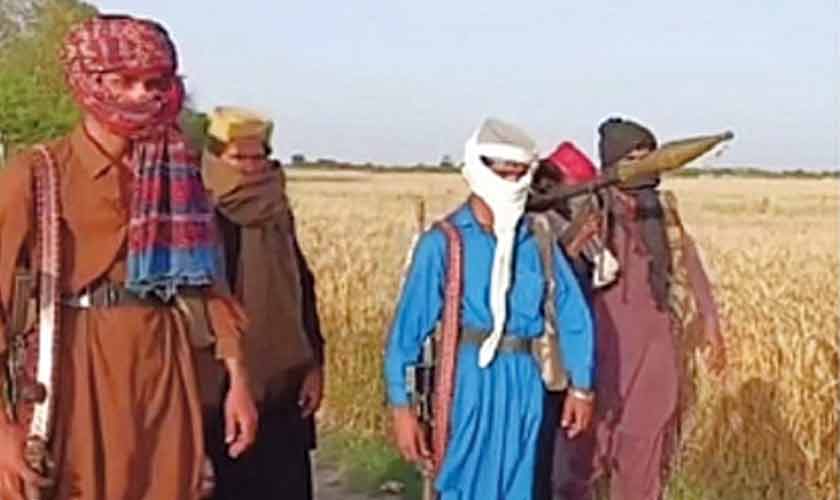
The Indus River’s katcha area has been a dacoit haven due to its dense forests, shrub lands, shifting channels and strategic location spanning Sindh and the Punjab, making police navigation tough and enabling evasion. Lanjar says until recently there were two trouble spots in Ghotki district although most of the riverine region had been cleared. Sanaullah and Rahib Shar, he says, were putting up strong resistance with their control over a swathe of thick forest spread over both sides of the Sindh-Punjab border. Besides honey trap kidnappings, both these gangs were accused of attacking and killing several police officials including some DSPs in 2022. They had been declared proclaimed offenders and carried head money. “They were using military-grade weapons, including 12.7mm anti-aircraft guns and US-made armour-piercing ammunition and rocket-propelled grenades,” he says.
Awash with money, some of the gangsters had taken over huge tracts of riverine land and were using those for farming. Electricity provided by solar panels allowed them to pump water from wells entirely free of cost to irrigate luxuriant wheat and mustard crops. Some of the criminals had established virtual fiefdoms where law enforcement feared to tread.
Cut off from the rest of the province by a lack of roads, these strongholds seemed destined for perpetual darkness. The lack of roads allowed dacoits to operate with virtual impunity, says DIG Nasir Aftab. He says the dacoits had converted parts of Katcha Ronti in Ghotki district and Katcha Kashmore into no-go areas. The Ghotki-Rahim Yar Khan section of the M-5 motorway was frequently targeted by dacoits impersonating as police. “In 2022, as many as 50 drivers were kidnapped from the area.”
Technology
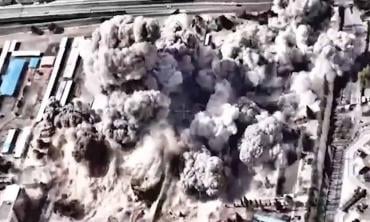
Modern drones are proving a game-changer. “Drones equipped with advanced surveillance tools allow police to track fleeing suspects, map hidden routes and assess threats from a safe distance. This has dramatically improved both tactical effectiveness and personnel safety,” IGP Javed Alam Odho says.
Police commanders say their force is determined to conquer the last bastions of organised crime in the region. In recent weeks, police have destroyed several bunkers used to stage attacks on the police. Both Sanaullah and Rahib Shar gangs used to hide by going underground literally. “They operated from a network of tunnels beneath the forest,” police officers say.
IGP Odho says that in the past the area’s location at the intersection of three provinces (Sindh, the Punjab and Balochistan) had allowed a steady influx of sophisticated weapons. He says the authorities are now monitoring key weapon suppliers. Since December, the operations and heightened vigilance along supply routes have resulted in a sharp decline in the inflow of such arms. “The supply has dried up for now,” he says.
Early last month, all police resources were focused on the operation in Ghotki’s Raunti and Mashkii police stations when a window of opportunity opened in Larkana. A major gang—over 50 strong—descended on Bagerjee. The IGP and the home minister gave Larkana SSP Azhar Khan the green light to strike. Under the cover of darkness, police units silently moved into advantageous positions. The gang had no idea it had been surrounded. “Once the dragnet was tightened, ensuring that no escape routes remained, the police directed them to surrender. They chose instead to attack the police. In the exchange that followed, 15 gang members were killed. Another 35 lay wounded,” says SSP Azhar.
The tide of the battle may be turning, but the war is far from over. As police regroup and strategise, plans are under way to transform the once lawless landscape into a training ground for law enforcement. IGP Odho says “proposals are under consideration to “convert parts of the Ghotki riverine forest into a Jungle Warfare School.” He says a permanent police presence in the region is long overdue. “In the 21st Century, no area can be allowed to remain lawless,” he remarks. The aim is to establish sustained state control and help pave the way to regenerate the regional economy.”
Following reports of some surrendering dacoits running syndicated crime from Sukkur Jail, the IGP says, he has asked for the posting of a seasoned and competent PSP officer to the prison to plug security gaps and prevent inmates from exercising influence from behind bars, besides working on their rehabilitation.
The latest government policy includes construction of roads to transform the no-go areas into zones with all-weather access. Alongside connectivity, the plan promises land titles for women, new schools and veterinary clinics. The IGP says these roads are not just about infrastructure—they are about establishing the writ of the state. “Better roads mean a permanent government presence,” another senior official says. “These will go a long way in making these volatile areas peaceful.”
Home Minister Lanjar says the government is working on a broad, comprehensive strategy “considering attaching strict conditions to land leases to be given to locals only. Under the proposed model, any lease would be immediately revoked if criminal activity is reported from the land,” Lanjar says.
The home minister confirms the start of work on the Sukkur-Bagerjee road proposal and has pledged to build more roads to turn the tide permanently. Similar proposals are being considered in other districts as well, he says.
The writer is a senior The News staffer in Karachi.