Print Story
X




US adventures in Iran and Venezuela show that the world’s sole super power is in the grip of an imperialist impulse
| T |
he US war against Iran and the recent military intervention in Venezuela have imperialist designs behind them. Although the trend and necessity of physical control and subjugation of territories by imperialists waned after the WWII, over many decades, imperialism has been mutating in its form and means. At its core, it remains extractive and exploitative of economic resources that belong to vulnerable communities and states. It uses poorly justified tactics and bends international laws that were meant to maintain global peace and balance of power. Some recent developments have exacerbated this tendency.
The US initially framed its intervention in Venezuela as part of a drug enforcement mission. However, it soon imposed a maritime blockade of Venezuelan oil tankers and the Trump administration claimed that the US control of this oil will benefit the Americans and Venezuelans. President Trump, moreover, demanded that Venezuela sever its ties with Russia, China and Iran and resume oil production and processing under conditions imposed by the US. It was clearly a military intervention without clear legal authority. It was also regime change under the guise of drug enforcement and a flagrant violation of international law and the norm of equal sovereignty.
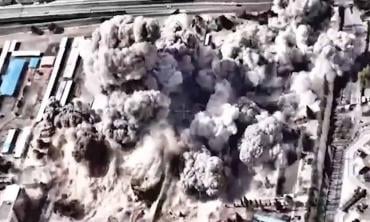
In similar manner, the US engaged Iran in a series of negotiations after alleging that the latter was developing nuclear arsenal. On June 22, 2025, it attacked, unilaterally and in violation of international laws, Iran’s nuclear facilities located in Fordow, Natanz and Isfahan in an operation codenamed Midnight Hammer. Domestically, while most Republicans continued to support Trump, most of the Democrats and some Republicans questioned the constitutionality of this move. They were concerned about its effects and the Iranian response. International community expressed concern and criticised escalation and blatant use of force on part of the US and Israel. After the Twelve Days War, President Trump declared a ceasefire between Iran and Israel.
Both these moves can now be analysed in the larger context of imperialist US interests under Trump administration and its frenetic efforts to block global footprint of Chinese economic expansion. The US seeks to perpetuate its global hegemony over the production and supply of fuels and recapture markets for the benefit of the US, as part of President Trump’s motto of “making America great again.” The imposition of a broad array of tariffs on products making their way into the US markets was the very first step taken by Trump administration after resuming office in the White House.
China was, nonetheless, able to thwart Trump’s efforts for the imposition of exorbitant tariffs. The same US had once championed free trade for decades when its industrial produce far exceeded the other countries. Faced now with new reality of Chinese industry, the US has backtracked its free trade mantra and is bent upon protecting its markets by erecting unjustifiably high tariff walls. The Chinese retaliated by imposing taxes on supply of rare earth minerals critical for the use of high-tech industries located in the US. Chinese have near monopoly on the mining and processing of rare earth materials.
The Trump administration then signed agreements with a large number of countries for mining rare earth minerals in a bid to lessen its dependence on China. For instance, it signed a framework agreement on rare earth and critical minerals with Australia to boost mining, processing and supply chain cooperation. Similar frameworks were also signed with Japan, Malaysia, Thailand, Cambodia, Vietnam, Kazakhstan and Ukraine for extraction, stockpiling, refining, recycling and related supply chain support agreements. The goal was to reduce dependence on China’s dominant market position. The Chinese were, by and large, able to absorb the challenge of tariffs imposed by the US by forging a string of alternative arrangements world-wide.
Other large markets traditionally aligned with American businesses such as the European Union, Canada and India were agitated by the imposition of unjustifiable tariffs. Resultantly, all of them have signed alternative agreements for economic diversification and easing out market pressures. In a historic move, Canada signed a large framework of agreements with China and India. Likewise, the European Union signed a broader framework of agreements with India to reduce its dependence on the US markets.
US administrations have been long obsessed with a monopoly over oil markets. The Middle East produces 30-33 per cent of the global crude oil. Moreover, the region holds about 50 per cent of the world’s proven oil reserves. No wonder, the region has always occupied critical importance for the US. Venezuela holds the largest proven crude oil reserves in the world - about 303 billion barrels. Iran comes third position with proven crude oil reserves estimated at around 208-209 billion barrels. Since China and India, two major oil importers, were relying on Venezuela, Iran and Russia, the Trump administration has resorted to aggression and blockade of this steady supply of oil.
In another imperialist bid, the Pentagon has recently approached architects of the future, the AI developers, for mining of big data and arming of Department of War with AI models. While Anthropic’s CEO, Dario Amodei, did something rare in the heart of the empire by refusing to be an architect of mass slaughter, Sam Altman of OpenAI saw the opportunity and went for it. The imperialism has mutated; it now seeks to turn our minds, our lives and our futures into extractable resources.
The writer heads the History Department at University of Sargodha. He has worked as a research fellow at Royal Holloway College, University of London. He can be reached at [email protected] His X handle: @AbrarZahoor1.