Print Story
X




The Soomra hakims of Shikarpur once shaped the city’s intellectual and spiritual life
| I |
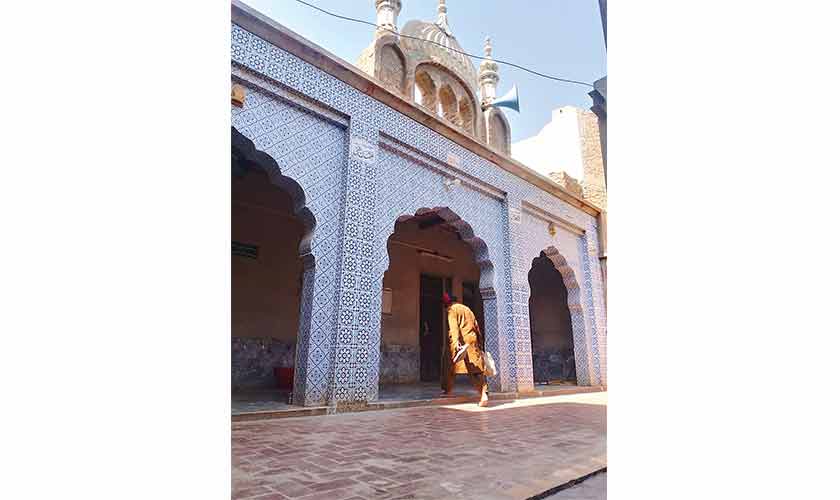
n the heart of Shikarpur, along the historic Khalifa Nasrullah Street, stand the fading tombs of its celebrated hakims, silent yet powerful witnesses to a glorious intellectual past. These mausoleums once symbolised honour, reverence and communal gratitude for men who healed bodies, guided souls and shaped the scholarly life of the city. In the Nineteenth and early Twentieth Centuries, Shikarpur’s hakims were not merely medical practitioners; they were also religious scholars, teachers and often mystics whose dawakhanas served as centres of healing and intellectual exchange.
Among these, the tombs of hakims known as khalifas (spiritual deputies) are particularly prominent. Two tombs located on Khalifa Nasrullah Street in Shikarpur’s Shah Hussain Mohalla are noted for their distinctive architecture. The first tomb belongs to a woman from the family and the second to Khalifo Karamullah, Khalifo Nasrullah and Khalifo Muhammad Ibrahim. All these dignitaries were learned scholars in medicine (tibb). They were also known for their religious scholarship. I will return to the tombs later. A word first about this family of hakims who played an important role in the socio-religious history of Shikarpur. They not only treated patients but also taught in religious seminaries. These Khalifas belonged to the Sooomra tribe. This family of hakims in Shikarpur built mosques and madrasas and ran hikmatkhanas, dawakhanas or shifakhanas. The history of Khalifan Jo Dawakhano (Khalifas’ clinics) dates back to Khalifo Karamulllah Soomro. The first prominent person from the family of hakims was Khalifo Karamullah Soomro, a Sufi, religious scholar, hakim and poet. From Tazkira-i-Lutfi Vol 2 by Lutfullah Badvi one learns that Khalifo Karamullah Soomro was the son of Hafiz Muhammad Ramszan. His father was also known for his piety. Khalifo Karmaullah Soomro was a pious and righteous person. According to Lutfullah Badvi, Khalifo Karamullah benefited spiritually from many Sufi mentors. He was granted khilafat (spiritual deputyship) by the Makhdoom mystics of Khura Sharif in Khairpur. It is unclear which mystic adept in the Makhdoom family of Khura Sharif conferred the khilafat upon him. Professor Aminullah Alavi states in the article Shikarpur Ja Sufia Kiram, published in Shikarpur Mazi Ain Haal (Shikarpur: Past and Present), a book compiled by Dr Memon Abdul Majeed Sindhi, that Khalifo Karmaullah was initiated into the Qadiri order by the Faruqi family of Daraza. His spiritual master was Khawaja Nazar Muhammad (d 1251 AH/ 1835 AD).
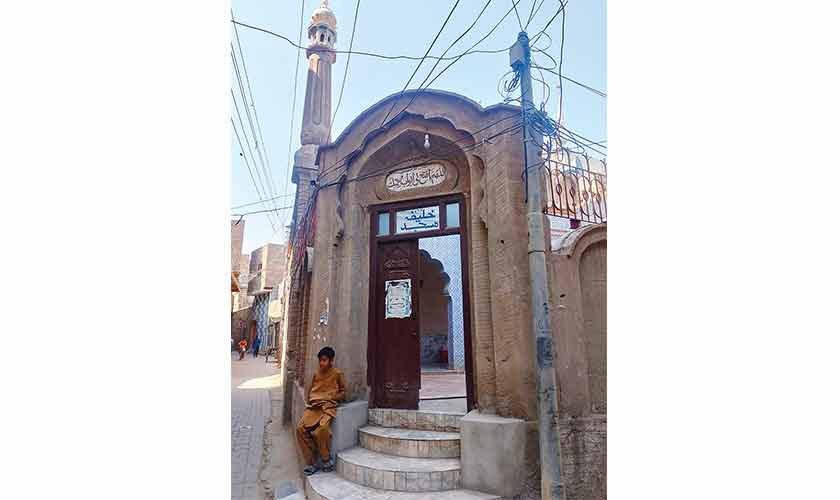
It is believed that Khalifo Karamullah was an erudite scholar of Arabic and Persian. According to Abdul Razaq ‘Raz’ Soomro, the author of Tareekh-i-Shikarpur, Khalifo Karamullah Soomro, also founded a madrasa in 1230 AH/ 1810 AD that was located in Khatian Jo Mohalla in Shikarpur. He also served in the madrasa as a mudarris (teacher) and muhtamim (administrator). He continued both his profession of hikmat and teaching in the madrasa. Khalifo Karamullah also composed poetry in Sindhi, Seraiki and Persian. He used Karam as a pen name in his poetry and hence was also known as Khalifo Karamullah Karam. Khalifo Karamullah died in 1271 AH/ 1855 and was buried in Shikarpur. Maulana Khalifo Nasrullah succeeded him. Some scholars believe that he was the son of Karamaullah. Others, notably Professor Aminullah Alavi, state that Maulana Khalifo Nasrullah was the younger brother of Maulana Khalifo Karamullah Soomro. He, too, had received initiation from Khwaja Nazar Muhammad. He continued his brother’s legacy. He taught in the madrasa and continued to practice hikmat, which he had learned from his brother, Khalifo Karamullah Soomro. He was not only a physician and scholar but also a Sufi. He continued adding books to the library his brother had founded. According to Khalifo Kaleemullah, the current custodian of the Maulana Khalifo Karmaullah shrine, Maulana Khalifo Nasarullah also collected rare books on tibb (medicine). Khalifo Nasarullah also established a mosque on what is now Khalifa Nasrullah Street in Shah Hussain Mohalla. This mosque was built in 1301 AH/ 1884 AD. It was later renovated and expanded by his successors. Khalifa Nasrullah Mosque was rebuilt in 2003.
Khalfio Nasrullah died in 1889 and was buried next to Khalifo Karamullah. According to Professor Aminullah Alavi, Khalifo Nasrullah had one son, Khalifo Muhammad Ibrahim, who continued his father’s legacy. He taught in the madrasa and continued to practice tibb. He was a learned scholar of Arabic, Persian and Sindhi. He died in 1897 and was buried next to his father. Khalifo Muhammad Ibrahim had no son, so his brother-in-law, Muhammad Akram Soomro, became the custodian of the dargah (shrine) of Khalifo Karamullah Soomro. After the death of Muhammad Akram, his son, Maulana Khalifo Abdul Ghafoor, became a well-known physician from the Khalifa family of Soomras. He was also a scholar and physician. He also collected several books on subjects such as medicine, theology, Sufism and literature.
It is disheartening that the resting places of Shikarpur’s hakims, scholars and mystics – men who once illuminated the city with knowledge and healing – are left today to crumble in silence.
Khalifo Abdul Ghafoor had received training in hikmat from Khalifo Muhammad Ibrahim. Later, he received further medical education (tibb) at Tibbia College, Delhi, under the guidance of Hakim Ajmal Khan (d. 1927). Several physicians, Muslim as well as non-Muslim, had earlier received education at the Tibbia College of Delhi. Ishar Singh was a famous physician who earned a degree from Tibbia College in Delhi in 1926 and opened his clinic in Shikarpur. He was a scholar of Arabic, Persian and Sanskrit. One knows about Ishar Singh and several other physicians (hakims) from Hakim Niaz Hussain’s book Sindh Ji Tibbi Tarikh (A Medical History of Sindh), Vol. 2. This book was published in 1976. It mentioned several eminent hakims from Shikarprur city and other nearby villages and towns of the Talpur and British periods. They included Hakim Mir Muhammad Wafa Lakhvi, Mir Muhammad Shuja Lakhvi, Bhagat Radha Krishan, Maulana Abdul Ghafoor Maftoon Humayuni, Hakim Mir Ali Nawaz Alavi (d. 1920), Hakim Ghulam Shah Lakhvi, Hakim Somomal (Mian Jo Goth), Hakim Naraindas (Rustom town), Hakim Maulvi Abdul Rahim Sindhi, Hakim Dhanraj Mal, Ishar Singh Charan Singh Bedi, Hakim Maulvi Fazlullah Shikapuri, Maulvi Ilahi Bakhsh Awan (d. 1949), Pir Fazal Ahmad Sirhandi, Hakim Bhojraj (Lakhi town), Maulana Hakim Abdul Karim Chishti, Syed Hidayat Ali Shah (Amrot Sharif village) and Hakim Dareldas (Sultankot). These people were not only physicians but also learned religious scholars and mystics.
After returning from Delhi, Khalifo Abdul Ghafoor established a madrasa in Shikarpur. He was both a mudarris and the muhtamin at the madrasa. He became known far and wide for his expertise in Unani medicine. Like his predecessors, patients from as far as Bahawalpur and various towns of Balochistan used to visit his clinic in Shikarpur. He also kept a journal, called Bayaz-i-Ghiyasia. The bayaz was far more than a notebook; it was the intellectual heart of his practice. The compilation carried medical scholarship accumulated and preserved over several generations of clinical observations and refined prescriptions.
Bayaz-i-Ghiyasia, bearing the stamp of Khalifo Abdul Ghafoor, is still in possession of the present custodian of Khalifo Kaleemullah Soomro’s dargah. In an interview with Khalifo Kaleemullah, I learnt that Khalifo Abdul Ghafoor had four sons: Khalifo Fatehullah, Khalifo Sanaullah, Khalifo Lutfullah and Khalifo Fazlullah. Khalifo Abdul Ghafoor died in 1960 and was buried in the graveyard of Kiri Nawab Khan in Shikarpur.
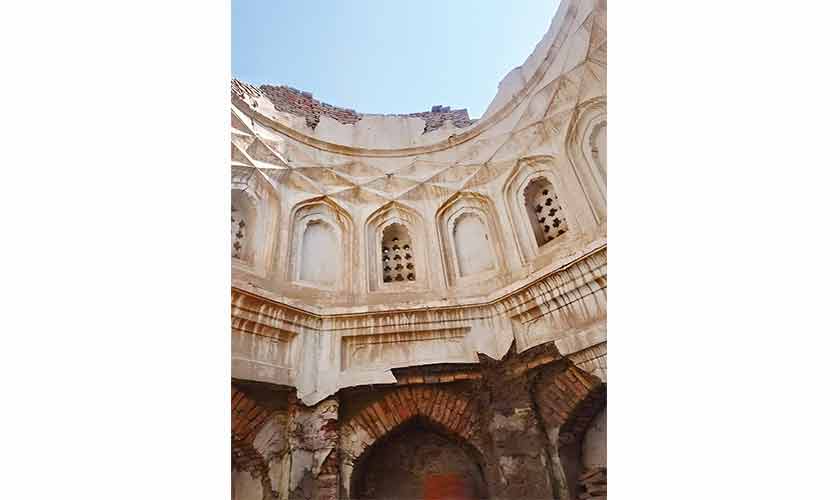
The tombs of the Soomra physicians of Shikarpur are also noted for their architecture. Both tombs are built in a square plan superimposed with hemispherical domes. Unfortunately, the dome of Khalifo Karamullah’s tomb caved in during the catastrophic rains of 2022. These devastating rains not only damaged tombs but also the historic library associated with the shrine, which contained more than 3,000 rare books. Some of the books translated by Khalifo Karamullah were also damaged in the rains. It is disheartening that the resting places of Shikarpur’s renowned hakims, scholars and mystics – men who once illuminated the city with knowledge and healing – are left today to crumble in silence.
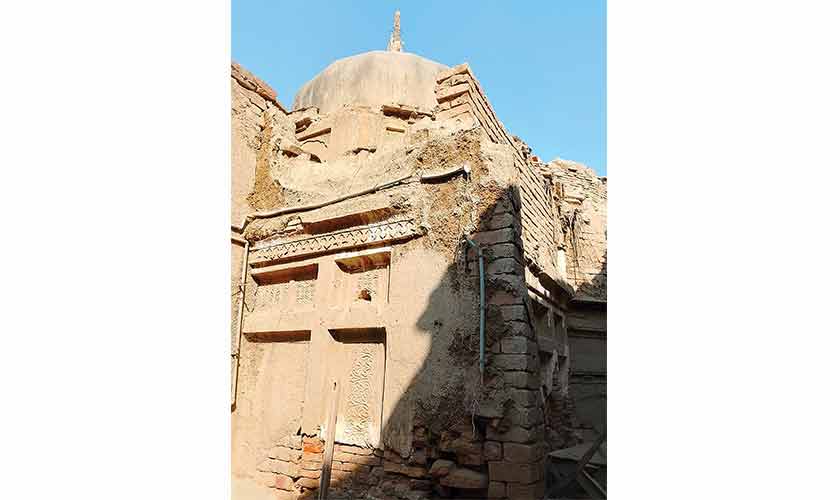
The crumbling tombs and graves speak of a deeper neglect. These were not ordinary graves. They belonged to physicians and scholars who healed bodies, guided souls and transmitted knowledge across generations. Today, the stones that once commemorated their service stand fragile, bearing the marks of time and abandonment.
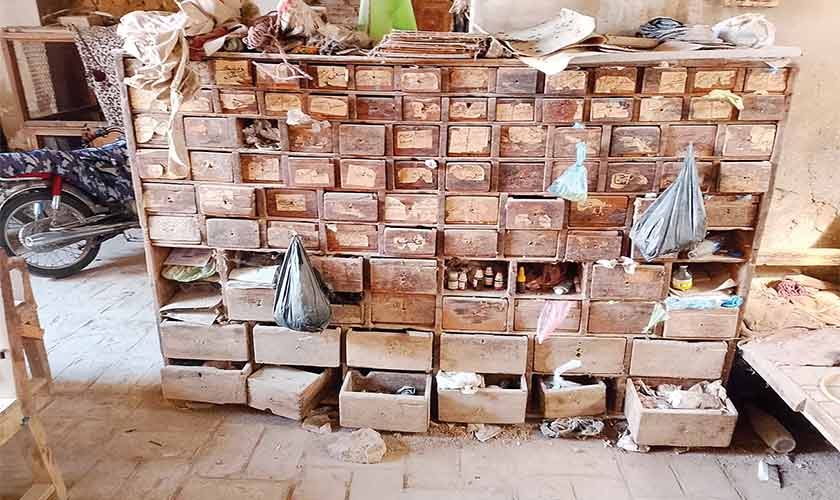
The same melancholy extends to their dawakhanas. Once vibrant spaces where remedies were prepared, prescriptions compiled and students instructed, they now present a sorrowful sight. Shelves sag in disrepair; walls that once witnessed scholarly exchange and patient consultations are fading into quiet deterioration. The physical decay mirrors the gradual fading of a once-thriving intellectual culture.
There is an urgent need for institutional intervention. The Directorate of Antiquities & Archaeology must take concerted steps to restore these historic tombs of the hakims and their dawakhana. These structures are not merely relics of brick and mortar; they also embody Shikarpur’s rich intellectual and medical heritage. Allowing these to deteriorate risks losing the tangible link to a tradition of scholarship, healing and spirituality that once defined Shikarpur’s identity.
The writer is an associate professor and anthropologist at the Pakistan Institute of Development Economics, Islamabad. He has authored 18 books on Pakistan’s cultural heritage and anthropology. He tweets @kalhorozulfiqar. He may be contacted at [email protected]