Print Story
X




International mounted archery star appointed Chef de Mission for 50+ athlete delegation
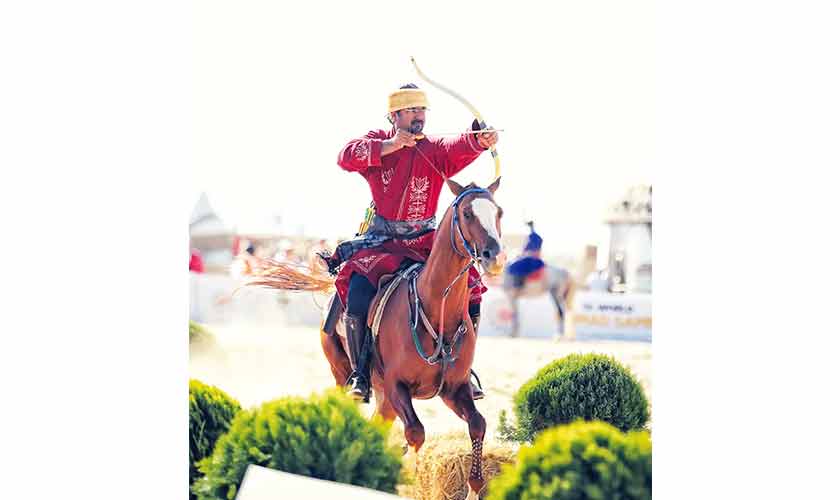
In a move that blends heritage, leadership and international credibility, Lahore-born mounted archery star Aurangzeb Mubashar, widely known as “Oz”, has been appointed Pakistan’s Chef de Mission for the 2026 World Nomad Games. He will lead a national delegation of more than 50 athletes to one of the world’s most culturally significant sporting festivals, marking a defining moment for Pakistan’s presence in traditional equestrian sport.
Mubashar’s appointment is not ceremonial; it is symbolic of Pakistan reclaiming space in a global arena dedicated to indigenous and heritage games. The World Nomad Games celebrates ancient traditions rooted in Central and South Asian history, disciplines that demand not only athletic skill but cultural authenticity. Few embody that blend more completely than Mubashar.
Born and raised in Lahore, Mubashar’s journey began at Aitchison College, where his affinity for horses first took shape. Those early riding grounds laid the foundation for a lifelong pursuit of excellence in equestrian sport. What started as youthful fascination matured into elite international competition, eventually positioning him among the most respected mounted archers in the global community.
Today, based in Niagara, Canada, Mubashar represents Canada in mounted archery and traditional tent pegging, while simultaneously maintaining strong sporting ties with Pakistan. He remains Pakistan’s only colour-holder in horseback archery, a distinction that underscores both his rarity and resilience. His participation in past editions of the World Nomad Games and various international championships has consistently placed Pakistan on the competitive map of this demanding discipline.
Mounted archery, a sport that combines high-speed horseback riding with precision shooting, is not merely athletic theatre. It is history in motion. For Pakistan, a nation with deep equestrian traditions, Mubashar’s leadership offers more than representation; it offers restoration of pride.
His path, however, was never linear. After moving to Canada in the late 1990s, Mubashar pursued higher education at York University, studying Human Resources and Public Policy. A corporate career could easily have followed. Instead, he chose entrepreneurship rooted in land and livestock, establishing Lahore Livestock Farms in the Niagara region. Focused on sustainable agricultural practices, the venture reflects his belief in balancing tradition with innovation.
Even while building a successful agricultural enterprise, Mubashar refused to let sport drift into hobbyism. He earned selection to Canada’s National Mounted Archery Team and Traditional Tent Pegging Team, reinforcing his global credibility. Yet, despite competing internationally under Canada’s banner, his commitment to Pakistan’s equestrian revival has remained steadfast.
That dual identity, global athlete, cultural custodian, makes him uniquely qualified to lead Pakistan’s contingent in 2026. As Chef de Mission, his responsibilities will extend beyond ceremonial duties. He will oversee preparation, coordination and athlete welfare while ensuring Pakistan’s representation reflects discipline and dignity on the world stage.
His appointment also arrives at a critical time. Traditional sports often struggle for visibility in an era dominated by commercialised athletics. By placing an internationally recognised horseman at the helm, Pakistan signals seriousness about preserving and promoting its cultural sporting heritage.
Within Canada’s equestrian circles, particularly in Fort Erie, Mubashar is respected not only as a competitor but as a mentor and entrepreneur. Yet he remains deeply connected to his roots. He continues to reside in Niagara, balancing farming operations with training commitments, embodying a life that bridges continents without abandoning identity.
For Pakistan’s athletes heading to the 2026 Games, leadership matters. They require someone who understands both the pressures of international competition and the cultural weight of representing tradition. In Aurangzeb Mubashar, they have precisely that.
His story is not merely about sport; it is about continuity, of heritage, of discipline, of belief. As Pakistan prepares for the next edition of the World Nomad Games, it does so under the guidance of a horseman who carries two flags but one unwavering passion: to see tradition ride proudly into the future.