Print Story
X

| S |
overeignty is one of the words that sound simple but actually define a very technical idea in political theory. The most plausible definition still tracks Jean Bodin (16th Century): sovereignty is the final authority to decide within a political community. Thomas Hobbes sharpened it: the sovereign is “that mortal god, to which we owe… our peace and defence.” In other words, sovereignty is not about power in general, nor about wealth, nor about prestige; it is about who has the last word when disagreement cannot be resolved. If courts, generals, corporations, foreign states, creditors, or mobs can override you, then you are not fully sovereign.
We can widen the lens a little and see that the difficulty with the word sovereignty is historical as well as conceptual. The term was born in a particular European crisis. In the Sixteenth and Seventeenth Centuries Europe was tearing itself apart in religious wars. Both Catholics and Protestants appealed to a higher truth than the king, and civil order collapsed. Bodin’s theory was therefore not abstract metaphysics; it was a remedy. Someone, he argued, must have the last earthly competence to end disputes, otherwise every citizen becomes a private judge of justice and the polity dissolves into faction. Sovereignty was less a glorification of rulers than a political sedative for chaos.
Hobbes radicalised this insight. In the Leviathan he did not defend kings because they were virtuous, but because the alternative was worse: a condition where no decision could finally bind anyone. His famous phrase about the state of nature—life “solitary, poor, nasty, brutish and short”—was not anthropology but logic. If no final authority exists, every disagreement becomes potentially violent. Hence his shocking formulation that the sovereign is a “mortal god,” not sacred in morality, but necessary in function. The sovereign does not guarantee justice; he guarantees decision. Carl Schmitt later condensed Hobbes’s point into a sharper sentence: “Sovereign is he who decides on the exception.” The exception means the moment when rules run out—war, emergency, insurrection. Whoever can suspend the ordinary order without being overridden is the real sovereign.
Now notice how far this is from freedom. Freedom concerns whether I may speak, travel, worship, own property or refuse commands. Sovereignty concerns whether there exists an authority whose commands cannot be finally refused. A prisoner in a stable state lacks freedom but lives under sovereignty. A region in civil war may enjoy bursts of personal liberty—no police, no taxation—but lacks sovereignty altogether. The biblical proverb captures the distinction more elegantly than theory:
“Every kingdom divided against itself is brought to desolation.”
Desolation, here, comes not from lack of freedom but from lack of final authority.
In fact, the sovereign himself is often the least free individual in the state. He cannot simply abstain. Citizens may ignore politics; the sovereign must decide. The crown imposes obligation. Shakespeare again grasps the psychological burden:
“Uneasy lies the head that wears the crown.”
The sovereign’s will is constrained not by superior power, but by responsibility—he must choose even between evils. Freedom is the ability to avoid necessity; sovereignty is being trapped in necessity.
Modernity complicates this structure because power has multiplied into systems. In early modern Europe the sovereign minted coins, commanded armies, judged disputes and defined law. Today each of those functions is partly dispersed. Central banks influence currency independently of governments; multinational markets punish fiscal decisions; nuclear weapons make military victory catastrophic; global supply chains make autarky impossible; public opinion constrains leaders through elections and media. Arendt’s remark becomes clearer: power exists “only so long as people act together.” A ruler without compliance commands nothing but paper.
So the clean theoretical distinction remains: sovereignty is the ultimate competence to decide and bind; freedom is the lived capacity of persons to act without constraint. Modern states still possess sovereignty, but not in the absolute form.
Foucault pushes even further: modern authority operates through institutions—schools, hospitals, statistics, bureaucracies—rather than through decrees alone. The modern state does not only command; it administers, measures and normalises. Thus sovereignty survives, but it sits atop an ocean of what he called disciplinary power. The king once ruled bodies through force; modern states govern populations through systems. This is why even powerful states feel constrained. They are sovereign legally, but interdependent materially.
Hence your intuition about large continental states contains a sociological truth. Size provides buffers. A vast internal market, agricultural capacity, demographic scale and military reach give room for maneuver. The United States, China, Russia and India possess something like what political economists call autonomy of reproduction: they can sustain core functions internally for longer than smaller states. Yet even they encounter external vetoes. Financial crises, technological chokepoints, demographic decline, energy supply or maritime trade routes limit them. A modern state does not lose sovereignty when it listens to constraints; it loses sovereignty only if another authority can compel its final decision. Most limitations today are structural, not hierarchical.
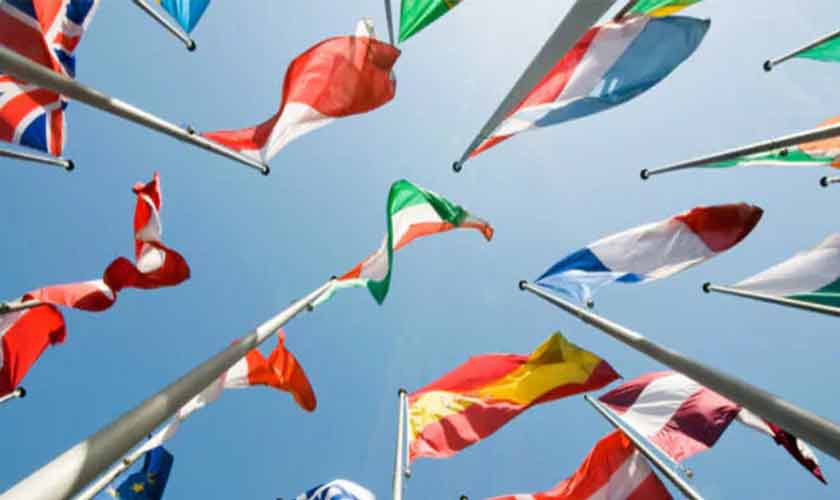
European integration illustrates a paradox. By pooling sovereignty, states reduced unilateral authority but increased collective effectiveness. A small state alone cannot regulate multinational corporations or negotiate with superpowers effectively; together it can. This is closer to covenant than surrender. The Book of Ecclesiastes expressed the logic centuries earlier:
“Two are better than one; because they have a good reward for their labour.”
Shared sovereignty is therefore not absence of sovereignty but a different architecture of it.
Where confusion often enters is the leap from influence to ultimate control. Politics always involves influence: lobbying groups, religious communities, economic sectors and foreign allies all attempt to shape policy. But sovereignty, in theory, refers to recognised supremacy, not persuasive capacity. If a government can reject advice, reverse course or change alliances without another actor legally overruling it, sovereignty remains intact. The existence of pressure does not negate authority. A merchant may influence a king; he does not become king.
The attraction of attributing world politics to a single hidden master is intellectual as much as emotional. Complex systems feel unsatisfying; they lack narrative clarity. The mind prefers a central puppeteer. Yet modern political orders are pluralistic and often chaotic. Decisions emerge from legislatures, courts, bureaucracies, parties, elections, public opinion, economic consequences and international bargains. No leader—not an American president, not a Chinese general secretary, not an Israeli prime minister—escapes these constraints. Even the strongest rulers spend immense effort managing coalitions and legitimacy rather than issuing pure commands.
The old sages repeatedly warned against mistaking power for omnipotence. The Psalmist wrote:
“Put not your trust in princes, nor in the son of man, in whom there is no help.”
Not because rulers are weak individually, but because political authority is conditional. It rests on acceptance, cooperation and circumstance. Remove those and the ‘sovereign’ becomes merely a man with a title.
So the clean theoretical distinction remains: sovereignty is the ultimate competence to decide and bind; freedom is the lived capacity of persons to act without constraint. Modern states still possess sovereignty, but not in the absolute form imagined by early theorists. It has become layered, negotiated and entangled. The crown has not vanished; it has been woven into networks—law, economy, alliances, publics. Thus, the central irony of modern politics appears: the more complex the world becomes, the less any single actor can truly rule alone, yet the necessity of a final decision never disappears.
The writer is a professor in the Faculty of Liberal Arts at the Beaconhouse National University, Lahore