Print Story
X




The Rs 38 billion Ramazan Relief Package is modest relative to the broader poverty-reduction framework

| T |
he federal government has announced a Rs 38 billion Ramazan Relief Package for 2026, targeting approximately 1.21 million families across all provinces, including Gilgit Baltistan and Azad Jammu and Kashmir. Each eligible household will receive Rs 13,000 through digital transfer, reflecting the continued shift from in-kind subsidies to direct cash support. Of the total allocation, Rs 10 billion is reserved for families already covered under the Kafalat programme, while Rs 28 billion is directed toward other low-income households. The per-family amount has increased substantially from earlier years, primarily in response to inflation and rising food prices. The stated objective is to provide short-term liquidity during Ramazan, when consumption pressures intensify, thereby helping vulnerable households smooth expenditures and avoid distress coping mechanisms such as borrowing at high interest or liquidating productive assets.
In fiscal terms, however, the initiative is modest relative to the broader poverty-reduction framework. The total federal budget stands at Rs 17.573 trillion, while the Benazir Income Support Programme alone receives approximately Rs 720 billion—about 4.1 percent of total expenditure. Combined direct social protection allocations amount to roughly Rs 734 billion (around 4.2 percent of the budget). By contrast, the Rs 38 billion Ramazan package represents only about 0.22 percent of total federal spending and roughly 5 percent of the annual social protection envelope. It, therefore, operates as a supplementary, seasonal intervention rather than a central pillar of anti-poverty policy.
This distinction becomes clearer when situated within the structural drivers of poverty in Pakistan. Households typically fall into poverty due to macroeconomic instability, inflation shocks, climate-related disasters, health expenditures and the fragility of informal labour markets. Poverty persists as repeated shocks erode assets, weaken human capital formation and limit access to productive employment, creating low-productivity traps. Regular transfers under the BISP address chronic vulnerability to some extent, but seasonal relief packages are primarily consumption-smoothing tools. Their impact is immediate but temporary, reducing short-term hardship without fundamentally altering the structural determinants of poverty.
The recurring announcement of Ramazan-specific relief underscores a policy orientation toward short-term stabilisation rather than long-term transformation. While such measures provide visible and politically salient support, they do not substantially improve productivity, job quality, resilience to shocks or human capital accumulation. When repeated annually without deeper structural reform, episodic cash injections risk normalising poverty management instead of poverty reduction. Sustainable progress requires shifting emphasis from symbolic, time-bound relief toward sustained investments that raise incomes, strengthen resilience and reduce vulnerability throughout the year rather than during a single month.
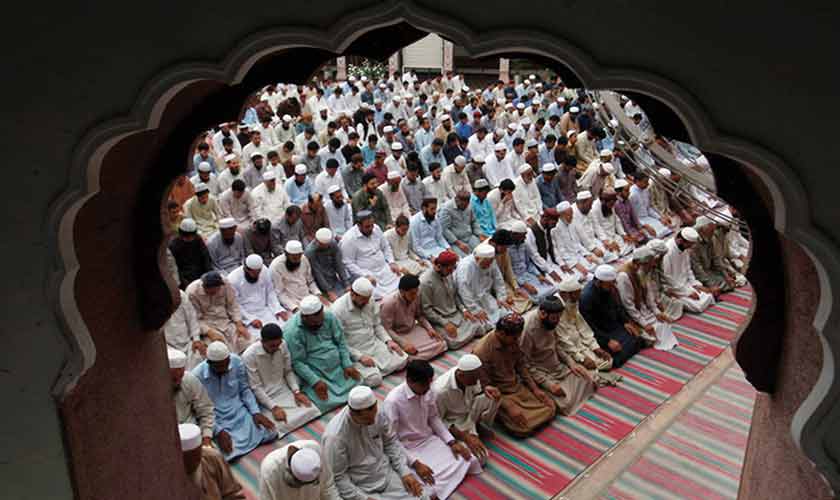
The federal government’s Rs 38 billion Ramazan Relief Package points to a logic of short-term consumption support within Pakistan’s anti-poverty architecture. While the state deploys seasonal transfers to ease immediate liquidity pressures, Islamic social ethics independently generate a parallel flow of private redistribution. In Islam, spending in the way of Allah—particularly feeding the hungry and relieving hardship—carries exceptional moral weight. This normative emphasis intensifies during Ramazan, when both public and private transfers increase. Yet, empirical evidence suggests that the overwhelming majority of zakat and voluntary sadqah in Pakistan is disbursed privately rather than through formal institutional channels.
Various household and philanthropy surveys, including work by the Pakistan Centre for Philanthropy and other sectoral assessments, indicate that a very large share—often estimated at well above 80 percent—of charitable giving is made directly by individuals to beneficiaries or through informal networks, while only a small fraction is routed through government-administered zakat systems or regulated institutional platforms.
This distribution pattern has important economic implications. When charitable flows are predominantly individualised and consumption-oriented—food packages, one-time cash handouts, seasonal assistance—they closely resemble the structure of state-led Ramazan relief: highly visible, morally resonant and immediately beneficial, but limited in duration and transformative capacity. Just as the Ramazan package represents roughly 0.22 percent of total federal expenditure and functions mainly as a stabiliser within a larger social protection framework, privately distributed zakat typically alleviates short-term consumption constraints without systematically building productive assets or human capital. The institutional zakat system, which could in principle aggregate funds and channel them into structured poverty-exit strategies, accounts for only a minor share of total charitable flows.
Consistent with the poverty dynamics discussed earlier—where households fall into poverty due to shocks and remain poor because of asset erosion and low productivity—the predominance of fragmented, consumption-oriented giving limits the shift from relief to resilience. Feeding the hungry and providing immediate cash support fulfill an essential ethical and social function, preventing acute deprivation and preserving dignity. However, durable poverty reduction requires channelling redistributive resources into productivity-enhancing uses such as education, skills development, microenterprise capital, asset rebuilding and risk mitigation. When zakat, sadqah and seasonal public transfers remain largely episodic and weakly institutionalised, they tend to manage hardship compassionately without systematically transforming the structural conditions that sustain poverty.
The persistence of such short-term interventions can be understood in light of political economy and administrative realities. Immediate cash or food support is fiscally contained, administratively feasible and highly visible, generating quick welfare gains under tight budget constraints and urgent social pressures. By contrast, restructuring the productive base of the economy—improving human capital quality, strengthening institutions, stabilising macroeconomic conditions and fostering investment—requires coordination, credibility and time horizons that often extend beyond electoral cycles and are vulnerable to political uncertainty. In this context, seasonal relief measures represent a pragmatic and responsive instrument within existing constraints. They deserve recognition for mitigating short-run hardship, even as sustainable poverty reduction ultimately depends on gradual, sustained reforms that enhance productivity, resilience and income-generating capacity over the long term.
The writer is a tenured associate professor and head of the Department of Economics, COMSATS University Islamabad, Lahore Campus.