Print Story
X




True relief requires more than just standard Ramazan packages
| E |
arlier this week, both the federal and provincial governments announced Ramazan relief packages for low-income households. The government of Balochistan officially announced its Ramazan relief plan on Thursday, aiming to provide a cushion to low- and middle-income households against rising food prices.
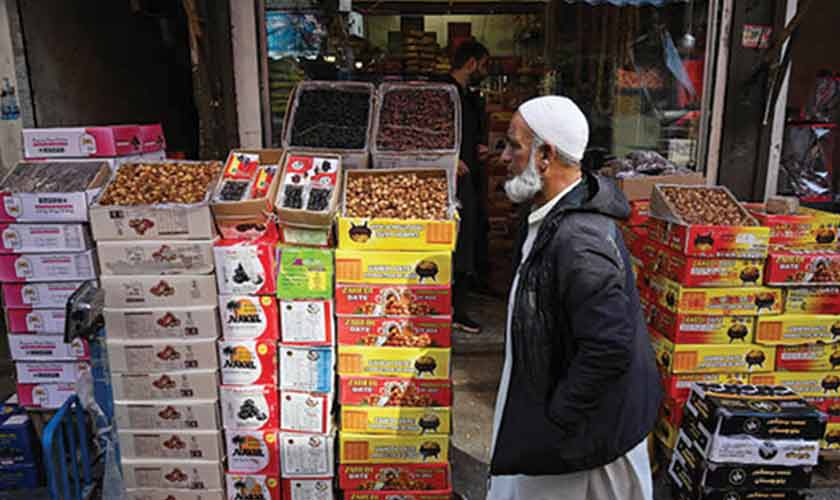
In the previous Ramazan, the Balochistan government had offered two kinds of relief packages. Subsidies were offered on essential commodities such as flour, cooking oil, dates, pulses, sugar, rice and selected beverages, through government-allocated selling points in various bazaars. Secondly, relief was also undertaken by the Provincial Disaster Management Authority. According to available data, 227, 000 deserving families were targeted last year through a relief allocation of Rs 5 billion. A package of essential commodities was distributed through the district administration.
Jahanzeb Khan, the PDMA director general, briefed the media on Balochistan’s Ramazan relief package on Tuesday. He stated that the chief minister had approved a Ramazan relief package for 328,000 deserving families across all districts of the province. He said that an eight-member district coordination committee would distribute relief packages in their respective districts to ensure transparency.
The relief packages, he said, had already reached 20 districts across the province.
Speaking to The News on Sunday, he says that the package consists of 20 kg flour, 5 kg rice, 5 kg cooking oil, 1 kg salt, 1 kg tea, 5 kg white chana, 5 kg chana dal and 5 kg sugar.
He says that the package would cover an average family’s dietary needs for 15 days.
Gohar Khan, a professor of economics at Balochistan University, disagrees with the government’s plan for relief activities. Speaking to The News on Sunday, he says that such a plan would be vulnerable to corrupt practices and benefit only a small section of the families in need.
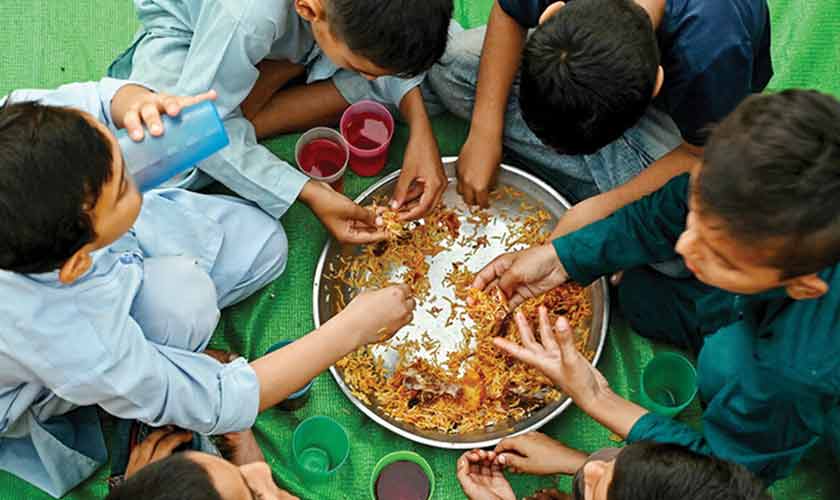
According to available data, 227,000 deserving families were targeted last year through a relief allocation of Rs 5 billion.
Professor Khan says that if the government is serious in helping low-income households, it should double the amount of BISP cash transfer in the month of Ramazan. He also has strong reservations on the distribution method. The relief packages, he says, must be distributed by the local government so that relief activities are ensured at tehsil and union council level.
Farooq Agha, the Quetta Flour Association president, says he blames the Food Department for the rising prices of flour in Quetta. He says the ban on interprovincial movement of wheat and untimely purchase of wheat have raised the price of flour.
In a matter of days, he says, the price of 50 kg flour bag in Quetta has risen from Rs 3,500 to nearly Rs 7,000.
Agha says that hoarding by traders and inefficiency of the price control committee are also major causes of price hikes in the province.
Mehran Badini, Quetta’s deputy commissioner, has announced strict action against hoarders and profiteers. In a stern warning, he warned of strict legal action against those involved in price gouging and hoarding. He directed the inspection teams to regularly visit markets and ensure the implementation of government notified rate lists.
As Ramazan packages aim to ease the financial burden on low-income families, many residents in Quetta have voiced reservations on the low quality of food and other essential commodities.
Shafiq Khan, a cashier in a private bank, says that meaningful implementation of the policy and consistent monitoring of markets can ensure both quality and price of food items.
The writer is a freelance journalist based in Quetta. He has worked for BBC Urdu, Dawn and other digital media outlets.