Print Story
X




The holy month reveals a complex choreography of piety and commerce
| W |
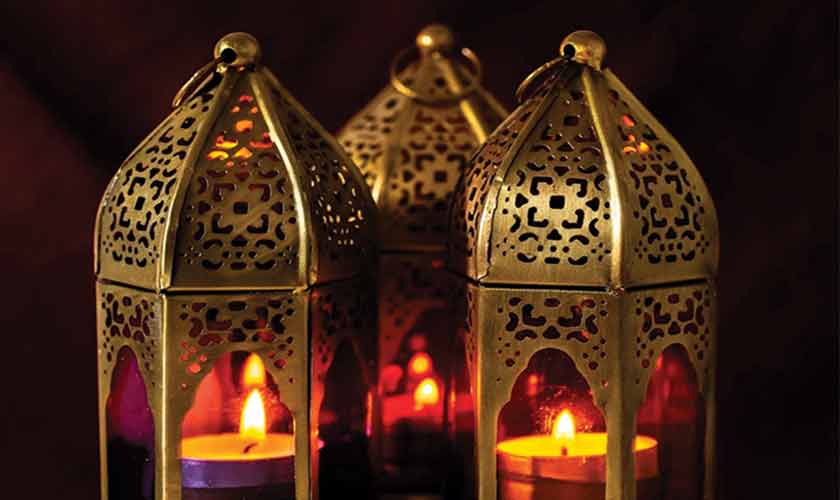
hen the crescent moon is sighted and Ramazan begins, our society undergoes an almost theatrical transformation. Streets grow quieter in daylight. Offices thin out. Invitations multiply. A hush of piety settles over public life, as though an entire nation has collectively lowered its voice. Yet beneath this calm exterior lies a complex choreography of ritual, appetite, restraint and release.
In Pakistan, daily life during Ramazan revolves around prayer and the breaking of the fast. Iftar has evolved into a quasi-social ritual, where tables groan under the weight of food and more is often consumed than required after a day of abstinence. In recent years, even sehri has become an occasion to eat out, to host guests and to turn a pre-dawn meal into an event. Restaurants advertise special menus and families drive through near-empty streets at improbable hours in search of culinary indulgence before the first light of dawn.
Weddings are postponed. Entertainment is tempered. The faithful are expected to shun normal pleasures and devote spare time to acts of worship. The mood is meant to be sober, reflective, restrained. Ramazan, in this imagination, is a month set apart from ordinary time, a sacred interval during which worldly pursuits recede and divine salvation comes into sharper focus.
Yet this is not how the month is experienced everywhere. In many Arab countries, Ramazan unfolds as a season of celebration. Markets remain open late into the night. Restaurants serve food and drink throughout the hours between iftar and sehri. Families and friends gather in cafés, stroll through illuminated shopping districts and relax in an atmosphere that is festive rather than austere. The night becomes the true day.
In some Gulf states, Ramazan resembles a month-long adjustment of rhythm rather than a retreat from life. Work hours are reduced. Socialising increases. The tempo shifts, but the pulse remains strong. Much has been said about how oil wealth has shaped attitudes towards labour and leisure in these societies. The immense revenues generated by energy exports have undoubtedly conditioned workplace ethics in ways that poorer Muslim societies can ill afford to emulate.
In Pakistan, by contrast, Ramazan can become an uncontested reason for sluggishness. Deadlines drift. Appointments are deferred. Productivity dips. The sacred month is invoked to justify delay and indifference. After all, what importance do worldly matters hold when weighed against eternal salvation? Yet this argument carries its own contradictions. If discipline and self-restraint are central to the fast, should they not also extend to civic and professional responsibility?
It is worth asking how Ramazan was observed in Arabia before the discovery of oil transformed the desert into a landscape of opportunity. In the Hijaz, the Hajj season was historically the principal moment of economic vitality, when pilgrims generated income that sustained local communities for the rest of the year. Ramazan, by contrast, was not traditionally associated with mass influxes of visitors or heightened commercial activity. Its contemporary festive character reflects broader social and economic shifts.
As the days shorten and the nights lengthen during Ramazan, we are invited to reconsider not only our relationship with food and prayer, but also with work, culture and community.
Back home, the cultural expression of Ramazan carries its own peculiarities. Qawwali gatherings are hosted in private homes, a practice that gained wider acceptance after receiving international recognition. Other musical forms, hamd, naat and, increasingly under Middle Eastern influence, the nashid, are framed as permissible alternatives to more overtly secular entertainment. Art galleries mount exhibitions of calligraphy. Television schedules pivot towards religious programming, special transmissions and charity appeals. The mood is sombre rather than revelrous.
Even this sobriety is not static. As parts of the Middle East relax their strict codes governing cultural activity, one wonders how far the boundary between celebration and revelry might shift. Can a month devoted to restraint accommodate spectacle? Can spiritual reflection coexist with commercial exuberance?
The digital age has complicated these questions further. Once, the tone of Ramazan was largely set by state-controlled radio and television. Today, a proliferation of electronic media platforms offers a dizzying array of devotional content, culinary tutorials, live sermons and entertainment tailored to every taste. A young Muslim in Karachi can stream a lecture from Cairo, follow a recipe from Dubai and watch a religious drama produced in Istanbul, all within a single evening.
The Muslim world spans continents and cultures, and the diversity of Ramazan observance is correspondingly vast. In Indonesia, communal iftars spill into the streets. In Turkey, drummers wake residents for sehri. In West Africa, the month intertwines with local musical traditions. These variations rarely conform neatly to prescribed modes. Instead, local cultural practices blend with ritual obligations, producing hybrid forms of devotion.
This fusion is perhaps inevitable. Religion does not exist in a vacuum; it is lived through language, food, architecture, climate and history. In South Asia, Ramazan carries the imprint of Mughal kitchens, Sufi shrines and colonial-era urban rhythms. In the Gulf, it reflects tribal customs and the modern infrastructure of oil-rich states. In diaspora communities, it is shaped by minority status and multicultural negotiation.
The month, then, is less a monolith than a mirror. It reflects back to each society its own anxieties, aspirations and contradictions. In Pakistan, Ramazan can be at once a time of genuine spiritual renewal and of performative piety; of charity and of excess; of discipline and of indulgence. It reveals the tensions between sacred ideals and social habits.
As the days shorten and the nights lengthen during Ramazan, we are invited to reconsider not only our relationship with food and prayer, but also with work, culture and community. The fast is meant to cultivate empathy, patience and self-control. Whether these virtues extend beyond the dining table and the prayer mat is a question each society must answer for itself.
In the end, Ramazan is neither solely austere nor wholly festive. It is a negotiated space, shaped by history, economics and imagination. The crescent moon may signal the same month across the globe, but what unfolds beneath it depends on where one stands, and on what one chooses to see.
The writer is a Lahore-based culture critic.