Print Story
X




To counter the scourge of terrorism, Pakistan will have to rethink its policy and intent
| T |
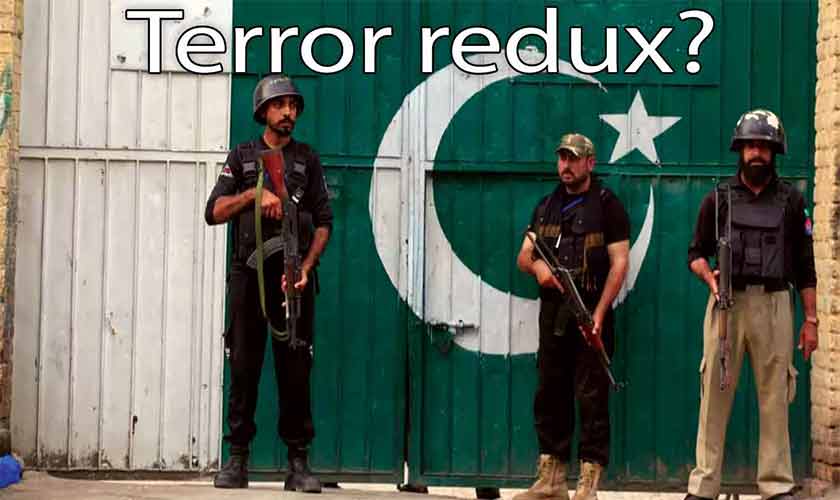
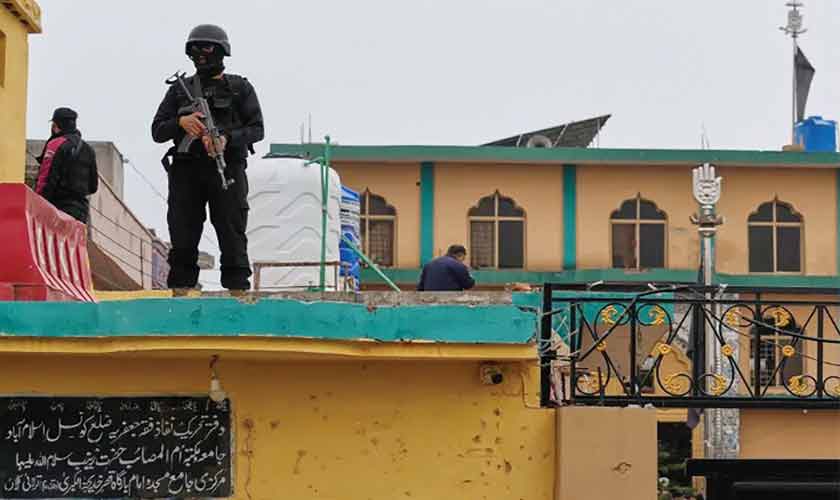
he continuous terror attacks on security forces and civilians, especially the recent Islamabad imambargah suicide bombing and a well-planned terrorism spree in Balochistan, have once again exposed the faultlines in Pakistan’s counter terrorism strategy, demanding that the state and political forces work together to evolve a strategy with a new and clear lens.
Pakistan’s security forces are engaged in continuous intelligence-based operations against terrorist networks like Fitnat-ul Hindustan (Baloch Liberation Army and other militant groups) and Fitnat-ul Khwarij (Tehreek-i-Taliban Pakistan). However, terrorist attacks continue to increase every year.
According to published reports, Pakistan witnessed a sharp surge in militant violence in 2025, with 699 terrorist attacks recorded countrywide—an increase of 34 percent compared to the previous year. This violence claimed at least 1,034 lives, marking a 21 percent rise in terrorism-related fatalities. These include the one-of-its-kind attack on the Jaffer Express.
2026 has been no different. At least 80 incidents have been recorded in Khyber Pakhtunkhwa and Balochistan, including simultaneous attacks in several cities of Balochistan, and attacks on security installations in Khyber Pakhtunkhwa and Balochistan.
Defence Minister Khawaja Asif, speaking in the National Assembly after the Islamabad bombing, spoke openly on the issue. He held two military rulers, Gen Zia-ul Haq and Gen Musharraf, responsible for terrorism but did not blame the political leaders.
“There is a spike in terrorism in the country. I sadly say that we are not even united in condemning terrorism. Many parliamentarians refrained from attending the funerals of martyrs in Islamabad and other places.
“At least on national issues—all of us sitting here, regardless of party affiliations—should respect those sacrificing their lives,” he said.
“Two dictators in the past had joined wars in Afghanistan to please a superpower.” He said terrorism was a backlash for the mistakes made by the dictators. Claming that India was sponsoring terrorism in Pakistan, he said it was the need of the hour for all Pakistanis to be united to foil India’s plan.
“Now, India is using Afghan terrorists against us. India is fighting a proxy war in Pakistan,” he said, adding, “Let us make this parliament fully functional.”
The latest wave of terrorism in Pakistan is complex and different from that witnessed over the last decade. Pakistani forces are not just combating a few groups of local terrorists, but heavily funded groups, which Pakistani authorities claim are proxies of Indian and Afghan governments.
The current anti-terrorism policies, which are reactive instead of being pre-emptive, cannot achieve the desired objectives on account of the current faultlines and the state’s use of a traditional lens to look at the situation.
Weak implementation of laws and policies like the National Action Plan also gives space to terrorists, their facilitators and sympathisers, who take advantage of the concessions and strike back.
Pakistan is still struggling with the strategic ambiguity regarding militant groups, which had resulted in the ‘good’ and ‘bad’ Taliban terminology in the past. It should opt a single policy against all terror networks. Ilyas Kashmiri, head of the Brigade 313 of Harka-tul Jihad-i-Islami, is a classic example in that he showed how a favoured warrior wreaked havoc in the country by joining other networks like the TTP.
Weak implementation of laws and policies like the National Action Plan also gives space to terrorists, their facilitators and sympathisers, who take advantage of concessions and strike back.
In the past, several persons affiliated with banned organisations were allowed to roam around freely. Their names were removed from the Fourth Schedule. They continue to spread religious hatred in society and incite violence against other sects.
When the NAP was being formulated, the state had decided not to create or sponsor any hardliner group; however, support to some of the militant groups continued. Those later turned into organisations like Tehreek-i-Labbaik Pakistan. The state eventually had to proscribe the organisation.
The Anti-Terrorism Act has an excessively broad definition of terrorism. This burdens the courts with non-terrorism cases. Anti-terrorism trials also struggle on account of poor evidence gathering. The 2009 amendments permitting “extrajudicial confessions” have increased reliance on torture rather than forensic evidence, leading to low conviction rates.
On the other hand, the persistent gap in coordination among civilian law enforcement institutions like the police and the Counter Terrorism Department, and the army often results in disjointed intelligence and operations.
The assassination of Punjab Governor Salman Taseer by his police bodyguard; the escape of various high-profile terrorists from the custody of security forces allegedly in connivance with security officials; and the recent case in Samundari, Faisalabad, where a security official left his job to join a banned organisation, only to die in an encounter, are all examples of poor scrutiny in security forces.
This scribe had a chance in 2015 to discuss the issue of a hardline mindset in the police with Rana Sanaullah, then the Punjab law minister. He said that the government planned to screen the police and other civil institutions to trace extremist elements. That plan, however, was never implemented.
Last but not the least, major political parties extend support to some hardliner groups. The PTI government released several terrorists in 2021 and resettled thousands of people who had earlier escaped to Afghanistan. It also lifted the ban on TLP and released its leadership from prisons.
The PML-N has similarly attracted criticism since 2008 for its political ties with groups like the Sipah-i-Sahaba. In 2010, then chief minister Shahbaz Sharif had urged the Taliban not to attack the Punjab considering ideological solidarity with regard to US occupation in Afghanistan.
The PPP too forged an electoral alliance with the banned Sipah-i-Sahaba in 2013.
The support of both factions of the Jamiat Ulema Islam to the Taliban in Afghanistan is no secret.
The crux of the matter is that Pakistan’s security forces and political leaders must realise that they cannot defeat terrorism with a confused or compromised vision.
The writer is a journalist, teacher of journalism, writer and analyst. He posts on X @BukhariMubasher.