Print Story
X




Last week’s attack on an imambargah in Islamabad claimed at least 40 lives. For the locals, the nightmare is far from over
| S |
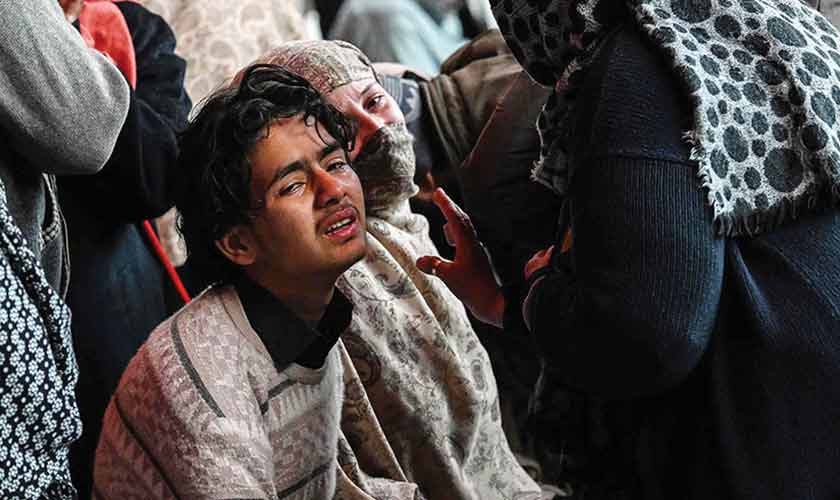
yed Mursaleen Haider and Syed Wasi Haider, brothers, are fighting for their lives after being severely injured in last week’s suicide attack in Khadijah-tul Kubra imambargah in Tarlai, Islamabad. They were in the main hall of the mosque when the suicide bomber was challenged, following which he opened fire and detonated explosives. At least 40 people lost their lives in the attack. More than 200 were injured, many critically.
The attacker had tried to target the main hall of the mosque where hundreds of people had gathered to offer Friday prayers. His interception prevented further loss of life.
“We were inside the main hall when the firing started. Fear gripped us. We rushed outside to save our lives fearing that the roof of the mosque might collapse,” Haider recalls. “We were injured… our uncle lost his life,” he says as tears well up his eyes.
“It will take me several weeks to recover. We are hopeful,” he says, urging the government to help and compensate the families of the victims of the attack. Many of the dead and injured were the only or main bread-winners for their families. “We are helpless,” he says.
On that Friday, bloodied bodies lay on the carpeted floor of the mosque, with scattered glass shards and debris all around. According to some government officials, the suicide attacker, identified as Yasir, belonged to Daesh. The plan was to cause the three-storeyed mosque to collapse. Had it been successful, the number of deaths would have been much higher.
The outer structure of the mosque has been heavily damaged. Prayers, however, continue to be held. People are still visiting the mosque to offer condolences to the imam of the mosque and the families of the victims.
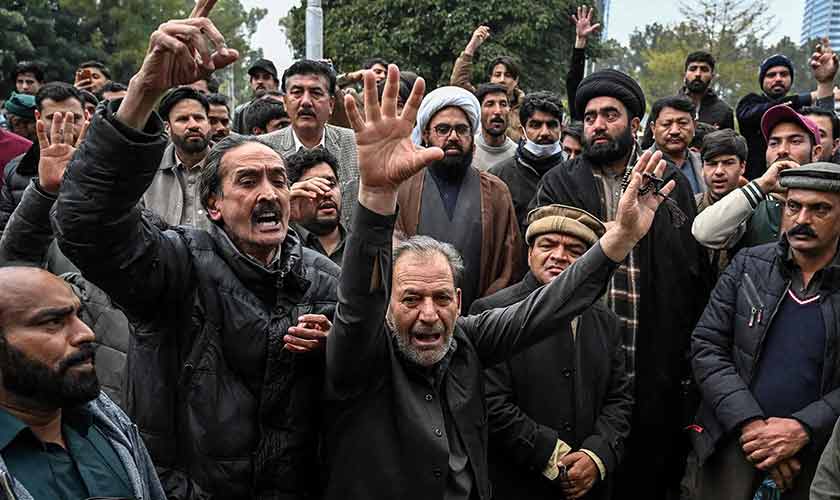
The dead included children and adolescents. There were appeals for blood donations as soon as the victims started arriving at hospitals across the city. Funeral prayers for the victims were held amid heavy security, with thousands gathering in mourning.
In a statement posted on its Telegram account, the Islamic State claimed the attack. A day after the attack Interior Minister Mohsin Naqvi claimed that the planning of and training for the attack were carried out by Afghanistan-based Daesh/ IS militant group. He said four facilitators of the assailants, including the mastermind of the attack, had been arrested.
“We were inside the main hall when the firing started. Fear gripped us. We rushed outside to save our lives fearing that the roof of the mosque might collapse.”
“In a joint operation, the Counter Terrorism Department and other security agencies have arrested all those linked to the attack during raids in Peshawar and Nowshera districts of Khyber Pakhtunkhwa.”
“It was a test case for us,” he said. He also accused India of planning the attack, funding the militant groups and assigning them targets.
“This is a failure of intelligence and a security lapse,” said a relative of a youth who died in the attack last week. “The administration claims that they have close circuit cameras to monitor the city. They have so many Safe City cameras. But every time there is such an attack, these facilities are used to trace the attackers rather than stopping them.”
The minister said security and intelligence agencies had not been negligent. He said the criticism was uncharitable as well as unnecessary. “For every attack of the kind that succeeds, 99 other attempts are foiled,” he said. He said most of the security agencies’ work was not made public.
“We are in a state of war. The terrorists are planning and attempting attacks in Balochistan, Khyber Pakhtunkhwa and elsewhere,” he said. He also said that community intelligence was of utmost importance and urged the citizens to help the security apparatus.
This is the second major attack in the capital city in recent months. In November last year, following a pattern similar to the recent attack, a suicide bomber had tried to enter the district courts complex. Failing to do so, he had detonated the explosives he was carrying at the entrance, hitting a police van. The attack had killed at least 12 people, including policemen. The local authorities had then said that the attacker was an Afghan citizen.
Neighbours say their concerns regarding the safety of places of worship have deepened with Ramazan round the corner. “We look to no one except God for safety and to have mercy on us,” says a local.
The writer is a staff reporter. He can be reached at [email protected].