Print Story
X




Basant 2026 demonstrated Lahore’s ability to hold a safe mega event
| A |
fter a hiatus of nearly two decades, Basant returned to the provincial capital last weekend, drenching the city in a kaleidoscope of colour, music and the long-awaited hum of kites.
As the government officially marked the return after 25 years, for many Lahoris, the revival of the spring festival felt like the end of an era of silence. From the narrow alleys of the Walled City to the sprawling campuses of private universities, Basant 2026 saw families, students and international visitors congregate for a festival that authorities managed to keep both vibrant and safe.
The festival’s return was as much a digital event as a physical one. Social media feeds were flooded with videos of kite-flyers silhouetted against star-studded backdrops of the Badshahi Masjid and Lahore Fort.
“It was about cultural capital and influence,” noted Dr Rizwan Safdar, an assistant professor of sociology at the University of the Punjab. “In the digital age, if you didn’t share the moment online, the perception was that you weren’t part of it.”
Dr Safdar suggested that global media attention has transformed Basant into a “prestige event,” compelling even those who previously lacked interest in kite-flying to join the festivity.
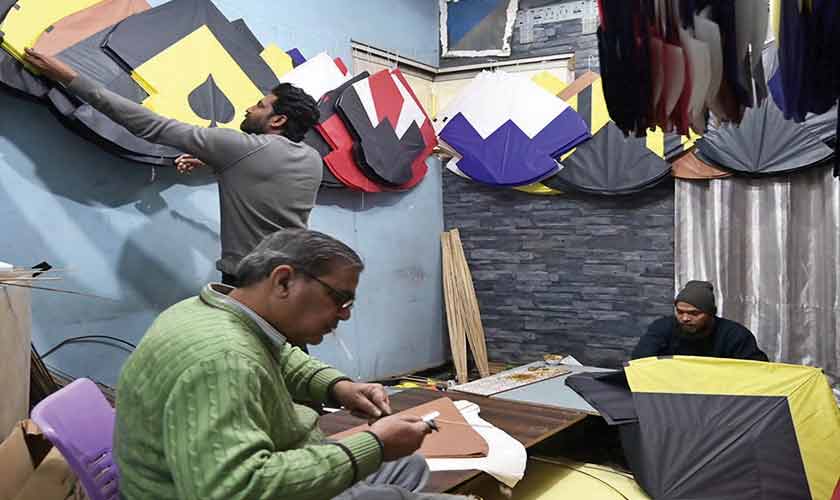
The exclusivity of the event to Lahore sent the local economy into overdrive. Muhammad Asif, a registered kite maker, reported a surge in orders from the Pakistani diaspora.
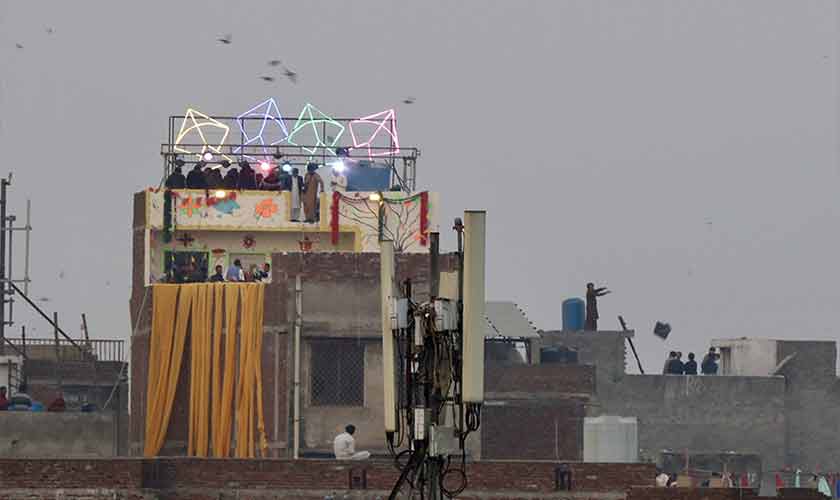
Real estate in the Walled City became Lahore’s most valuable commodity. “Rooftops near iconic monuments were being rented for anywhere between Rs 500,000 and Rs 1.5 million for a single night,” Asif claimed.
While many residents succumbed to lucrative offers from corporate sponsors to turn their rooftops into ticketed VIP venues, some resisted. Ahsan Amjad, a media studies graduate based in Bhati Gate, turned down a high corporate bid. “I prefer to celebrate with my family,” he said, even as his neighborhood transformed into a series of ticketed venues featuring catering and live DJs.
The real estate of the Walled City became Lahore’s most valuable commodity. “Rooftops near iconic monuments were being rented for anywhere between Rs 500,000 and Rs 1.5 million for a single night,” said Asif, a registered kite maker.
| B |
asant 2026 clearly demonstrated that the festival has evolved into a nocturnal celebration. While kites dotted the sky at daytime on each of the three days of the event, the momentum would typically peak in late afternoon and surge through the night.
Private educational institutions also led the charge. National Institute of Technology, in collaboration with Arizona State University, hosted over 1,000 families. The event drew diplomats and local dignitaries. Founder and Chancellor Shahzeb Awan described the festival as “a symbol of hope and a bridge between cultures.”
The economic impact of the three-day event is estimated at Rs 1 billion. To protect this growth, the Punjab government had initiated preparations five months in advance. Key safety measures included real-time monitoring, as police and Safe City authorities monitored rooftops; the distribution of 1.4 million free safety rods for motorcyclists; and medical readiness, as 200 mobile units and 25 field hospitals were deployed to prevent tragedies associated with kite flying accidents.
Vlogger Jamal Wattoo suggested that if managed correctly, Basant could rival international festivals like India’s Holi, which generated approximately $720 million last year.
Chief Minister Maryam Nawaz Sharif expressed her gratitude for a safe and successful event, particularly noting the absence of harassment and casualties.
“The festival brought joy not only to Lahore but to the entire country,” she said, highlighting the participation of the youth.
As the last kites fluttered down on Sunday night, the consensus was clear: Lahore is ready to reclaim its title as the kite-flying capital of the world.
Ahsan Raza is the editor of Minute Mirror. He can be reached at [email protected]