Print Story
X




How conflict and violence might urbanise in 2026
| S |
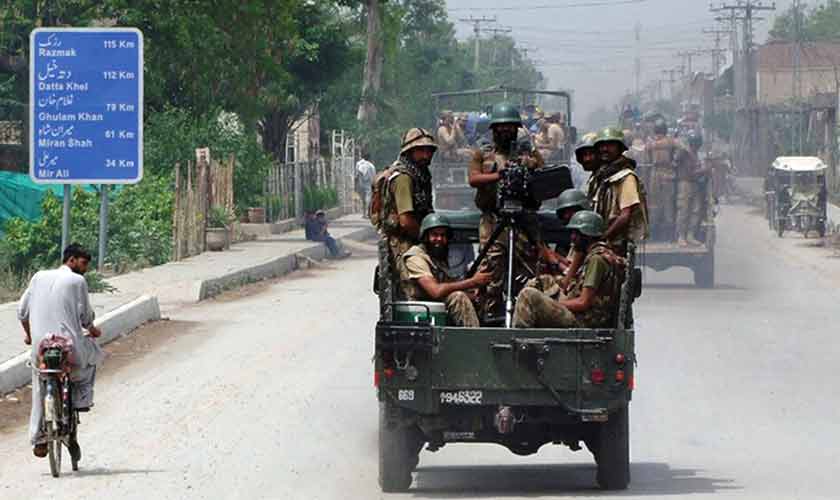
ince 2021, Pakistan has witnessed a sharp and sustained rise in militant violence, influenced heavily by the Taliban’s return to power in Afghanistan and evolving insurgent dynamics along the western borders.
According to a report released by the Pakistan Institute of Peace Studies, terrorist attacks in Pakistan increased by roughly 34 percent in 2025, with a total of nearly 700 attacks and over 1,000 fatalities, underscoring an expanding insurgent footprint beyond traditional rural battlefields.
What once were predominantly rural insurgencies in Khyber Pakhtunkhwa and Balochistan have increasingly spilt into urban centres and high-population areas, as seen in the deadly suicide bombing at an imambargah in Islamabad on February 9, which killed more than 30 worshippers. Just two months earlier, on November 11, a suicide bomber had set off an explosion next to the District Courts Complex in Islamabad.
In April 2024, a series of attacks had resulted in the death of two police officers in Lahore and injuries to several others. Tehreek-i-Taliban Pakistan later claimed responsibility for these incidents. The primary suspect, Faizan Butt, was subsequently apprehended and fatally shot, along with three accomplices, during an encounter with a CTD Punjab team in Lahore in May 2024.
In April 2023, security forces also busted a network of ISKP working in Islamabad with lone wolves. The “freelancers” working for them had no idea what they were doing.
Since 2024-25, increasing attacks have been reported from Dera Ghazi Khan district in the Punjab which touches Khyber Pakhtunkhwa in Dera Ismail Khan district. The protest and crackdown on Tehreek-i-Labbaik Pakistan also saw extensive support from the TTP, even a formal invitation to join their armed struggle. This was followed by a group of young men announcing that while they had no connection with the TLP, they will work to support the religious political party as an armed wing. For its part, the TLP denied affiliation with the armed wing. In his latest audio, released on February 10, TTP’s chief Noor Wali Mehsud once again voiced support for the TLP.
From its propaganda channel, the TTP has issued three statements in support of the TLP. The TTP also released a formal video featuring Maulana Abu Darda, a senior affiliate from South Punjab, asking the TLP, in Seraiki, to join the TTP.
With the start of 2026, the TTP announced its new administrative structure for operations over the coming months. Under this new structure, a paradigm shift was evident as two new zones were established to manage two shadow provinces, namely the Western Zone (Balochistan) and the Central Zone. Both these zones were placed under respective military commanders. Simultaneously, new provinces were added under TTP’s administrative control. This included Kashmir province and Gilgit. In other developments, on December 13, Commander Sanaullah from Ziarat, Balochistan, and on February 2, Commander Abu Jandal from Nawab Shah, Sindh, pledged allegiance to Mufti Noor Wali Mehsud, the TTP leader.
The expansion in the TTP network of alliances from the erstwhile Federally Administered Tribal Areas to Sindh and Balochistan elucidates the TTP’s aim to urbanise its conflict. This became evident when, in its Urdu magazine Mujalla, the TTP stated that their “fight is not only to implement shariah in Khyber Pakhtunkhwa but across the country.”
This evolution in tactics not only amplifies the social and political impact of terrorism but also complicates counterterrorism responses, forcing security and law enforcement agencies to adapt to threats that are no longer confined to border belts or rural tribal zones.
Ever since, frequent reports have been received from the Taunsa belt between the Khyber Pakhtunkhwa and the Punjab, where the group is working to entrench its foothold.
Such trends point to a potential urbanisation of violence, where densely populated areas, symbolic targets and public spaces become key arenas for militant activity, increasing threats to civilians and challenging traditional security measures.
This evolution in tactics not only amplifies the social and political impact of terrorism but also complicates counterterrorism responses, forcing security and law enforcement agencies to adapt to threats that are no longer confined to border belts or rural tribal zones.
Especially in Islamabad, despite placing aggressive security measures like not allowing cars to enter the capital without an M-Tag, putting up multiple check posts inside and around the city, two attacks were reported in a span of three months.
This shift reflects a broader pattern where militant groups are adopting more complex, coordinated tactics, including suicide bombings and attacks on infrastructure.
In recent years, the pattern of violence in Balochistan has also shifted markedly toward urban and semi-urban environments, reflecting both a strategic adaptation by militant groups and deeper security challenges.
Traditional insurgent activity was mostly concentrated in remote tribal areas, but recent coordinated operations have shown a deliberate push into major towns and cities such as Quetta, Gwadar, Nushki, Pasni, Mastung and Kalat, with militants simultaneously targeting police stations, security installations, markets, banks and administrative buildings across urban centres in early February 2026, recording one of the largest offensives of the kind in the province’s history.
Following the conclusion of its Operation Herof II, the BLA issued a message categorically stating that now their operations had “expanded from the mountains and into the urban area.”
These assaults involved gunfire, suicide attacks and incursions into city perimeters, disrupting daily life and prompting emergency responses from law enforcement and military units.
The severity and scope of these attacks, including threats close to government offices and red-zone areas, underline a trend toward urbanisation of violence where the operational reach of groups like the Baloch Liberation Army extends into dense population hubs, aiming to overwhelm security forces and gain publicity as well as operational leverage. At least five female suicide bombers have taken part in recent attacks. This shift combines classic insurgency tactics with urban targeting, complicating counter-insurgency efforts and heightening risks to civilians and economic infrastructure.
The writer is the editor of The Khorasan Diary. He can be reached on X @iftikharfirdous.