Print Story
X




Khyber Pakhtunkhwa has been rattled by terrorism the past year. Where does this place the province in the security paradigm?
| I |
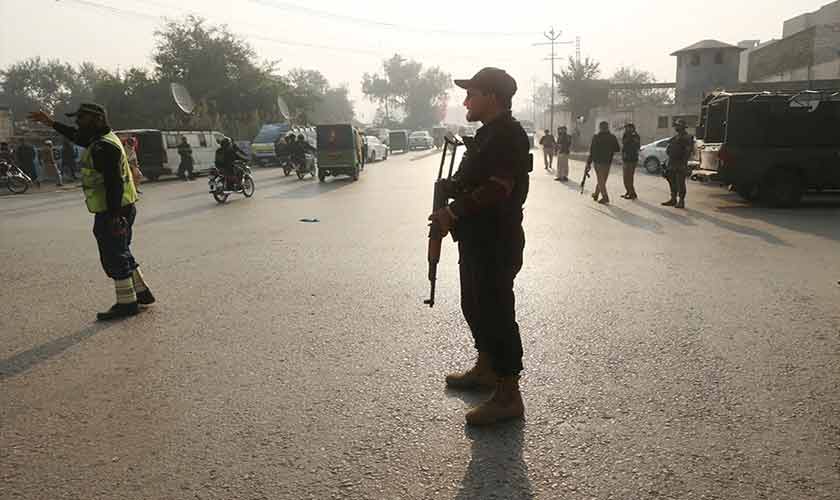
n 2025, Khyber Pakhtunkhwa once again found itself at the centre of a fresh wave of terrorism—harsher and more brutal. After several years of militancy that claimed hundreds of lives and military operations that had pushed militants back, violence surged across the province, particularly in the merged tribal districts, reversing some of the hard-won security gains and unsettling life in these districts.
Official reports suggest that Khyber Pakhtunkhwa recorded hundreds of terrorism incidents during the year. The Counter Terrorism Department had reported 284 terror attacks by mid year, with 148 militants killed by security forces and over a thousand suspects identified. maj605 incidents were recorded in the first eight months in 2025, resulting in dozens of civilian and security casualties and hundreds of injuries.
At the end of 2025, CTD data shows a total of 766 attacks, with 293 terrorists killed and 878 arrested, underscoring the persistence of militancy in the region.
The tribal districts have remained in the grip of terrorism for the last two decades. North Waziristan, historically the most violent district, remained the epicentre of conflict. In the first five months of 2025 alone, 289 fatalities were reported. These included militants, civilians and security personnel. The number surpassed the total fatalities for 2024 and represented a 135 percent surge over the previous year.
North Waziristan recorded 53 incidents; 391 suspects were named in terrorism-related cases. South Waziristan remained a significant flashpoint with 63 attacks, each resulting in multiple deaths among militants and law enforcement personnel. In November last year, the militants targeted Cadet College Wana, but security forces successfully repelled the attack.
Other merged districts also experienced significant violence. In Bajaur, a roadside bombing on July 2 killed five people, including some government officials and security personnel. Kurram witnessed landmine blasts besides the sectarian clashes between Sunni and Shia communities. Even smaller districts such as Orakzai recorded some incidents, with fatalities affecting both local residents and law enforcement personnel.
Beyond the merged districts, violence spread to settled districts of Khyber Pakhtunkhwa. In Lakki Marwat, 73 incidents led to dozens of deaths and many arrests. Dera Ismail Khan witnessed 66 attacks with more than a hundred fatalities. Peshawar, although comparatively better guarded, recorded several incidents affecting both civilians and security personnel.
This resurgence of militant violence is shaped by complex factors.
The Tehreek-i-Taliban Pakistan, Daesh-Khorasan and their allies have regrouped, exploiting rugged terrain, porous Afghan border and administrative gaps. In June 2025, a suicide car bombing in Mir Ali, North Waziristan, killed 14 soldiers and injured dozens of civilians. This was one of the deadliest attacks against security forces in recent memory. The Hafiz Gul Bahadur faction claimed responsibility.
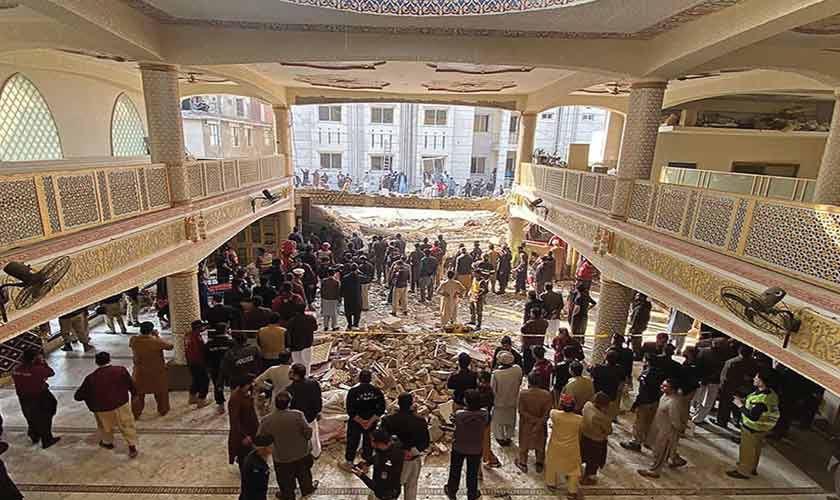
Incidents elsewhere too framed Khyber Pakhtunkhwa’s security landscape. Last week, the suicide bombing in an imambargah in Islamabad’s Tarlai area killed at least 31 worshippers and injured over 170. The attack, claimed by an Islamic State affiliate, was traced to networks in Khyber Pakhtunkhwa, highlighting how instability in the province continues to influence national security.
Maj Gen Amir Riaz (retired) says that militants have adapted by blending into fragmented communities and exploiting political distractions.
DG ISPR Lt Gen Ahmed Sharif Chaudhry linked Khyber Pakhtunkhwa’s surge in violence to a “politically conducive environment” that allowed militants to regroup. He stated in a press conference that nearly 71 percent of terrorist incidents in Pakistan in 2025 occurred in the province, framing the threat as both a provincial and national concern. He cautioned that militancy is “not merely a security issue but also rooted in political fractures and a lack of cohesive national strategy.”
For his part, Chief Minister Muhammad Sohail Afridi has said that all stakeholders must be on board before the initiation of a security operation. He also said that these operations had to go hand-in-hand with development initiatives. “We must address governance gaps, invest in education, provide jobs and support rehabilitation programmes in the merged districts,” he said.
The chief minister acknowledged that without tackling socio-economic and political roots of militancy, violence cannot be uprooted permanently.
Maj Gen Amir Riaz (retired) says that militants have adapted by blending into fragmented communities and exploiting political distractions. “Counter-terrorism cannot succeed solely through force,” he says.
Dr Farzana Qasim, an expert on terrorism at the University of Peshawar, says that the threat landscape has become more complex with “domestic insurgent networks interwoven with transnational terrorist elements like ISKP and sectarian groups,” requiring comprehensive responses.
On the ground, citizens experience the reality of terrorism daily. In Peshawar’s Hayatabad, Muhammad Arif, a shopkeeper, says, “Markets close early, people avoid crowded areas, and even routine travel is a risk.” In Khyber, Bannu and Dera Ismail Khan, he says, “offering funeral prayers has become routine and everyday life has been overshadowed by fear.”
Tribal elder Haji Safiullah of North Waziristan says children now hesitate to go to school and villagers constantly weigh threats from militants against disruptions caused by security operations.
The provincial government has actively engaged in counter-terrorism, combining political advocacy with support for security targeted operations and development programmes. Provincial authorities have strengthened the police and CTD, improved protective infrastructure at posts and checkpoints, and pushed for rehabilitation and vocational training for deradicalised individuals.
Military operations in 2025 targeted militant hideouts in Bajaur, Khyber, North Waziristan and Mohmand. These neutralised some high-value targets and seizure of significant weapon caches was reported. These operations, particularly intelligence-based operations, demonstrate the army’s role in not only eliminating immediate threats but also attempting to hold cleared areas and prevent militant re-entrenchment.
However, challenges persist.
Coordination between federal and provincial governments and security agencies working under these authorities is not always perfect. Political differences regarding engagement strategies with Afghanistan further complicate the operations. Experts say that bridging the political divide and implementing governance reforms in Khyber Pakhtunkhwa are essential to sustain security gains.
In Khyber Pakhtunkhwa, political differences over counterterrorism policy continue to influence efforts against rising militancy. Government leaders still disagree on merits of negotiations with the militants and military operations. Security officials tend to stress that success depends on unity and consistent policy implementation. Experts warn that a fragmented response allows militant groups to regroup, arguing that political consensus and institutional coordination are essential to stabilise merged districts and border regions.
The writer is a freelance journalist.