Print Story
X




On a recent visit to Pakistan, the filmmaker reflected on why confronting uncomfortable truths still carries a cost
| W |
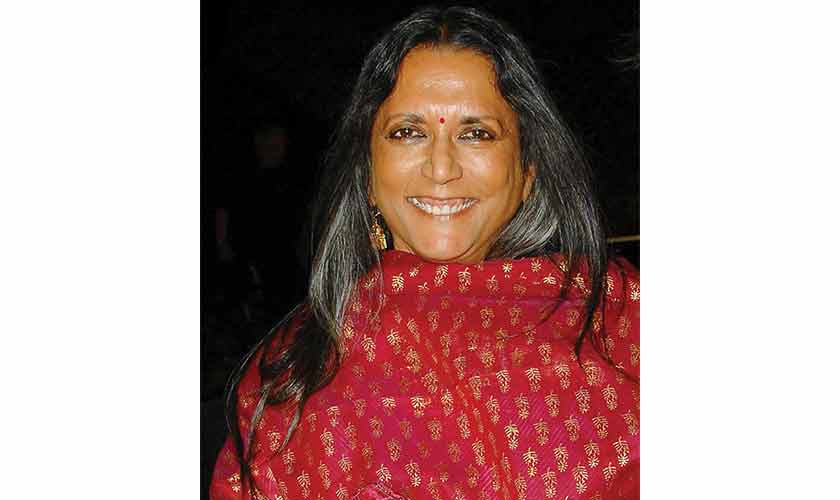
hen Deepa Mehta visited Lahore for the 2026 Lahore Literary Festival, she was not here merely as an internationally acclaimed filmmaker; she was here as a daughter returning to a city that had once shaped her family’s life. Lahore was not an abstraction; it was inheritance.
Her family had lived in the city before Partition. During her visit, she went to Government College University, Lahore, where her father had studied. Standing in its corridors, she found herself overtaken by emotion. It was not nostalgia in the simple sense. It was something more complex and unsettling. “This feeling is a little difficult to explain – a mixture of longing, regret, loss and frozen passion.” Only those who experience it, she suggested, can fully understand it.
Lahore revealed itself to her in unexpected ways. The childhood years of Rudyard Kipling suddenly felt less distant. The fictional world of Kim was no longer confined to the page. Seeing the Kim’s Gun in real time, rather than encountering it in prose, collapsed the boundary between literature and lived geography. She was also struck by the discovery that Kipling’s father, John Lockwood Kipling, had been the founding principal of Mayo School of Art, now the National College of Arts. History, art and personal memory seemed to overlap.
In many ways, Mehta’s return to Lahore mirrored the trajectory of her filmmaking career. She has never shied away from themes others avoid. When told that it took courage to tackle such subjects, she responded with characteristic honesty. In retrospect, she recognised the bravery involved. At the time, she had simply been trying to explore the complexities of human relationships within a changing Indian society. Her commitment lay in following those explorations to their logical conclusion, without compromise.
She did not initially perceive the pursuit of truth as transgressive. Yet the reaction to her films was often fierce. The unmasking of uncomfortable realities was not seen as a challenge to hypocrisy but as an assault on societal honour. That confrontation with the fault lines of Indian norms and relationships has shaped Mehta into the filmmaker she is today. Her body of work stands in a tradition of Indian cinema that has long grappled with social realities. The early productions of the Indian People’s Theatre Association provided one such foundation. Over the decades, the rough edges of social realism have been refined, and the once one-dimensional narratives have gained nuance. Mehta’s cinema belongs firmly within that evolving lineage.
Her visit to Pakistan also revived a familiar longing for greater cultural exchange between the two countries. The idea of shared cinematic spaces once seemed possible. Today, it feels increasingly like a distant hope. Many of the leading figures of Indian cinema hailed from regions that became part of Pakistan, yet few were able to revisit their birthplaces or those of their parents and grandparents. The desire was there but political realities intervened.
This feeling is a little difficult to explain, a mixture of longing, regret, loss and frozen passion.
The fraught relationship between India and Pakistan has produced inconsistent policies on everything, including culture. Cinema has suffered as a result. For Pakistan in particular, the consequences have been stark. The domestic film industry, once vibrant, has dwindled dramatically. Four decades ago, more than a hundred films were released annually. Today, the number hovers at three or four a year.
There are many reasons. Political instability, financial constraints and shifting audience habits have all played a role. The rise of streaming platforms has further disrupted conventional cinema. Globally, theatrical releases face pressure from digital consumption. For industries already fragile, the impact has been severe. Pakistan’s film sector, lacking sustained institutional support, has been especially vulnerable.
In this landscape, Mehta’s persistence offers a kind of lesson. She has remained unrelenting in her artistic choices, refusing to dilute difficult themes for comfort or approval. That steadfastness may serve as a beacon for filmmakers working within constrained environments. Her career demonstrates that courage in cinema does not lie in provocation for its own sake, but in the consistent pursuit of truth, even when it unsettles.
Her time in Lahore was therefore more than a sentimental return. It was a reminder that stories do not recognise political borders. Memory travels. Language endures. Art survives in unexpected forms, sometimes in the rediscovery of a family connection, sometimes in a classroom once occupied by a father, sometimes in a gun that once existed only in a novel.
For Mehta, Lahore was both personal and historical. For observers, it underscored how deeply entangled culture remains across the subcontinent, despite decades of separation. In revisiting her family’s past, she also illuminated a larger truth: that cinema, at its best, is an act of remembrance and resistance.
The journey through Lahore may have stirred longing and loss, but it also affirmed something more durable. The courage to confront uncomfortable realities, whether in film or in history, continues to matter.
The writer is a culture critic based in Lahore.