Print Story
X




Permits for keeping lions as private pets have been revoked across the province
| I |
f there is one universal childhood memory, it is a trip to the zoo — a place where wild animals are kept behind bars for safe observation. Among all the wild creatures, the big cats hold a unique fascination. For decades, it was understood that lions belonged either to the African savannah or regulated safaris. However, a growing human desire to domesticate these apex predators for circuses and personal status has birthed a dangerous trend.
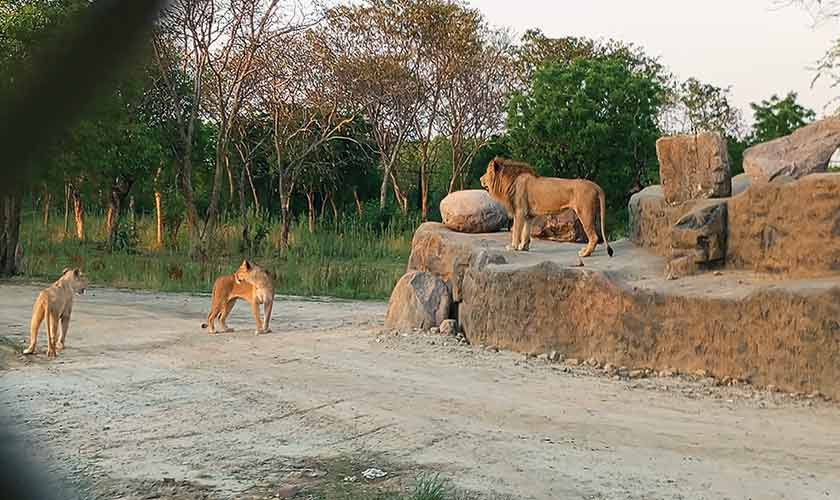
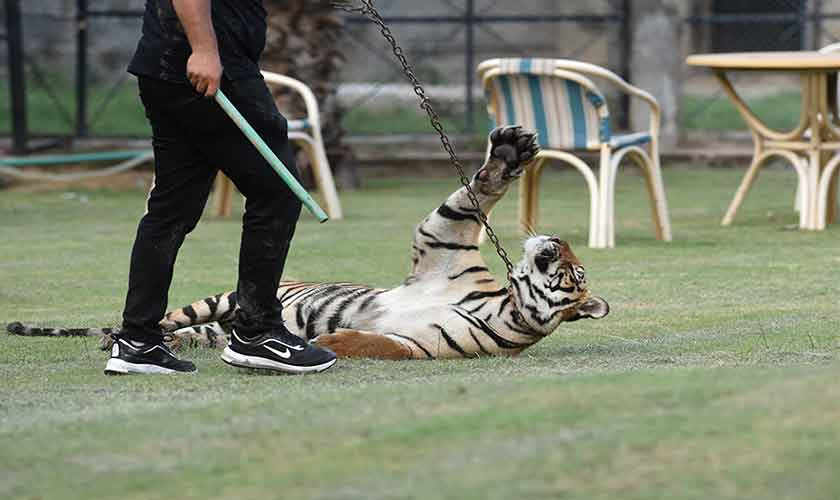
Like most countries of the world, Pakistan has a large population of big cats in unnatural habitats. Through social media people have come to witness the conditions these majestic animals are kept in, how they are tamed, and how they end up losing their grandeur. Deprived of their natural environment, these animals often react with instinctive violence. In two incidents early this year the lions attacked children. Chief Minister Maryam Nawaz has since ordered an immediate, province-wide revocation of all private permits for big cats.
The confiscation is a massive undertaking. Talking to The News on Sunday, Wildlife and Parks Department spokesperson Ramazan said: “Following the CM’s instructions, authorities are drafting a policy to seize 584 big cats across the Punjab. We are also working on a plan for their proper housing and care.”
This follows a December 2023 move in which the department secured the cabinet’s approval to place lions, cheetahs, tigers, pumas and jaguars under Schedule II of the Wildlife Act 1974. The amendment required owners to obtain permits, pay a Rs 50,000 registration fee and house the animals at farmhouses. Violations carry heavy penalties: fines up to Rs 5 million and up to seven years in prison. “Since that amendment, no new licences have been issued,” Ramazan adds.
While the CM’s directive has been welcomed by many, some experts remain cautious. Animal rights lawyer Awais Awan says the revocation of permits is a positive step for public safety. However, he also points to the legal gap.
“It is currently an executive order rather than a formal amendment to the Punjab Wildlife Act. As such, it lacks a clear legal framework for rehabilitating these animals or penalising breeders,” he says.
Awan also points out an irony: Pakistan has no indigenous lion population. The hundreds of lions currently in captivity are the result of exotic imports and prolific local breeding. Despite being a signatory to the Convention on International Trade in Endangered Species, illegal trafficking has remained a persistent issue in the country.
Altamush Saeed, an animal rights advocate, echoes these concerns, noting that roughly 600 lions face an uncertain future. “We hear that for lack of space, some may even be euthanised,” he warns, stressing that the suspension of licences does not entirely solve the problem of illegal trade.
| B |
ig cats aren’t safe to handle without protection. Dr Saleem, a veterinarian specialising in big cats, warns that domestication is often an illusion. “They are inherently wild, driven by hunting instincts. An owner might recognise their moods, but a stranger can never predict their reaction.”
He notes that even “playfulness” of a 400-pound predator can be fatal. His advice is simple: “If you wish to observe them, do so from the safety of an enclosure.” He urges the government to establish strict standard operating procedures rather than reacting only after tragedies or close escapes.
Dr Uzma Khan, a conservation biologist with the WWF-Pakistan and a member of the Punjab Wildlife Management Board, says that the relocation process is phased. “Department teams are stationed round-the-clock at current sites until relocation is finalised. Access is limited to current handlers to minimise stress.”
The proposed plan includes relocation — i.e., moving cats to private zoos and public safaris that meet standards; upgrading Punjab’s 21 captive facilities; and neutering the big cats with multiple litters to manage the captive population and preserve genetic health.
While the Punjab government appears committed to rescuing these animals from “gold-plated cages,” the real challenge is the long-term enforcement of the laws and the successful rehabilitation of nearly 600 apex predators.
R Umaima Ahmed is a freelance journalist