Print Story
X

| T |
he rise of empires has rarely puzzled historians; it is their decline that has generated deep and enduring reflection. Across cultures and centuries, thinkers as disparate as Ibn Khaldun, Edward Gibbon, Arnold Toynbee, Oswald Spengler, Paul Kennedy, Will Durant, and, in the modern era, Eric Hobsbawm and John Mearsheimer, converge on a sobering insight: empires do not usually fall because of sudden catastrophe or external assault alone. Rather, they decay from within through slow, cumulative processes generated by their own success. Power produces expansion; expansion multiplies obligations; complexity strains social cohesion, institutions and moral purpose. As Will Durant famously observed, “A great civilisation is not conquered from without until it has destroyed itself from within.” History suggests that this is less a moral aphorism than a structural law.
Ibn Khaldun’s concept of asabiyyah — social cohesion born of shared hardship—remains one of the most penetrating explanations for imperial ascent and decay. In The Muqaddimah, he argued that political authority emerges from strong group solidarity, typically forged on the margins rather than in settled cores. Empires rise when cohesive groups conquer decadent centres; they decline when prosperity erodes discipline, luxury replaces austerity and rulers substitute coercion for consent. The early Persian Empire exemplifies this dynamic. Under Cyrus and Darius, Persian power rested not only on military conquest but on an inclusive imperial ethos that respected local customs, incorporated elites and generated loyalty across vast territories. Yet over time, courtly luxury, dynastic intrigue and dependence on mercenaries hollowed out Persian cohesion. By the time Alexander arrived, Persia possessed overwhelming resources but lacked the unity and resolve to deploy them effectively.
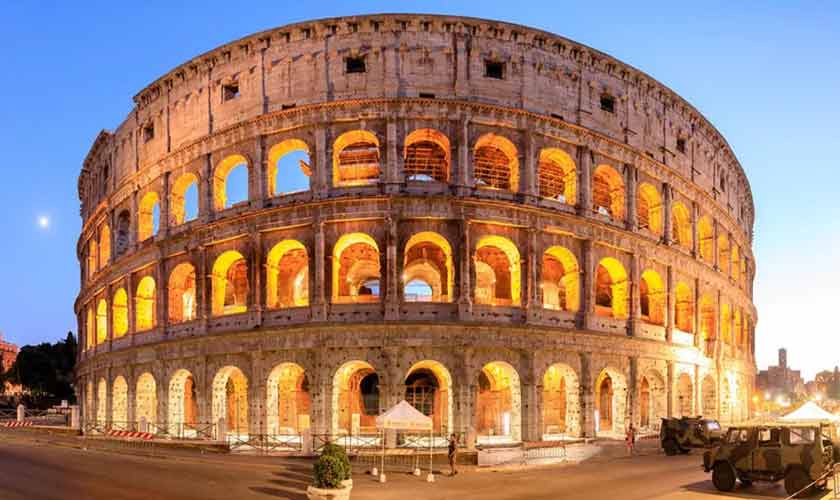
Edward Gibbon, writing on Rome, framed the same phenomenon through the erosion of civic virtue. For Gibbon, Rome’s fall was not an abrupt collapse but the “natural and inevitable effect of immoderate greatness.” Republican discipline, citizen armies and a culture of public duty enabled Rome’s ascent; imperial overreach transformed citizens into subjects and soldiers into mercenaries. The empire’s frontiers expanded faster than its fiscal and social capacity to sustain them, anticipating Paul Kennedy’s later concept of imperial over-stretch. Rome did not fall in a single moment — it hollowed out over centuries, burdened by military expenditure, bureaucratic sclerosis and declining civic trust.
The Mongol Empire illustrates Khaldun’s cycle in accelerated form. Its rise rested on perhaps the most intense asabiyyah in history: steppe solidarity forged through hardship, meritocracy and personal loyalty to charismatic leadership. Genghis Khan transformed this cohesion into unmatched military adaptability. Yet the very speed of Mongol expansion undermined its durability. Once conquest gave way to administration, unity fractured into dynastic and regional divisions. Luxury replaced austerity and the empire splintered into khanates lacking the original social glue. Toynbee’s insight is instructive here: civilisations decline not because they are defeated, but because they fail to respond creatively to new challenges — in this case, governance.
The Ottoman Empire demonstrates that longevity depends on institutional adaptability. Its rise combined frontier solidarity, religious legitimacy and administrative innovation, particularly through a professional bureaucracy and flexible incorporation of diverse populations. For centuries, the Ottomans adapted successfully to shifting military and geopolitical realities. Their decline began when institutions ossified, reform threatened entrenched elites and economic power shifted to the Atlantic world. Toynbee’s warning that civilisations die from suicide rather than murder captures the Ottoman experience precisely: conquest followed decay, not the reverse.
Paul Kennedy’s analysis of the British Empire brings economic structure to the forefront. Britain rose through naval dominance, industrial productivity and relatively inclusive political institutions that mobilised capital and innovation. Its empire relied less on occupation than on trade, finance and maritime control. Yet imperial success generated global commitments that exceeded Britain’s economic capacity. Two world wars and the cost of maintaining global order exhausted its fiscal base. As Kennedy warned, military power rises and falls with economic foundations. Britain’s decline was not a failure of competence or courage, but of arithmetic.
Eric Hobsbawm deepens this argument by embedding imperial rise and decline within the long cycles of capitalism. Empires are not merely political entities; they are expressions of specific economic regimes. The European empires of the Nineteenth Century were inseparable from industrial capitalism, fossil fuels and global markets enabled by imperial power. Their collapse followed not simply moral decay, but the exhaustion of the economic order that sustained them. The Twentieth Century, for Hobsbawm, marked a structural rupture: mass politics, nationalism and industrial warfare rendered empire politically illegitimate and economically unsustainable. World wars were not anomalies but symptoms of systemic crisis.
This framework is indispensable for understanding American power. The United States differs from earlier empires in lacking formal colonies, yet its informal empire — rooted in dollar hegemony, military basing, global institutions and cultural dominance — is no less real. American primacy arose from an extraordinary convergence: continental-scale resources, industrial supremacy, victory in two world wars and the devastation of rival powers. The post-1945 order reflected what Hobsbawm called capitalism’s “golden age,” when American productivity, social cohesion and institutional leadership aligned. The erosion of that economic model since the 1970s — through de-industrialisation, financialisation and rising inequality—has quietly undermined the material foundations of US hegemony. From this perspective, American decline is not primarily a failure of values or leadership, but the consequence of sustaining imperial commitments atop an increasingly fragile economic base.
Where Hobsbawm supplies historical structure, John Mearsheimer supplies the brutal logic of power politics. In The Tragedy of Great Power Politics, Mearsheimer argues that international politics is governed by anarchy: in the absence of a higher authority, great powers are compelled to seek dominance to ensure survival. Conflict is not an accident but a structural outcome of power transitions. The rise of a challenger inevitably generates fear in the dominant power, regardless of intentions. Institutions and norms may moderate behaviour, but they cannot override the underlying incentives of the system.
This realist lens sharpens the ancient insight of Thucydides. The rise of China, like the rise of Athens or Germany, creates fear in the ruling power not because the challenger is uniquely aggressive, but because its growing capabilities threaten the existing hierarchy. American efforts to contain China and China’s efforts to push US power out of East Asia are not policy choices alone — they are structural imperatives.
Mearsheimer also exposes a recurring imperial pathology: declining powers often overestimate their capacity to control outcomes, underestimate challengers’ resolve and pursue strategies that accelerate balancing against them. Over-stretch, in this sense, is not only economic but strategic.
The portents for American empire, viewed through this combined historical and realist lens, are sobering. Khaldun and Fukuyama would note weakening internal cohesion and institutional adaptability; Gibbon would recognise the dangers of immoderate greatness; Kennedy would point to overstretched commitments; Hobsbawm would emphasise eroding economic foundations; Mearsheimer would warn that power transitions are inherently dangerous. Like Britain, the United States is unlikely to suffer a sudden collapse. But it is also unlikely to retain uncontested primacy in a world where economic gravity and strategic resolve are shifting eastward.
China’s rise, meanwhile, displays many features associated with early imperial ascent: economic dynamism, technological catch-up, strong state capacity and a modern form of asabiyyah rooted in nationalism and developmental success. History counsels restraint. As China grows wealthier and more complex, it will face the same challenges of inequality, demographic strain, institutional rigidity and overreach that have confronted all great powers.
The enduring lesson of imperial history is not that decline is inevitable in a deterministic sense, but that power contains the seeds of its own erosion. Empires rise through cohesion, adaptability and inclusive institutions; they decline when success corrodes solidarity, obligations outpace resources, elites resist reform and societies lose the capacity to respond creatively to new realities. As Khaldun, Gibbon, Toynbee, Hobsbawm and Mearsheimer each remind us in different registers, empires do not escape history — they are governed by it. The tragedy is not that power fades, but that it so often recognises the limits of its foundations only when adaptation has become hard and conflict likely.
The writer is a professor in the Faculty of Liberal Arts at the Beaconhouse National University, Lahore.