Print Story
X




A look at some defining performance indicators of the national legislature as it completes two years this month
| T |
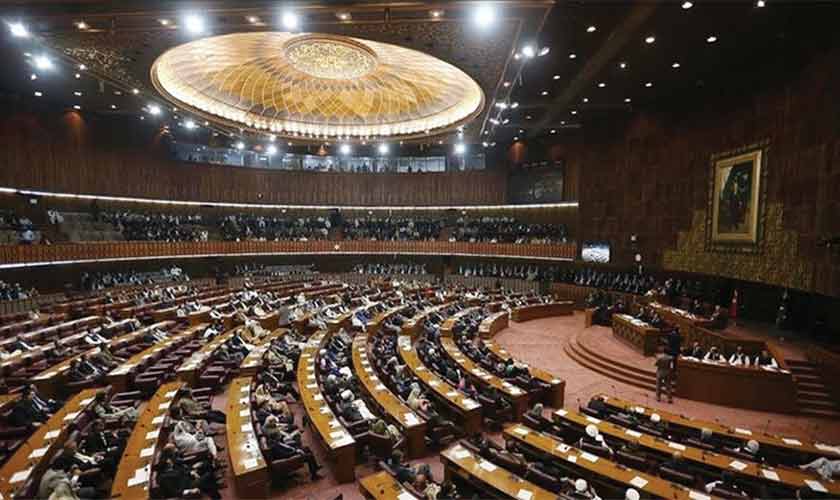
he current National Assembly of Pakistan, the 16th national legislature of the country, is about to complete its two years since it took oath on February 29, 2024, following the general election. Although the overall performance of the assemblies over the years has not varied much, there are some prominent features of the performance of the current assembly that may need to be recalled at the close of the second year.
The ruling coalition and the opposition have seen tense relations in the past, but the current National Assembly is experiencing one of the most bitter confrontational relations between the two. The opposition, mainly consisting of PTI-supported independents, mostly boycotted the assembly proceedings or resorted to noisy protests.
Two key developments reflected the state of treasury-opposition relations in the assembly. First, all PTI-affiliated members resigned from the standing committees of the National Assembly and the Senate in August and September 2025, respectively. This is a great setback to the parliament as standing committees are prime forums of parliamentary oversight. Opposition members have a key role in holding the government to account. The Public Accounts Committee is generally headed by an opposition member. With the resignation of PTI nominee as chairman, the most important committee of the parliament has been rendered ineffective.
The leaders of the opposition in the National Assembly and the Senate play a very important role not only in parliamentary proceedings but also in political decision-making in a wider sense. Seats of two opposition leaders fell vacant following their disqualification and conviction by the courts in July 2025. The election of a new leader of the opposition should normally take no more than a week as the process is very simple. Sadly, it took five long months to undertake this simple exercise indicating the sad state of relations between the ruling and opposition parties.
Statistics indicate that the average attendance of members during the two years of the 16th Assembly was around 60 percent, which is not much different from the average attendance in the previous assembly.
During the five-year term of the previous (15th) National Assembly, 72 out of 452 or about 16 percent assembly sittings had to be adjourned because quorum was lacking. It is estimated that the number of sittings lacking quorum during the first two years of the current National Assembly may be even higher because the opposition has frequently used pointing-out of lack of quorum as a tool to disrupt the proceedings.
Both the 16th National Assembly and the current Senate, on an average, worked for around 2 hours per sitting. By any standard, these are very low numbers of working hours. By comparison, the Indian Lok Sabha, has worked 6 hours per sitting, on average.
The low number of working hours explains the non-consideration of more than half of the items on the daily agenda (order of the day) of the National Assembly.
The 16th National Assembly passed 47 and 50 bills in the first and second year, respectively. An average number of 48.5 bills per year in the first two year is 137.5 percent higher than the two-year average of 20 bills per year in the previous (15th) National Assembly. The legislative activity of the current National Assembly in its first two years is thus substantially greater than the past four assemblies.
The parliament has passed two constitutional amendments during the two years. The 26th Amendment was passed in the first year (2024-2025), at a time when the ruling coalition did not have the required two-thirds majority. Although extensive debate did not take place within the parliament, a lot of negotiations took place among the parliamentary parties in informal parliamentary consultation. The JUI-F had become key to such negotiations and the draft constitutional amendment bill had to be significantly modified before its approval by the parliament.
The original plan to constitute a Federal Constitutional Court, independent of the Supreme Court, had to be abandoned in favour of a constitutional bench within the Supreme Court. When the 27th Constitutional Amendment Bill was introduced in the parliament during the second parliamentary year (2025-2026), the PML-N and its allies, including the PPP, had secured the required two-thirds majority thanks to the Supreme Court judgment that allocated reserved seats to the PML-N, the PPP and other parties that had previously been allocated to the PTI. Not much debate or deliberations took place within or outside the parliament prior to the passage of the 27th Amendment.
On January 21, the National Assembly passed the Elections (Amendment) Bill, 2026, which introduces provisions allowing legislators to keep their statements of assets and liabilities confidential, if such disclosure poses a ‘serious threat’ to their life or safety. Although the bill has yet to become an Act of the parliament as the Senate has not passed it so far, the bill has been criticised by the media and civil society as the planned confidentiality will run counter to the principle of transparency covering political leadership and legislators. It is hoped that the Senate will not pass the bill in view of the criticism it has attracted.
The current National Assembly has three more years before it completes its five-year term. The current Senate has two more years before half of its members are replaced. It remains to be seen whether the two houses of the parliament find a way of peaceful and productive proceedings despite political differences. It also remains to be seen whether the parliament will genuinely endeavour to develop a cross-party consensus on legislation, especially the constitutional amendments, instead of steamrolling the bills.
The writer is president of the Pakistan Institute of Legislative Development and Transparency, which has been monitoring the quality of democracy and performance of the parliament for the last 23 years.