Print Story
X




Is a PTI divided against itself resigned to an uncertain fate in Khyber Pakhtunkhwa?
| F |
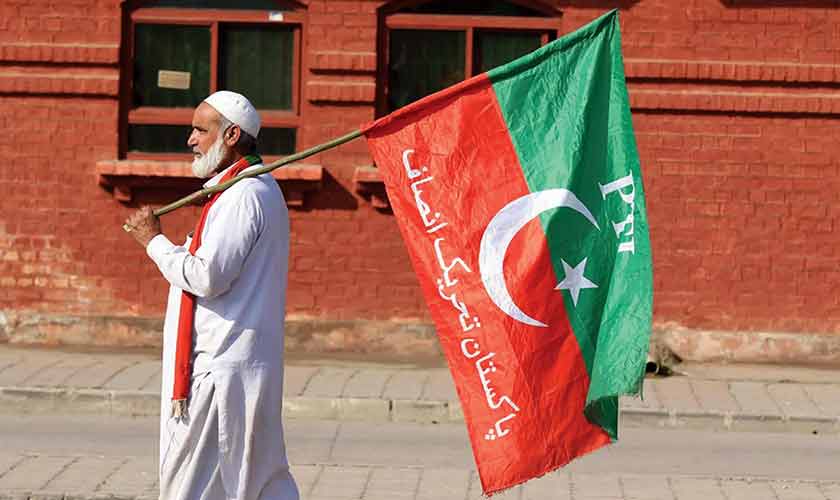
ew parties in the annals of Pakistani politics have demonstrated the electoral prowess and resilience of the Pakistan Tehreek-i-Insaf. Founded by Imran Khan in 1996, the party has evolved from a fringe movement advocating accountability of the corrupt to a dominant force in the country’s northwest. The 2024 general elections marked a historic milestone for the PTI, as it secured power in Khyber Pakhtunkhwa for an unprecedented third consecutive term, defying alleged electoral rigging aimed at sidelining its imprisoned leader.
The victory, however, has been overshadowed by internal divisions, leadership upheavals and governance failures that have reduced the party to sporadic protests and social media campaigns, even as the province grapples with escalating security threats and economic hardship.
The PTI’s governance journey in the province began in 2013, when capitalising on Imran Khan’s charisma and promises of reform, it first formed the provincial government under Pervez Khattak. The party retained power in 2018 with Mahmood Khan at the helm, focusing on initiatives like the Sehat Card health insurance and police reforms. In 2024, despite Imran Khan’s incarceration on multiple charges (which he and his supporters claim are politically motivated), PTI candidates running formally as independents due to the revocation of the party’s electoral symbol, swept the polls in Khyber Pakhtunkhwa, securing a commanding majority in the provincial assembly.
This was no small feat.
The elections were marred by controversy. The PTI pointed to internet shutdowns and accused the establishment of favouring a Pakistan Muslim League-Nawaz-led coalition that eventually formed the government at the Centre. PTI leaders, including Taimur Saleem Jhagra, alleged widespread rigging and a special provincial committee was formed in January 2026 to investigate these claims.
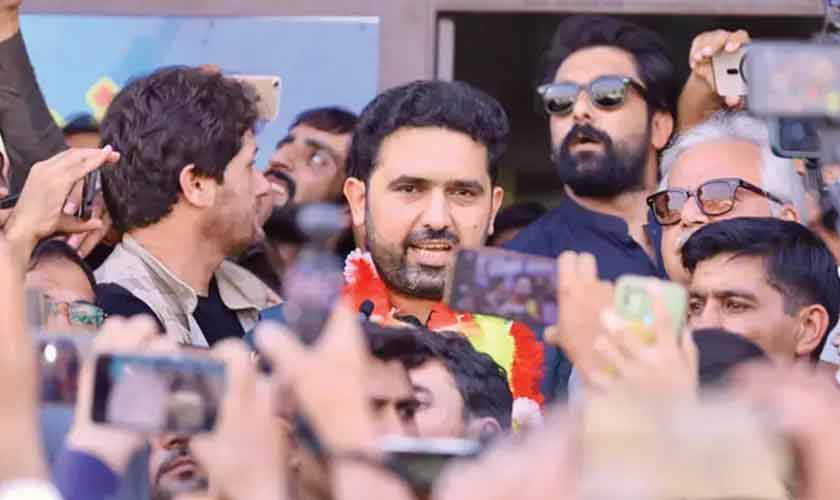
Most analysts put the PTI’s success down to grassroots support in Pashtun-dominated areas. The anti-establishment sentiment, fuelled by economic hardship and resentment over Imran’s ouster in 2022, they said, was running deep. However, the absence of two former chief ministers—Pervez Khattak and Mahmood Khan—highlighted early cracks in party unity.
Meanwhile, following the Afghan Taliban’s 2021 takeover of Kabul, the province was witnessing a resurgence of attacks by militant groups like the Tehreek-i-Taliban Pakistan and the Islamic State Khorasan Province. Political instability across Pakistan, including the rising tensions following PTI’s dissolution of provincial assemblies in 2023 to force early polls, compounded these issues.
Thus, the PTI’s third term began under immense pressure.
One of the most striking aspects of PTI’s 2024 resurgence was the notable absence of several stalwarts. People like Atif Khan, a long-time aspirant for the chief ministership, and Jhagra were sidelined. Atif Khan, known for lobbying against previous chief ministers (Khattak and Mahmood Khan) failed to secure a seat in the assembly. Jhagra, a former finance minister, joined the chorus of rigging allegations after his electoral defeat.
These departures were not isolated; they reflected pressure on the PTI. Many party leaders faced arrests. There were several defections, weakening the party’s institutional memory. This apparently caused the PTI to rely on less experienced leaders, contributing to governance lapses. Over a dozen cabinet members, for instance, were dismissed during Chief Minister Ali Amin Gandapur’s tenure. They included Shakeel Khan, who was accused of corruption. The purges further fragmented the party. The Atif Khan group, once influential, retreated to symbolic participation.
For PTI, resolving differences within and focusing on policy could revive its fortunes. Continued infighting risks alienating its electoral base.
With a two-thirds majority, Ali Amin Gandapur ascended to the chief ministership in early 2024, embodying PTI’s anti-federal and anti-establishment ethos. His administration promised bold reform but was quickly mired in confrontation. Gandapur led two major protest rallies in 2024 aimed at securing Imran Khan’s release; both failed, amid escalating tensions with the federal government.
A pivotal fracture emerged after Bushra Bibi, Imran’s Khan wife, relocated to Peshawar and allegedly tried to influence government affairs. Complaints from Gandapur’s aides about her ‘meddling’ led to factionalism: one group remaining loyal to Gandapur; the other siding with Bushra Bibi. The rift widened during the November 2024 march to Islamabad, when they accused each other of causing chaos and leaving the activists leaderless.
Gandapur’s tenure was plagued by corruption scandals. Allegations of financial irregularities persisted from his first year. Some critics argue that his focus on protests diverted attention from governance, contributing to the province’s deteriorating law and order, with militant attacks surging in 2024-2025. Public discontent grew, as evidenced by Gallup surveys showing declining satisfaction over unemployment and infrastructure.
Bushra Bibi’s presence in Peshawar not only intensified factionalism but also symbolised the personalisation of PTI politics. Her advisor, Mishal Yousafzai, was twice dismissed on charges of deviation from party line. After Bushra Bibi was imprisoned, Aleema Khan, Imran Khan’s sister, emerged as a vocal critic of Gandapur’s inability to force her brother’s release.
Aleema’s advocacy intensified in 2025, amid restrictions on family visits to Khan. Gandapur was finally ousted in October 2025, citing governance failures and stalled efforts for Imran Khan’s release. These interventions highlight a pattern: PTI’s decision-making increasingly revolves around Imran Khan’s inner circle, sidelining elected leaders and resulting in charges of nepotism.
Gandapur’s resignation paved the way for Muhammad Sohail Khan Afridi, a 36-year-old PTI MPA from Khyber district, who became Pakistan’s youngest chief minister in October 2025. Elected unanimously, Afridi was Khan’s choice for the office.
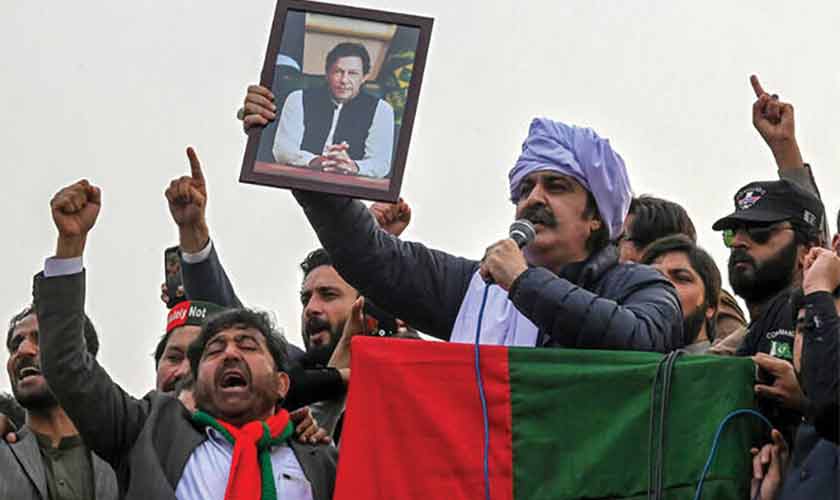
Despite fiery speeches against the federal government and the establishment, Afridi has struggled to make an impact. His administration has faced criticism for worsening conditions. Restrictions on Khan’s visitors have intensified. In early 2026, Afridi met Prime Minister Shahbaz Sharif to discuss security and funds. The meeting did not result in a breakthrough.
Insiders say while Afridi brings youthful energy, he lacks crucial leadership experience. His recent statements blaming federal government’s policies for the surge in terrorism and advocating provincial input in counter-terror strategies are seen as counterproductive.
With federation-province relations nearing hostility, Khyber Pakhtunkhwa is headed nowhere. Internal groupings have confined the PTI to social media and street protests, eroding its governance credibility. Broad implications of this paralysis include weakened counter-terror efforts. For the PTI, resolving differences within and focusing on policy could revive its fortunes. Continued infighting risks alienating its electoral base.
While the party’s electoral dominance has endured, internal strife threatens to undermine its legacy, leaving Khyber Pakhtunkhwa vulnerable amid increasing unrest. As of February 2026, the path forward remains uncertain, hinging apparently on Imran Khan’s release and PTI’s ability to heal its fractures.
The writer is a Peshawar-based journalist, researcher and trainer. He also works for the digital media platform The Khorasan Diary.