Print Story
X




Khyber Pakhtunkhwa is in the grips of multiple challenges but does the PTI realise the task at hand or is it too occupied with post-election politics?
| T |
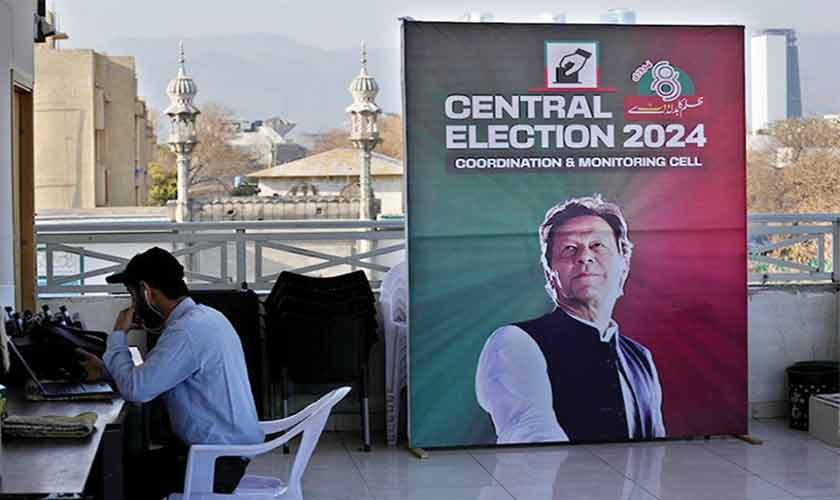
wo years have passed since the February 8 general elections. The electoral exercise remained controversial from the start of campaigns; through the polling day; and long after the results had been announced. Allegations of irregularities, disputes over results and sustained political agitation have left a lasting imprint on governance in Khyber Pakhtunkhwa, where the Pakistan Tehreek-i-Insaf emerged as the largest party despite contesting polls in extraordinary circumstances.
Ahead of the elections, the PTI was denied its electoral symbol. The decision significantly reshaped the political landscape. The electoral process was also marred by delays in the announcement of results; allegations that some returning officers had altered vote counts on Form 47; and disputes over the allocation of reserved seats. These controversies led to the suspension of Senate elections in Khyber Pakhtunkhwa, prolonging political uncertainty in the province.
Despite these challenges, the PTI formed the provincial government, having emerged as the single largest party. However, the party’s leadership has consistently questioned the broader electoral outcome.
In the media and in public speeches, PTI leaders have argued that collated Form 45 data, which records results at the polling station, reflected a clear mandate in the party’s favour. They allege that some returning officers deliberately altered results while compiling Form 47, reversing outcomes to defeat PTI candidates in both the National and Provincial Assemblies.
The political fallout from these allegations has significantly shaped governance in the province. The provincial government is currently grappling with some major challenges, including strained political and financial relations with the federal government and worsening security in the southern and merged districts.
Chief Minister Muhammad Sohail Afridi, in a recent meeting with the prime minister, raised the issue of pending federal payments, including allocations under the National Finance Commission award, the Accelerated Implementation Programme and the net hydel profit.
According to the chief minister, delays in the release of federal dues have placed severe strain on the province’s finances. The prime minister directed Federal Minister for Planning and Development Ahsan Iqbal and other officials to hold a meeting with Khyber Pakhtunkhwa’s Finance Adviser Muzammil Aslam to work toward a practical solution.
The provincial government has repeatedly organised protests against what it describes as large-scale election rigging. These demonstrations have also demanded the release of PTI founder Imran Khan and visitors’ access to him.
Kamran Bangash, a former special assistant to the Khyber Pakhtunkhwa chief minister for information and higher education, is among the people who have challenged the 2024 election results. Bangash contested the 2024 elections from PK 82. He alleges that vote counts were altered in several constituencies that the PTI had won.
“In my constituency, there was visible manipulation,” Bangash says. “Voters’ rights were undermined and results altered through Form 47.”
According to the Election Commission of Pakistan result, Bangash lost the Provincial Assembly seat to Malik Tariq Awan, an independent candidate, by a margin of about 6,000 votes. Bangash disputes the official outcome, arguing that the defeat exists “only on paper.”
“To the people, I remain their true representative,” he says. Bangash maintains that Form 45 reflects the genuine will of voters at polling stations, in contrast to Form 47, which he says was used at a later stage to alter the outcome and steal their mandate.
“Our entire movement, post election, is centred around the illegitimacy of this government, and the Form 47 election results.” Jhagra adds that public support does not disappear in the face of injustice, “whether it is for Imran Khan who is in jail or to force the integrity of election results.”
Bangash says his supporters in the constituency had rallied behind him to protest the injustice. “Every avenue was pursued, including street protests, media engagement and legal action,” he says. He says the struggle continues.
Bangash hopes that the ECP and the judiciary will address their grievances. “All disputes should be resolved through democratic means,” he says. “The sanctity of the public mandate must be upheld.”
He calls for a comprehensive review of electoral procedures. “Any mechanism that allows the public mandate to be altered at any stage raises serious questions about the credibility of the system.”
“The 2024 electoral manipulation is the central issue, not just for the PTI, but also for the future of elections in Pakistan,” says Taimur Khan Jhagra, the former Khyber Pakhtunkhwa finance minister. “If we let this go, democracy and future elections will be meaningless. Only the worst kind of politicians will then be willing to contest elections across Pakistan.”
“The regime was sure that its prepoll rigging had succeeded. It therefore allowed polling to proceed freely,” he says. “Then it panicked.”
Jhagra says none of the “Form 47 MNAs/ MPAs” could produce the original Form 45s. “We have many copies collected from our candidates,” he says. “However, not a single case has been decided on merit.”
“In many constituencies, Form 47 results amount to turnout in excess of 100 percent. In many other constituencies, the turnout doesn’t match with the NA results. However, the Form 45 results are consistent. In some constituencies, Form 47 and Form 46 counts don’t match.”
“In my constituency, PK 79, 64 of the 66 Form 47 official results have overwriting,” he says. Had original Form 45 results been examined, he says, the cases would have resolved within a day. “Two years later, this regime can only resort to repression to hide its original sin.”
In Peshawar, he says, 8 Provincial Assembly seats and one National Assembly seat were ‘stolen.’
“A regime that was willing to go to any lengths to fudge and forge election results will now go to any lengths to hide its forgery… This election commission is the most disrespected one in the history of Pakistan.”
Jhagra says following 26th and 27th Amendments, the Judiciary has effectively become an arm of the Executive. “This view is shared by the man on the street.”
“Recourse to courts is like the safety valve in a system. Remove these safety valves and once the pressure exceeds a point, it will explode. If and when that happens, this ECP, the courts and this regime will be responsible for the outcome. Meanwhile, we have to continue this fight.”
“Our entire movement, after the election, has been about the illegitimacy of this government, and the Form 47 results.”
Jhagra says that public support does not vanish in the face of injustice, “whether for Imran Khan who is in jail, or to establish the integrity of election results.”
The former minister hopes that the provincial government in Khyber Pakhtunkhwa will initiate an inquiry into the electoral process in the province, something the previous CM (Gandapur) didn’t or couldn’t do. “We need some way of being able to push back.”
“We don’t need more reform on paper. We need a commitment across stakeholders on the integrity of the electoral process. Otherwise, let’s stop pretending to being a democracy.”
Political analysts say the ongoing turmoil has compounded governance challenges in Khyber Pakhtunkhwa. Fayyaz Ahmed, a political analyst, says the region faces a serious security challenge linked to militancy. He says the lack of coordination between the provincial and federal governments is a serious impediment.
Referring to disagreements over the military operation in the Tirah Valley, he says, “There is a clear lack of coordination between the Centre and the provincial government regarding the anti-militancy actions and the displacement.”
Afghanistan remains another major factor affecting the province’s security and stability. Ahmed says the provincial government favours dialogue with the Afghan Taliban and has opposed the federal government’s policy and positions.
The provincial government also claims that the federal government has failed to release long-pending dues, placing Khyber Pakhtunkhwa under severe financial strain. Ahmed says political instability continues to hinder effective administration in the province.
The writer is a multimedia producer. He tweets @daudpasaney.