Print Story
X




Two new short story collections mark a shift and expose the limits still holding women’s writing back

| J |
Just when I had convinced myself that it would be years before a Punjabi-speaking woman on the western side of the border would consider producing fiction in her mother tongue, two fine collections of short stories by Samina Asma and Ayesha Aslam appeared on the horizon. It is refreshing to read both writers back to back, as it allows one to appreciate the wide spectrum of registers that define the Punjabi language. Whereas Samina Asma’s Punjabi is largely that which is spoken and heard in Lahore and its environs, Ayesha Aslam’s fiction is rooted mostly in rural Seraiki, which is not easy on the eye at first. After struggling through the first couple of stories, however, the sweetness begins to sink in.
That said, the stories in both collections, in terms of content, offer a mixed bag. Although all the stories manage to hold the reader’s attention, often piquing curiosity and sometimes testing patience, only a few rise above the familiar trope of women’s issues. Still, despite being somewhat too many for my personal taste, the stories are tucked into slim collections that help redress the imbalance in favour of female agency and point of view. The more female authors there are, the more female-centric narratives can emerge.
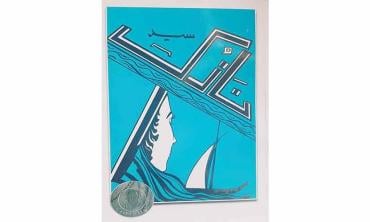
In Samina Asma’s collection, the title story patnaN day taaru and suknay pa’ey leeRay stand out as the finest. Both avoid the familiar and engage in subtle observations that extend beyond the obvious. The latter, in particular, centres on a mother’s observations through a window in her daughter’s house in Australia, where she is on a short visit to see her newborn grandchild. Through the window, all she sees is a fresh set of clothes hanging to dry on a clothesline, put up by her daughter’s presumably white neighbours, who never appear in the story. This stands in stark contrast to life back home, where guests at a neighbour’s house are greeted by other neighbours as well.
Without being verbose, pontificating or judgmental, the author offers a quiet observation on modern life, marked by diminishing human connection and a tendency to turn living beings into objects or mechanical entities. The title story affirms the courage and resilience of a female protagonist who refuses to give in despite the constraints imposed by a patriarchal structure. It ends on a complex and poignant note: a good man offers her stability and happiness, yet something deep within her longs for lost independence — and for a night’s sleep on the concrete floor of her own.

It is better to fail while attempting to produce a nuanced and complex work of literature than to end up with something slim, petite and pretty, and risk-free.
However, the collection risks being bogged down by tragedies heaped upon female protagonists, often narrated through a middle-class or slightly more secure female voice. My advice to Samina would be to try her hand at longer pieces and allow her characters to defy authorial control. Although her stories Jhalli, Taangh and chup are weaker, they nonetheless hint at her potential as a stronger writer, particularly in the way she invokes themes of madness, sexual awakening and silence.
Ayesha Aslam’s khari is more firmly rooted in a stream-of-consciousness style, allowing the reader a glimpse into the states of mind of her protagonists. However, her stories barely develop beyond vignettes, thin slices of poor to lower-middle-class lives, mostly lived by women toiling away either physically or emotionally. Despite the charming sound of Seraiki, almost all the stories lack nuance, even rasa, with the exception of laajo niyaN lachchiyaN and ya wadud di tasbih. Both stories go a little deeper in exploring the complex relationships younger women share with their mothers and/ or elders in the family, pointing out that patriarchy’s gradations are not simply black and white, nor do they require a Western or Oriental lens.
At the end of khari, Tauqeer Chughtai offers a succinct synopsis and distillation of the stories, noting that Ayesha does not merely tell stories but also makes us recognise injustice and cruelty. Her voice, he adds, is one of lament, of centuries-old silent aches buried under the weight of patriarchy. That is precisely the problem with her stories. The burden of such a voice becomes so heavy that the art of fiction becomes secondary, which ultimately is a disservice to the form.
Our writers need to recognise the need of the moment. They must learn about literature being produced in other countries and languages. They need to overcome self-imposed censorship and stylistic constraints and pursue heavier, more loaded, not merely forbidden, themes, experimenting with content and context even at the risk of failure. It is better to fail while attempting to produce a nuanced and complex work of literature than to end up with something slim, petite and pretty, and risk-free.
Disturbing male readership sensibilities is not enough. Every country’s and every language’s history offers crucial boiling points that writers can study and exploit in their novels. For women writers, it is time to rise up.
The reviewer is a librarian and a writer based in San Francisco. His last two novellas were A Footbridge to Hell Called Love and Unsolaced Faces We Meet In Our Dreams. The third novella, We Don’t Love Here Anymore, has just been released.