Print Story
X




Shahryar Khan Niazi’s latest book focuses on the government’s efforts to transform Pakistan’s subterranean wealth into global relevance and prosperity
| I |
n an era defined by a global scramble for the critical minerals essential to a carbon-neutral future, the strategic map is being redrawn. While international attention is often monopolised by established suppliers, a pivotal opportunity remains underexplored: Pakistan. Blessed with reserves that mirror those of major producers, the nation stands poised to become a cornerstone of the new energy supply chain.
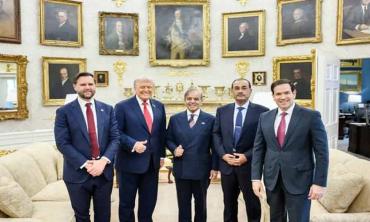
This potential has catalysed high-level diplomacy, with recent overtures from Prime Minister Shahbaz Sharif and Chief of Defence Forces Field Marshal Asim Munir to the United States signalling a decisive intent to transform subterranean wealth into global relevance and prosperity.
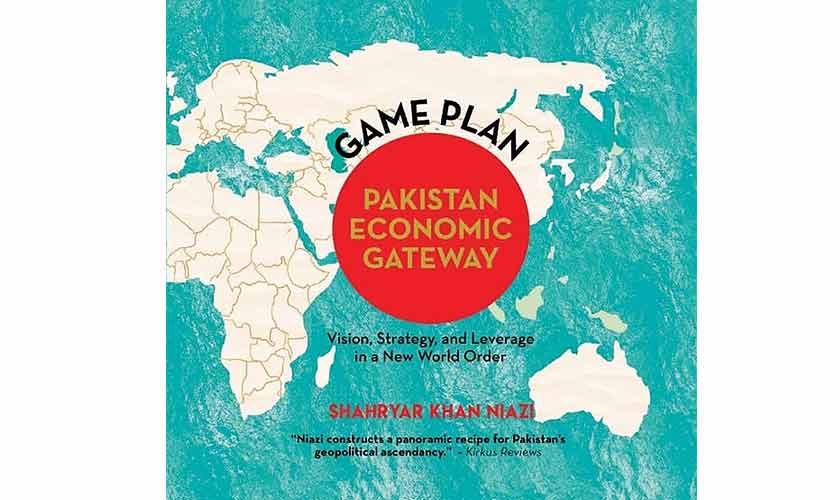
In Pakistan Economic Gateway, published by Markings Publishing, author and strategist Shahryar Khan Niazi leverages his two decades of deep, policy-level experience to deliver more than just an analysis; he presents a bold and meticulously constructed blueprint for national resurgence. This work transcends typical economic commentary by diagnosing a chronic national ailment and prescribing a concrete, geographically-rooted solution.
Niazi, a recipient of the UK Foreign and Commonwealth Office’s Secretary of State Award and chair of a coastal development commission, frames geography not as circumstance, but as destiny, positing that Pakistan’s location is its greatest—and most underutilised—strategic asset.
Niazi reframes Pakistan’s position at the crossroads of the Indian Ocean, South Asia, Central Asia, East Asia and the Middle East as its single greatest strategic asset.
Niazi posits that Pakistan’s destiny is to serve as a “potential continental conduit,” linking Asia, Europe, Africa and Australia through integrated overland and maritime corridors. He asserts that prosperity hinges on anchoring a faster, more secure and economically superior global supply chain. Crucially, this is framed not as a standalone project, but as a synergistic system designed to unlock the full potential of existing regional corridors.
Foremost among these is the Pakistan-Iran-Eurasia Corridor, a strategic initiative linking Finland, Russia, Azerbaijan, Iran and Pakistan. By merging the ancient Volga Trade Route with the historic Baloch-Persia Route through Gwadar, it creates a modern shortcut to South Asia and the Indian Ocean. Niazi quantifies its transformative potential: it could slash the 40-day Helsinki-to-Tokyo sea voyage by 23 days and enable Pakistani goods to reach Baltic markets in less than four days, nearly six times faster than conventional shipping.
Niazi leverages his two decades of deep,policy-level experience to deliver more than just an analysis—he presents a bold and meticulously constructed blueprint for national resurgence.
The Thar Energy Corridor can provide India and beyond access to cheap coal exported by Pakistan.
Niazi’s most compelling argument synthesises the nation’s infrastructure potential with its geological wealth. He positions mineral-rich Pakistan—endowed with critical deposits like copper and lithium-bearing ores—as a potential keystone in an Asian Battery Corridor, essential for the global transition to green energy.
Balochistan has one of the largest copper reserves worldwide. Besides, proven reservoirs of nickel, graphite, cobalt and manganese have been found across the Punjab, Khyber Pakhtunkhwa and Gilgit-Baltistan.
Niazi advocates for a vertically integrated value chain anchored by an international mineral commodity market in Karachi and specialised battery zones hosting processing plants, special economic zones and factories for manufacturing lithium-ion batteries, electric vehicles, semiconductors and renewable energy systems.
This vision frames Pakistan’s minerals as central elements in the global climate solution, transforming the nation from a mineral source into a manufacturing hub for a climate neutral future.
John Denton, the International Chamber of Commerce secretary general and a key architect of Australia in the Asian Century has said: “Niazi’s welcome work presents a compelling vision for elevating Pakistan’s geopolitical and economic stature... Pakistan Economic Gateway promises to make a significant contribution to the global transition towards a green economy while unlocking new business opportunities for companies worldwide.”
Niazi argues convincingly that by marrying its cross-continental corridors with its subterranean riches, Pakistan can evolve from a perceived peripheral state into a formidable continental power. For policymakers, economists and anyone invested in the future of Asia and global trade, this book is not just essential reading—it is a roadmap to a reimagined world order.
The writer is a senior The News staffer.