Print Story
X




How can we shape what children experience in everyday life in Pakistan to ensure their well-being and stability
| E |
very society makes a promise to its children. Not only through what it explicitly provides—schools, healthcare and safety—but also through the quieter, more powerful messages embedded in daily life: what is valued, what is tolerated, what is silenced; and who is protected. From a psychological perspective, these messages shape a child’s sense of self, their trust in others and their expectations of the future. In Pakistan, this offer is complex, often contradictory, and carries long-term consequences.
Children experience their country not through policy documents or political speeches, but through everyday life. They learn what matters by observing how adults behave, how institutions function and whose needs are consistently met—or unmet. In Pakistan, many children grow up amid chronic uncertainty—economic pressure, political instability, climate-related disasters, violence and deep social inequality. Even when adults attempt to shield them, children absorb these realities emotionally. Over time, this exposure shapes how safe the world feels and whether the future appears predictable or precarious.
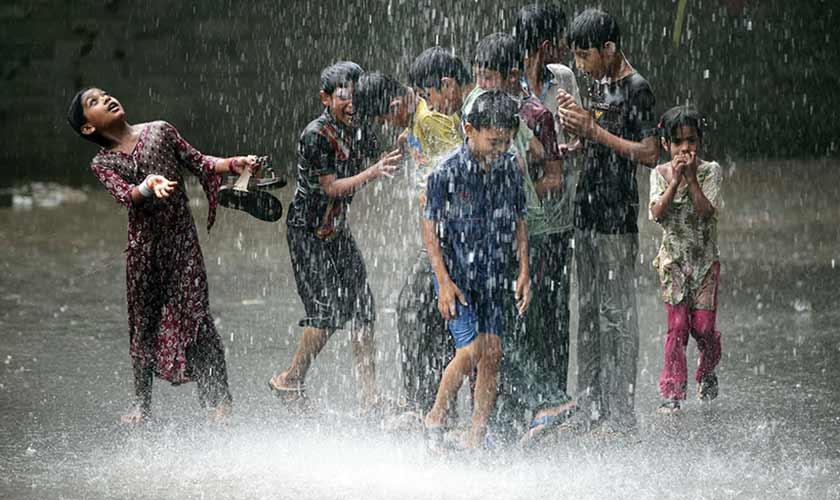
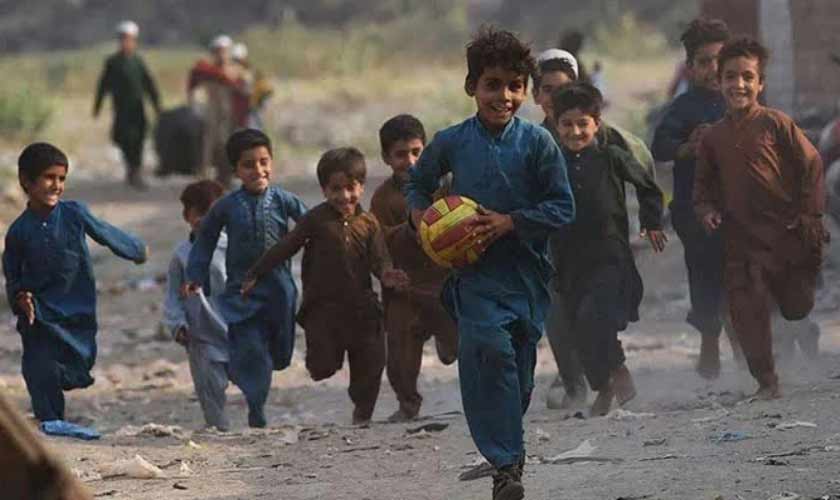
A fundamental measure of what a society offers its children is how it upholds their basic rights. Children’s rights extend beyond survival to include protection, development, participation and play. Play is not a luxury; it is central to emotional regulation, social learning and cognitive growth. Yet, in many Pakistani cities, safe and accessible parks are scarce, poorly maintained or entirely absent. Urban spaces are rarely designed with children in mind. When children lack places to play freely and safely, an essential part of healthy development is compromised.
The education system reinforces many of these limitations. For a large proportion of children, school is shaped more by pressure than possibility. Rote learning and high-stakes examinations dominate, while curiosity, reflection and emotional expression are marginalised. Integrated curricula that include arts, music, storytelling and reading for pleasure—widely recognised as supporting emotional wellbeing and flexible thinking—remain peripheral. The implicit lesson is that compliance matters more than creativity and performance more than understanding. Critical thinking skills, integral for the future they are stepping into, are largely ignored, even discouraged.
These experiences are further shaped by entrenched patriarchal structures. Girls are often raised with restrictions on mobility, voice and ambition. Boys are socialised to suppress vulnerability and assume adult responsibilities prematurely. Both pathways carry psychological costs. While girls internalise fear and self-doubt; boys struggle to recognise or express distress. When emotional expression is shaped by rigid gender norms, children’s ability to develop healthy relationships—with themselves and others—is weakened.
Layered onto this is the continued influence of colonial-era mindsets embedded within institutions. Education and governance systems still prioritise hierarchy, obedience and control over agency and critical engagement. Children are expected to conform rather than question, to adjust rather than be understood. For those already marginalised by poverty, disability or displacement, this reinforces silence and exclusion.
Families remain a central source of care and identity in Pakistan, but they are under increasing strain. Economic insecurity, crowding and limited access to social support affect parenting capacity. Added to this is generational trauma—rooted in partition, repeated political upheaval, conflict, displacement and poverty—that has never been systematically addressed. Trauma does not fade with time; it is transmitted through chronic stress, fear-based parenting and emotional unavailability, even in households where love is present.
This context helps explain why neglect is one of the most common forms of child abuse in Pakistan. Neglect is often misunderstood because it is not always visible. It includes the absence of consistent supervision, emotional responsiveness, protection and stimulation. Children who grow up experiencing neglect learn that their needs do not merit attention. Psychological research consistently links chronic neglect to increased risk of depression, anxiety, substance use, self-harm and difficulties in forming stable relationships later in life.
The consequences are now evident among adolescents and young adults. Suicide has emerged globally as one of the leading causes of death among people under 30. Pakistan is not exempt from this trend. Rising distress among young people reflects not individual weakness, but systemic failure—limited access to mental health services, lack of early intervention and environments that do not support emotional wellbeing. When distress accumulates without recognition or support, outcomes can be fatal.
The implications for Pakistan are serious and enduring. Children who grow up feeling unsafe, unheard or expendable are less likely to trust institutions, participate constructively in civic life or contribute to social cohesion. Emotional harm sustained in childhood shapes adult behaviour, parenting practices and governance, reinforcing cycles of instability and disengagement.
This trajectory, however, is not inevitable.
Pakistan has cultural strengths rooted in community, care and shared responsibility. What is required is deliberate policy alignment with children’s developmental and emotional needs. This includes urban planning that ensures safe public spaces for children, education reform that balances academic achievement with emotional and creative development, expanded child and adolescent mental health services and social protection policies that reduce pressure on families rather than intensify it.
These measures are not welfare add-ons; they are investments in human capital and national stability. Countries that protect children’s rights—including their emotional and developmental needs—are better positioned to manage social change, economic uncertainty and political transition.
What Pakistan offers its children today will shape its social and economic outcomes for decades to come. Continued neglect carries measurable costs. Strategic, child-centred policy action offers a more stable and sustainable future.
The writer is a consultant child, adolescent and adult psychiatrist. She is the founder and CEO of Synapse Pakistan Neuroscience Institute.