Print Story
X




Once growth strengthens and borrowing declines, debt servicing gradually ceases to dominate the budget
| P |
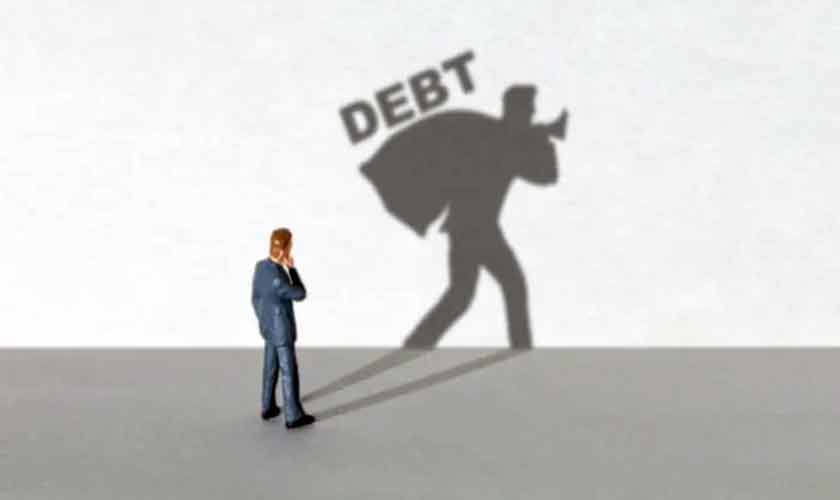
akistan’s debt trap is not merely a financial condition. It is an institutional habit — an addiction to spending without accountability and borrowing to postpone political choices. There is wisdom in conventional advice: when hardship tightens and debt strangles the neck, the first reform is not to demand more from the drained, but to discipline the self — spend according to means, accept constraint with honesty and build a path where relief follows restraint.
This is not sermonising; it is a workable macro-framework for a state that has tried every revenue push except the reform that actually lowers the temperature of insolvency: shrinking the unproductive footprint of government. Numbers mirror the pathology.
In the 2025-26 federal budget, the state plans a total expenditure of Rs 17.573 trillion, with debt servicing around Rs 8.206 trillion — almost half the entire federal spending. When debt servicing becomes the largest expenditure in the country, the budget ceases to be an instrument of development and becomes a transfer mechanism from taxpayers and inflation-hit citizens to creditors — domestic and external — mediated by a machinery whose own size keeps expanding.
In the Mid-Year Budget Review FY2024-25, the Finance Division, itself recorded that federal expenditures had risen to Rs 8.201 trillion (first half comparison context) against Rs 6.710 trillion last year, primarily due to debt servicing/ markup payments. This is the debt trap’s signature: even when governments commit to austerity, interest and rollover costs overwhelm the operating logic of the state.
Meanwhile, the debt stock keeps rising. The Ministry of Finance’s Annual Debt Review FY2025 has reported that total public debt increased to Rs 80.5 trillion and the public debt-to-GDP ratio reached 70 percent.
These figures mean that Pakistan is increasingly governed for cash-flow rather than for constitutional obligations — education, health, local government, clean water, environmental protection and justice — because the first charge on revenue is debt service and the second the state’s own consumption.
The debate regarding fiscal management is routinely mis-aimed: “How do we raise more revenue?” The question assumes that the state machinery is already appropriately sized and efficiently run. But it is not. We tax a shrinking economy to fund a bloated administrative economy. This is why repeated tax increases deliver disappointing outcomes: the productive base contracts, informality expands and compliance becomes negotiable. In such conditions, raising taxes is not reform; it is extraction under duress.
The debt trap persists through three reinforcing mechanisms:
First, a permanently high current expenditure structure — civil government running costs, untargeted subsidies, loss-making public entities, layered bureaucracies and privileges that are politically protected yet fiscally expensive.
Second, a fiscal federation that often rewards political bargaining rather than performance. Both federal and provincial tiers expand headcount and benefits while treating development spending as a residual item. The result is a state large where it should be lean — administration — and thin where it should be strong — service delivery.
Third, debt dynamics that convert governance into refinancing. When debt servicing consumes a dominant share of fiscal space, the state’s incentives shift toward rollover management and short-term stabilisation optics instead of productivity-enhancing investment.
The Budget in Brief 2025–26 shows total subsidies of Rs 1.186 trillion. Subsidies can be legitimate when sharply targeted to protect the poor or correct market failures. In Pakistan, however, subsidies often mask governance failures in energy and state-owned enterprises and distributing rents to politically connected groups. The public pays twice — first through taxes and inflation and again through poor services, which impose a private tax on households and businesses.
Debt servicing, subsidies and administrative consumption together create a fiscal prison. The uncomfortable truth is that primarily Pakistan is not short of money; it is short of discipline. The country has normalised a state that consumes too much and delivers too little, then borrows to finance the gap and labels it development. A credible debt-exit strategy must begin with the simple economic principle of living within one’s means, translated into enforceable fiscal architecture.
Creditors price discipline, not speeches. The starting point must be a statutory or constitutional expenditure ceiling binding both the federation and the provinces. These should be linked to realistic revenue projections rather than optimistic forecasts. The objective is a durable primary surplus achieved not by strangling development spending but by reducing administrative consumption.
The Annual Debt Review FY2025 notes improvements in the primary balance. The key question is whether this surplus becomes structural through permanent reform or remains temporary through one-off adjustments.
Rightsising must go beyond hiring freezes at lower tiers while privileges expand at the top. Pakistan requires a comprehensive redesign of the state with two non-negotiable principles: first, the number of public entities must decline sharply through mergers and closures; second, compensation and benefits must be rationalised transparently across cadres.
Rightsising should include functional reviews of ministries and departments, merger of overlapping divisions, closure of dormant bodies, elimination of redundant regulators and devolution of service delivery to empowered local governments. This is not merely administrative reform — it is constitutional political economy. When functions move closer to citizens, waste becomes visible and harder to defend.
Pension and payroll reform is equally essential. No debt-exit strategy can succeed if pension obligations and salary structures continue expanding unchecked. Moving toward contributory pension schemes for new entrants, eliminating double-dipping, rationalising commutation benefits and digitising payroll systems to remove ghost employees are necessary steps.
Much of Pakistan’s fiscal stress is quasi-fiscal. Losses in energy and other state-owned enterprises accumulate outside the budget before eventually appearing as subsidies or bailouts. These subsidies often masquerade as social protection while actually covering structural inefficiencies.
The state must therefore choose: either run public enterprises professionally under hard budget constraints or exit them. Privatisation, strategic partnerships and transparent competition are not ideological preferences; they are practical instruments for slowing the debt machine.
Pakistan does not lack recommendations. The challenge is implementation. However, rightsizing threatens entrenched interests; subsidy reform invites resistance and restructuring public enterprises disrupts patronage networks. Reform therefore requires careful sequencing.
Credibility is central to escaping a debt trap. When markets and citizens believe that reform is genuine, inflation expectations soften, exchange rate pressure eases and borrowing costs decline. Fiscal restraint today reduces the price of money tomorrow.
A serious debt-exit strategy must also speak the language of budgets. If debt servicing is Rs 8.206 trillion in FY2025–26, its share can fall only by reducing borrowing needs through expenditure reform and lowering borrowing costs through credibility and disinflation. Any plan promising debt reduction without shrinking the state is unrealistic.
Similarly, if subsidies amount to roughly Rs 1.186 trillion, policy must clearly identify what portion should become targeted social transfers; what portion should disappear through governance reform in energy and state enterprises; and what portion should continue as genuine welfare protection.
A state cannot preach sacrifice to citizens while refusing discipline in its own machinery. Pakistan’s debt trap will not end through clever fiscal instruments, new surcharges or cosmetic austerity. It will end when the state adopts the discipline it expects from households: spending within means, eliminating wasteful consumption and building an economy where production — not extraction — finances governance.
Once the economy is allowed to breathe, revenues rise naturally without a need for punitive rates. As growth strengthens and borrowing declines, debt servicing will gradually cease to dominate the budget. That is the only credible route out of the trap — and it is entirely within Pakistan’s control if the political leadership chooses to live within the nation’s means rather than far beyond them.
The writers are lawyers, adjunct faculty at Lahore University of Management Sciences and members of the advisory board of Pakistan Institute of Development Economics