Print Story
X




The rise in fuel prices owing to the conflict in the Middle East has already impacted transportation fares
| T |
he impact of the ongoing war in the Middle East involving Iran, Israel and the United States is beginning to ripple across the global economy, with far-reaching consequences for countries dependent on imported fossil fuels. One of the most immediate impacts has been on the global oil market, where disruptions in supply chains have driven fuel prices upward. For Pakistan, a country already struggling with inflation, the rise in petroleum prices is resulting in higher transport fares and increased financial pressures on ordinary citizens.
The latest escalation in the region has affected shipping routes near the Strait of Hormuz, a critical corridor for global oil transport. Restrictions on the movement of oil tankers through this strategic passage have disrupted the supply chain and triggered price increases in international petroleum markets. As a result, the cost of petroleum products has risen worldwide.
Pakistan has also felt the shock.
Last week, the federal government raised the prices of petrol and diesel by Rs 55 per litre, pushing the price of petrol to Rs 322 per litre. The sudden increase has alarmed citizens, as the cost of fuel directly affects transportation, food prices and the overall cost of living.
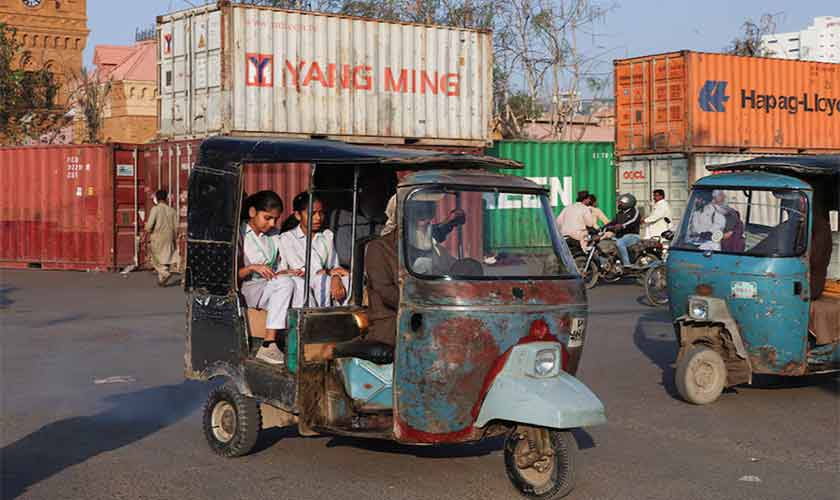
The rise in fuel prices has already begun to affect transportation fares across the country.
In Khyber Pakhtunkhwa, transporters have unofficially raised fares on various routes, adding to the financial burden on commuters.
The timing of this increase is particularly significant as the country approaches the religious festival of Eid-ul Fitr. Traditionally, millions of Pakistanis travel from major cities to their hometowns and villages to celebrate the holiday with their families. During Eid holidays, buses become the preferred mode of travel for many people due to their affordability and accessibility.
Given the surge in fuel prices, bus operators have raised fares, making travel more expensive for passengers who are already dealing with inflation and rising living costs. Many fear that fares may increase even further as Eid approaches and passenger demand rises.
To understand how the fuel price hike is affecting transport fares and the public sentiment regarding the issue, The News on Sunday surveyed Lahore Adda and Haji Camp Adda on GT Road in Peshawar, the city’s major bus terminals serving long-distance routes.
Fares for inter-provincial and inter-district routes have risen noticeably since the recent hike in fuel price. For instance, the fare for an executive seat on a bus service from Peshawar to Lahore previously stood at Rs 3,800. Following the rise in fuel prices, the same seat now costs Rs 4,200, representing an increase of roughly 11 percent in the fare.
Transport operators say similar increases have been implemented on other long-distance routes, including services between Peshawar and Karachi as well as other major cities.
The impact of higher fuel prices is not limited to long-distance travel. Short-distance and inter-district transport services have also seen similar trends.
Anwar Khan, a bus driver who operates daily between Charsadda and Peshawar, says the raise in diesel prices has significantly affected his earnings. Khan drives passengers from Shakoor area of Charsadda to Saddar in Peshawar, a route frequently used by government employees commuting to work.
Most of his passengers are regular commuters who travel daily between the two cities. Previously, he charged Rs 150 per passenger for a one-way trip. After the recent diesel price increase, he raised the fare to Rs 170, an almost 13 percent increase in the fare for inter-district commuters.
Khan drives nearly 150 kilometres every day. Before the latest fuel price hike, his daily diesel expense was around Rs 10,000. Now it has risen to approximately Rs 13,000.
“The passengers are not willing to pay even twenty rupees extra,” he says. “Every day there are arguments over fares. Sometimes, these lead to disputes. Instead of making a profit, I am now suffering losses.”
He says that transporters are also struggling with the rising cost of vehicle maintenance, and oil change, which have become more expensive due to inflation and currency fluctuations. Khan says drivers and transport operators are caught in a difficult situation. On one hand, they must raise fares to cover rising costs; on the other, passengers resist higher prices because their incomes have not increased.
“If the war ends soon and fuel prices fall, we will reduce the fares,” he says.
The impact of higher fuel prices is also being felt by people who rely on private vehicles for their daily commute. Amir Wazir, a resident of Hayatabad in Peshawar, travels around 35 kilometres daily on his motorcycle for work. Until recently, he spent about Rs 700 on petrol once a week, which was sufficient for his commute between home and office.
However, after the recent increase of Rs 55 per litre in petrol prices, his weekly fuel expense has risen to around Rs 1,000. “My weekly petrol expenditure has risen by roughly Rs 300,” he says. “Over the course of a month, I will be spending about Rs 1,200 more on fuel than before,” he says.
The writer is a multimedia producer. He tweets @daudpasaney.