Print Story
X




In 2026, we will have to confront our biggest problem: an ever-increasing population
| A |
t the start of the New Year, let us be honest. Let us be straight. We need to set our house right. It’s not happening. The International Monetary Fund has given us a bad report. This is not just embarrassing; the cake is just too small for all of us to get a bite.
Because of this, the society is polarised and the elite are squishing the throats of the rest of us. It’s getting harder by the day to breathe.
Islamabad, where I have mostly lived since 1966, is no longer the beautiful, cozy, tranquil, green and blue town that I still remember. The underpasses and freeways, the concrete ghettos and the smog are turning it into an environmental disaster. The Taxila hills are gone and I wonder how long the Margalla hills behind my house will last.
It is frightening to imagine in that in 10 years Islamabad could turn into a Lahore and in 20 into a Karachi. I hope that I am not around to see it become a failed city.
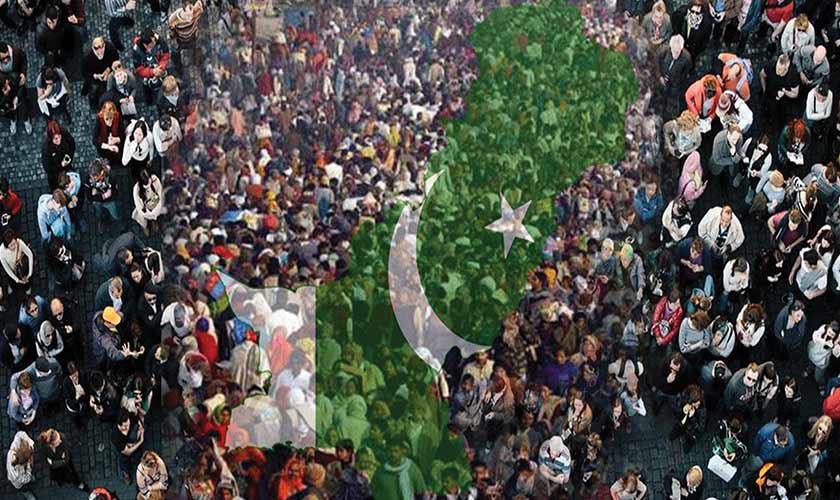
In 2026, let us think out of the box. We live in a population pressure cooker with 20,000 babies being born every day (~7 million per year), In 30 years, this could take us to over 400 million. That means increasing wheat, rice and protein production; jobs, energy and infrastructure at least proportionately. Assuming that half the population in 2050 is below age 30, the number of jobs required will reach 200 million. Does this seem possible? With the present GDP growth rate of about 3 percent this would mean keeping things more or less the way they are at present. That is neither a good scenario for Gen Z nor an encouraging one for Gens Alpha and Beta.
So, let us go out of the box. There are just two fixes; both difficult. One of those goes against the force of the prevailing winds. But let’s just consider it: Pakistan downloads China’s labour-intensive low-tech industry providing the required number of jobs while all of South Asia becomes a kind of European single market where goods, services and people move freely among two billion people of India, Pakistan, Afghanistan, Bangladesh, Nepal and Sri Lanka. That will allow China to shift gears and become the undisputed hi-tech global leaders and India to be the second predominant economic power. Pakistan will find itself in a comfortable situation at the heart of a peaceful South Asia and as a gateway to Central Asia. However, that is not the way politics is shaping up in the region. It is therefore a unlikely scenario.
Let us think out of the box in 2026. We live in a population pressure cooker with 20,000 babies being born every day (~7 million per year). In the next 30 years, this could take us to over 400 million.
Now let us turn to the next solution; a mass exodus policy. This fits in more with the way things are.
We already have a Diaspora of over 10 million people. Several large countries can still absorb immigrants. Canada, a 40 million population, can still accommodate another 40 million. Australia with just 27 million people can let in millions more. Both these countries can significantly improve their GDP growth rates by welcoming skilled-worker immigration. Saudi Arabia, Libya, Chad, Mali, Niger and Sudan, too, have vast pockets of sparse population. Europe, on the other hand, is saturated. Still it will probably see a migrant population of about 100 million within the next thirty years. Global demographics are changing rapidly. As one of the countries with a high population growth rate, there may be an opportunity for Pakistan.
A well managed exodus policy could send 100 million abroad. For this to happen, every Pakistan-origin person abroad should sponsoring 5 or 10 new migrants.
How will the host countries view this? There are already many movements, several violent, opposed to immigrants in North America and Europe. Even Japan, which is in need of skilled migrants, has seen anti-immigration discourse in its politics. Most of these movements have arisen out of cultural and economic fears accompanied by threat perceptions of ‘alien’ invasions. Anti-immigration policies are taking shape in countries led by the United States, United Kingdom and several European countries. Initially confined to informal localised pockets, these now appear to have considerable public support.
Migration has been a major force in shaping history. The United States of America is a recent example of immigrants and settlers colonising lands where indigenous people had lived for centuries. Just as descendants of European settlers became leaders of United States, Canada, Australia and New Zealand so too did Barak Obama, Rishi Sunak, Zohran Mamdani, Ilhan Omar and Mohammad Sadiq. Immigration, driven by ideological, economic or other factors, will always take place from one country to another.
If Pakistan cannot stop the population growth, reverse the elite capture or quickly raise its tax to GDP ratio, the only way to avoid catastrophic poverty, misery, unemployment and polarisation may be immigration.
The author, a nuclear engineer by training, has worked at Dr AQ Khan Research Labs and the Air University, Islamabad. He can be reached at [email protected].