Print Story
X




As Pakistan steps into 2026 amid global turbulence and domestic pressures, most analysts foresee continuity rather than rupture
| A |
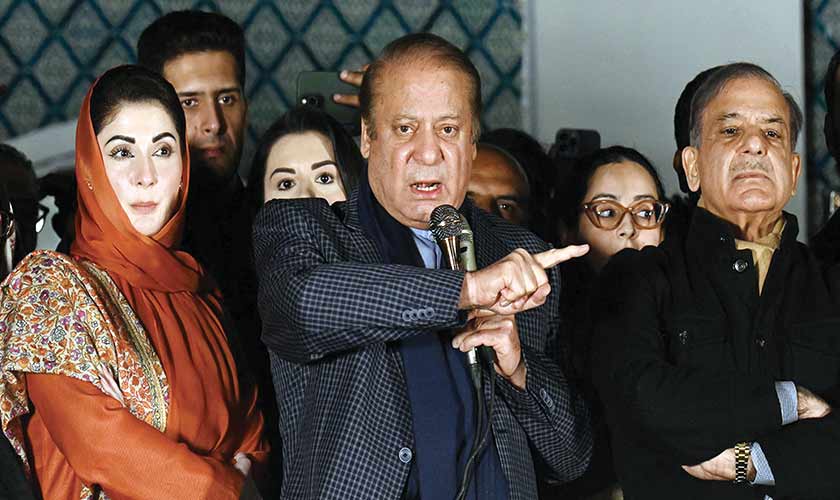
s Pakistan enters 2026, the moment is defined less by political upheaval at home than by external uncertainty and strategic recalibration. From shifting global power dynamics to persistent economic pressures at home, the year ahead is expected to test the country’s capacity for careful governance rather than dramatic change. Eminent political, strategic and economic analysts agree that Pakistan is likely to prioritise continuity, institutional alignment and managed stability over confrontation and disruption.
Defence analyst Dr Maria Sultan situates Pakistan’s trajectory in a rapidly evolving international order. She believes that the year will unfold against the backdrop of a volatile global environment, with major power rivalries shaping regional outcomes. “Pakistan, like the rest of the world, will be entering an extremely volatile environment, with the US and China at the centre,” she tells The News on Sunday.
According to Sultan, a global transition will reverberate across regions. Pakistan, too, will feel its impact. She says that national decision-making is expected to remain harmonious.
“As Pakistan transforms into a middle-level power and a leading voice for the Global South, civil-military relations are likely to remain harmonious. Pakistan is entering a new phase of state-building under the shadow of hybrid warfare,” she says.
This emphasis on harmony and coordination is echoed by prominent political observers who view continuity in civil-military relations as a defining feature of 2026. Journalist Ameer Abbas say that the current political equilibrium will be largely preserved. “The status quo in the affairs of the state will be maintained in 2026.” He argues that the stability of the civil-military ties will owe less to institutional pressure and more to the posture of the incumbent civilian leadership. “The political equation will not be disturbed — not because of the military establishment, but because of the civilian leadership,” he says.
Abbas expects public debate to remain intense, particularly on governance, economic performance and administrative capacity. However, he does not anticipate a breakdown of the political arrangement. “There will be much debate on governance and economy, but the hybrid coalition will continue in its present form, with only a few changes in the cabinet and important public offices,” he says.
He says that proposed constitutional amendments or subordinate legislation could generate friction, particularly involving the Pakistan Peoples Party. However, he says, such rifts are unlikely to destabilise the system. “By and large, the existing hybrid regime will not be affected,” Abbas says, , adding that the year is expected to remain difficult for the parliamentary opposition, particularly Pakistan Tehreek-i-Insaf.
Khushnood Akhtar Lashari, the former principal secretary to the prime minister, says 2026 will be a year of navigating complexity rather than pursuing bold departures from the policy paradigm. “Pakistan will be managing complex economic reforms, regional instability and major power rivalries. Simultaneously, it will be dealing with significant internal social and environmental pressures,” he says.
As Pakistan steps into the New Year, the dominant theme is not transformation but consolidation. In a world defined by uncertainty and competition, the state appears focused on defending the centre. Whether this emphasis on continuity can deliver tangible relief to citizens remains an open question.
Lashari expects Pakistan to further consolidate its strategic partnership with China while maintaining pragmatic transactional ties with the United States.
He says that regional tensions remain a persistent concern. “The unresolved conflict with India remains a major risk, with potential for escalation despite the recent ceasefires,” Lashari says.
On the economic front, he anticipates continuing efforts to control inflation, which eased significantly in late 2025, and modest growth. “GDP growth of around three per cent is possible. It remains dependent on sustained reforms,” he says. He expresses confidence that Pakistan will be able to achieve greater economic stabilisation despite global pressures, while maintaining its focus on regional security challenges.
Not all analysts, expect meaningful change during the New Year. Columnist Yasmeen Aftab Ali says, “Pakistan is facing multiple issues, ranging from economic stress to political plarisation, as well as terrorism.” “I do not see a lot of change on these fronts. The New Year is simply a change of dates.”
While Pakistan’s international stature may have improved, Ali suggests that structural domestic challenges are unlikely to be resolved in the short term.
Dr Ikramul Haq says the conviction and sentencing of former ISI director general Faiz Hameed and his alleged involvement in the May 9, 2023, attacks on military installations will continue to shape the political environment. “The year 2026 will likely bring more hardships for the opposition,” Haq says, noting that trials related to the May 9 violence are still pending. “These proceedings will have serious ramifications for the PTI and its leader Imran Khan.”
On civil-military relations, Haq sees little ambiguity. “These ties will remain positive. The incumbent government openly admits the hybrid-plus arrangement,” he said.
However, he is less optimistic about the economic space. He says legitimacy concerns and reliance on the IMF will remain key challenges. “The government will be unable to provide substantial relief to the masses due to the austerity agenda imposed by the IMF, which is seen as anti-growth and anti-people,” he says.
Taken together, these perspectives suggest that 2026 is unlikely to be marked by dramatic political shifts or institutional breakdowns. Instead, Pakistan appears set to move forward through cautious governance, calibrated decision-making and institutional coherence.
As it navigates economic constraints and public expectations, the government is expected to prioritise stability and external engagement. The opposition, meanwhile, faces shrinking political space amid legal challenges and organisational pressures. Civil-military relations, far from being a source of instability, are expected to remain aligned.
As Pakistan steps into the New Year, the dominant theme is not transformation but consolidation. In a world defined by uncertainty and competition, the state appears focused on defending the centre. Whether this emphasis on continuity can deliver tangible relief to citizens remains an open question.
The writer is an award-winning investigative journalist and the editor-in-chief of The Scoop, a digital platform. He can be reached on X @HassanNaqvi5.